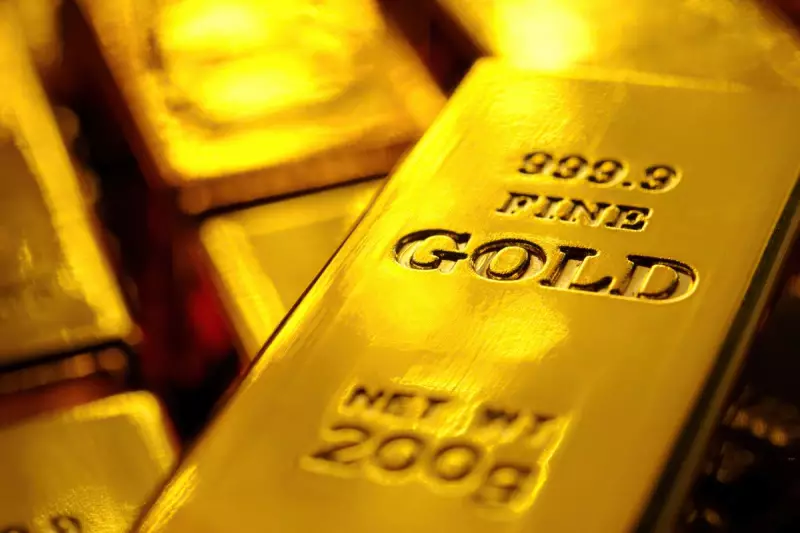
The price of gold has surged to a fresh record high, breaking through the $4,900 per troy ounce barrier as global markets reel from the dual threats of US tariff impositions and Donald Trump's controversial pursuit of Greenland. Investors are flocking to the precious metal as a traditional safe haven asset during periods of economic and geopolitical uncertainty.
Unprecedented Rally in Precious Metals
Gold's remarkable ascent continues unabated, with the yellow metal now within striking distance of the psychologically significant $5,000 milestone. This represents a gain of more than 12 per cent since the beginning of the year and a staggering 77 per cent increase over the past twelve months. The metal only first breached the $4,000 threshold in October, highlighting the extraordinary pace of its recent appreciation.
Silver has been performing even more spectacularly, with March futures currently priced at $95 per ounce. This represents a 22 per cent climb in 2026 alone and totals more than a 200 per cent increase across one year, significantly outpacing its more expensive cousin.

Geopolitical Tensions Driving Market Anxiety
The primary catalyst for this flight to safety stems from Donald Trump's aggressive foreign policy moves. The US president has declared "there can be no going back" regarding his attempts to pressure Denmark into relinquishing control of Greenland, while simultaneously imposing a 10 per cent tariff on nations opposing his territorial ambitions.
"The cocktail of tariff threats, political uncertainty in Japan, and lingering inflation risks has reignited a risk-off tone across global markets," explained Lukman Otunuga, a market analyst at broker FXTM. "While equities remain vulnerable, precious metals are thriving as investors seek protection from policy uncertainty and geopolitical shocks."
Stock Market Reactions and Diplomatic Fallout
Equity markets have responded with significant volatility to these developments. America's benchmark S&P 500 index dropped more than 2 per cent on Tuesday, though it is projected to open slightly higher when US trading begins this afternoon. The tech-focused Nasdaq 100 has fared worse, declining 1.2 per cent so far in 2026.
In contrast, the UK's FTSE 100 has remained mostly flat today, declining less than 0.1 per cent while maintaining a January gain of almost 1.9 per cent. This relative stability highlights the uneven impact of the current geopolitical tensions across different markets.
The diplomatic repercussions have been substantial, with French President Emmanuel Macron describing Trump's tariff threats as "unacceptable." The US president is scheduled to meet with fellow NATO leaders at the World Economic Forum in Davos on Wednesday to discuss the Greenland situation, which has severely strained relations with Western allies.
Analyst Perspectives on Future Trajectory
Market experts suggest that precious metals may have further room for appreciation. "Gold and silver still have room to run, especially if inflation data or geopolitical developments add fuel to the fire," added Otunuga, emphasizing the multiple factors influencing market prices.
Dan Coatsworth, head of markets at AJ Bell, offered a broader perspective: "A fresh record high for gold is a reminder of continuing nervousness as people fret over the future of a NATO alliance which has been a key part of the Western world's firmament in the post-war period."
Coatsworth continued: "The hope will be that some form of compromise can be found as Donald Trump meets with European leaders and speaks at the World Economic Forum in Davos." However, with no immediate retaliation from the European Union regarding reciprocal tariffs, the situation remains fluid and markets continue to price in significant uncertainty.
The remarkable performance of precious metals serves as a stark indicator of investor anxiety in the current climate, with traditional safe havens benefiting from what appears to be a perfect storm of geopolitical tension, trade uncertainty, and inflationary concerns.