

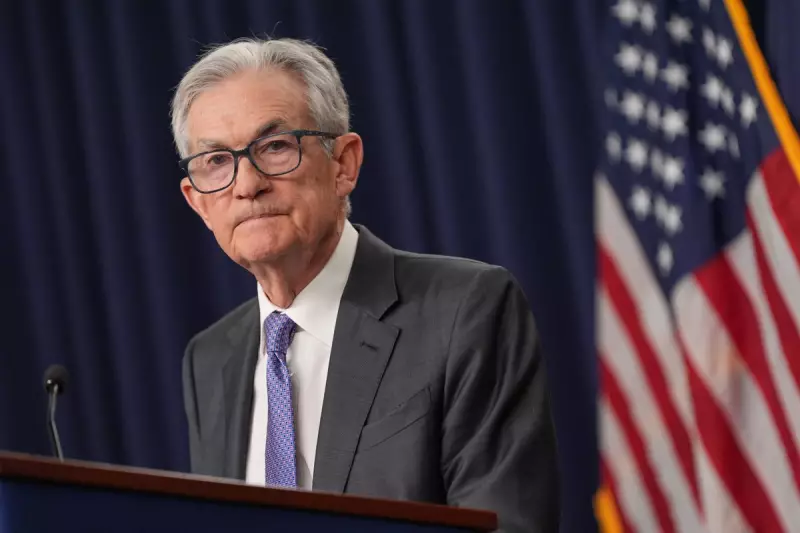
Federal Reserve officials are widely anticipated to leave short-term interest rates unchanged during their meeting this Wednesday, marking a pause after implementing three reductions last year. This decision comes despite significant pressure from the White House to lower borrowing costs, with the central bank opting instead to adopt a wait-and-see approach as the economy demonstrates tentative signs of health.
Economic Indicators and Policy Stance
The Fed's rate cuts in the previous year were designed to bolster the economy and avert a more severe downturn in the labour market, following a sharp slowdown in hiring triggered by President Donald Trump's extensive tariffs last April. Recent data, however, suggests that unemployment may have stabilised, and there are indications that economic growth could be accelerating. Concurrently, inflation persists stubbornly above the Fed's 2% target, creating a complex backdrop that supports maintaining the current rate level.
Internal Divisions and Future Outlook
A critical question that Chair Jerome Powell is expected to address at his post-meeting news conference is the duration of this holding pattern. The rate-setting committee remains divided between members who oppose further cuts until inflation recedes and those advocating for additional reductions to further stimulate employment. In December, only 12 out of 19 participants in the committee's meetings endorsed at least one more rate cut this year, reflecting this ongoing debate. Most economists predict the Fed will implement two cuts later in the year, potentially starting in June or beyond.

Unprecedented Political Pressure
This week's deliberations occur under the shadow of unprecedented pressure from the Trump administration. Powell revealed on January 11th that the Fed had received subpoenas from the Justice Department as part of a criminal investigation into his congressional testimony regarding a $2.5 billion building renovation. In a notably candid video statement, Powell asserted that these subpoenas were a pretext to penalise the Fed for not cutting rates more aggressively.
Additionally, last week, the Supreme Court considered Trump's attempt from the previous year to dismiss Fed governor Lisa Cook over allegations of mortgage fraud, which she denies. No president has ever fired a governor in the Fed's 112-year history, and during oral arguments, justices appeared inclined to allow her to remain in her position until the case is resolved. Meanwhile, Trump has hinted that he is nearing the appointment of a new Fed Chair to replace Powell when his term concludes in May, with an announcement potentially imminent, though previous delays have occurred.
Backlash and Fed Independence
Economists suggest that the president's efforts to influence the Fed may have inadvertently strengthened its independence, as Senate Republicans expressed support for Powell and threatened to obstruct Trump's proposed replacement. Patricia Zobel, a former New York Fed official and current head of macroeconomic research at Guggenheim Investments, noted, "The last couple of weeks have been pretty positive for Fed independence."
Leadership Dynamics and Communication
Amid this turmoil, Powell appears to have adopted a more reserved stance as his chairmanship nears its end. Vincent Reinhart, a former Fed economist now serving as chief economist at BNY Investments, observed that Powell has delivered only one speech addressing the economy since September. Reinhart speculated that Powell might be delegating the task of explaining why the central bank could delay rate cuts in the coming months to other Fed officials, highlighting that the chair does not make rate decisions unilaterally. "The contribution of Chair Powell to news about our understanding of the next Fed move has been as small as it's ever been, over his tenure," Reinhart remarked.

Voting Members and Regional Perspectives
Only 12 of the 19 members on the Fed's rate-setting committee possess voting rights, including all seven board of governors members, the president of the New York Fed, and a rotating group of four regional Fed bank presidents. This year, the voting regional presidents are Beth Hammack of the Cleveland Fed, Neel Kashkari of the Minneapolis Fed, Lorie Logan of the Dallas Fed, and Anna Paulson of the Philadelphia Fed. All have recently expressed some scepticism regarding the necessity of imminent further rate cuts.
In a speech earlier this month, Paulson indicated that an improving economy might permit additional rate reductions later in the year. "I see inflation moderating, the labour market stabilising and growth coming in around 2% this year," she stated. "If all of that happens, then some modest further adjustments to the Fed's key rate would likely be appropriate later in the year."
Consumer Sentiment and Economic Drivers
Economists anticipate that larger-than-usual tax refunds in the coming months could stimulate consumer spending, potentially fuelling faster growth that might eventually enhance hiring, which has remained subdued despite economic expansion. With businesses adding jobs at a minimal pace, consumer confidence has waned. The Conference Board reported on Tuesday that its measure of consumer confidence plummeted to an 11-year low in January, underscoring the persistent gloom among consumers regarding the economic outlook.





