
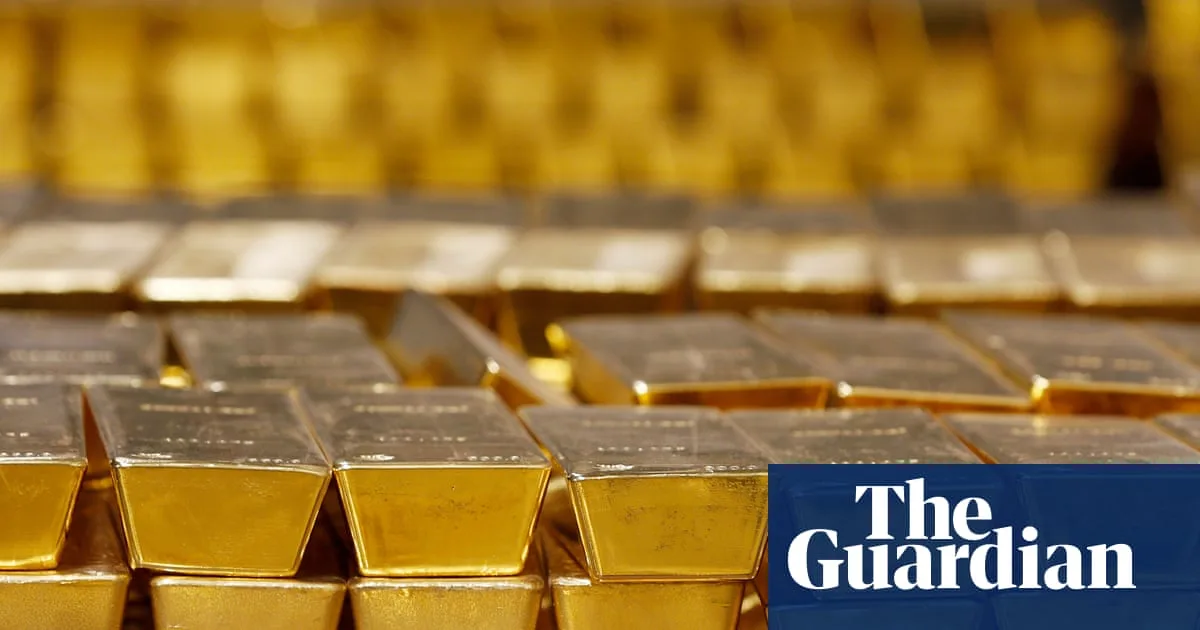
Central banks around the world are rapidly accumulating gold reserves, reversing decades of conventional economic logic and driving the price of bullion to record highs. The trend, fuelled by geopolitical tensions and concerns over the US dollar's reliability, has seen the share of gold in central bank reserves double over the past decade to over a quarter, the highest level in nearly 30 years.
Serbia's central bank governor, Jorgovanka Tabaković, recounted an incident where millions of dollars' worth of gold bars destined for a high-security Belgrade vault were left on a Swiss airport runway because fresh flowers and food took priority in air freight. Serbia is among a growing number of countries hastily amassing gold stockpiles as an insurance policy in a volatile world.
The price of gold soared to a record $4,643 (£3,463) an ounce this week, with analysts predicting it could break $5,000 this year. This surge comes as the Trump administration challenges the US Federal Reserve's independence and shatters the global rules-based order, sending jitters through financial markets.
Raphaël Gallardo, chief economist at asset manager Carmignac, said: 'We have moved from Pax Americana to global discord, geopolitically. It is the law of the jungle when we see what the US are doing. Investors believe their strategic reserves are no longer safe in dollar terms, as they can be confiscated overnight. The dollar is losing credibility as the nominal anchor of the global monetary system.'
The dollar's share of total central bank reserves has slipped from about 66% a decade ago to around 57%, but economists say it lacks a clear alternative. Other fiat currencies such as the pound, euro, yen or yuan lack global scale, leading institutions to turn to gold. In June last year, gold overtook the euro to become the world's second-most important reserve asset after the dollar.
According to a survey by asset manager Invesco, about half of 50 central banks plan to increase their gold allocation, while two-thirds plan to relocate bullion stockpiles held overseas back to domestic vaults. Gallardo added: 'There is no one to replace the dollar. So gold is shining by default. People are returning to what Keynes called the “barbarous relic”, as it is nobody’s debt.'




