

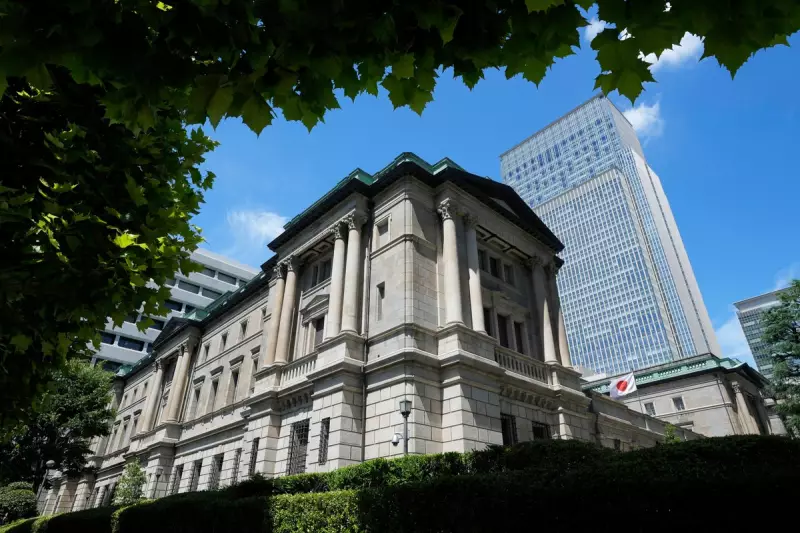
Global investors are on high alert as the Bank of Japan (BOJ) concludes a pivotal policy meeting, with widespread anticipation of an interest rate increase that would push its benchmark to a three-decade peak. The move, expected on Friday 19 December 2025, could send ripples through international financial markets.
A Historic Shift in Japanese Monetary Policy
The BOJ's final meeting of the year, which began on Thursday, is predicted to culminate in a 0.25 percentage point increase in its key policy rate, lifting it to 0.75%. This would mark the highest level since September 1995. For years, the central bank maintained rates at or below zero in a prolonged battle against deflation, a strategy starkly different from peers like the U.S. Federal Reserve, which have recently been cutting rates after a cycle of hikes.
Japan's own economy contracted at an annualised rate of 2.3% in the last quarter. However, mounting price pressures and improved business sentiment have compelled the BOJ to change course. This decision signifies a continued effort to 'normalise' monetary policy after the first hike in 17 years occurred in 2024, once inflation stabilised above the bank's 2% target.

Drivers and Global Consequences of the Hike
A primary catalyst for the shift has been the persistently weak Japanese yen, which has driven up the cost of crucial imports like food and fuel. The yen currently trades at about 156 to the U.S. dollar, near its lowest point this year and nearly double its 2012 value. A stronger yen, anticipated from higher rates, could help temper imported inflation.
Kei Fujimoto, a senior economist at SuMi Trust, noted, “The BOJ’s stance towards rate hikes reflects the fact that inflation is becoming entrenched. If drivers such as a further depreciation of the yen accelerate inflation going forward, it is possible that the pace of rate hikes will also increase accordingly.”
For world markets, the impact could be significant. The hike threatens the popular 'carry trade' strategy, where investors borrow in low-yielding yen to invest in higher-return assets abroad. Any unwinding of these positions could trigger volatility. The effect may extend to cryptocurrencies; reports of the impending BOJ decision last week saw bitcoin fall below $86,000, a drop from its October peak near $125,000.
Balancing Risks for Japan's Future
The central bank's challenge is immense, balancing the need to control inflation against supporting a fragile economy and managing the world's largest public debt, which is nearly triple the size of Japan's GDP. Governor Kazuo Ueda has signalled optimism that rising wages, driven by competition for a shrinking workforce, will underpin growth.
External risks, such as U.S. trade policy, have also influenced timing. Concerns over potential tariffs on Japanese automakers were partly alleviated by a deal setting U.S. duties at 15%, rather than a planned 25%. Market watchers will scrutinise Governor Ueda's comments on Friday for clues on the trajectory of future rate increases, as the BOJ navigates its most profound policy shift in a generation.






