
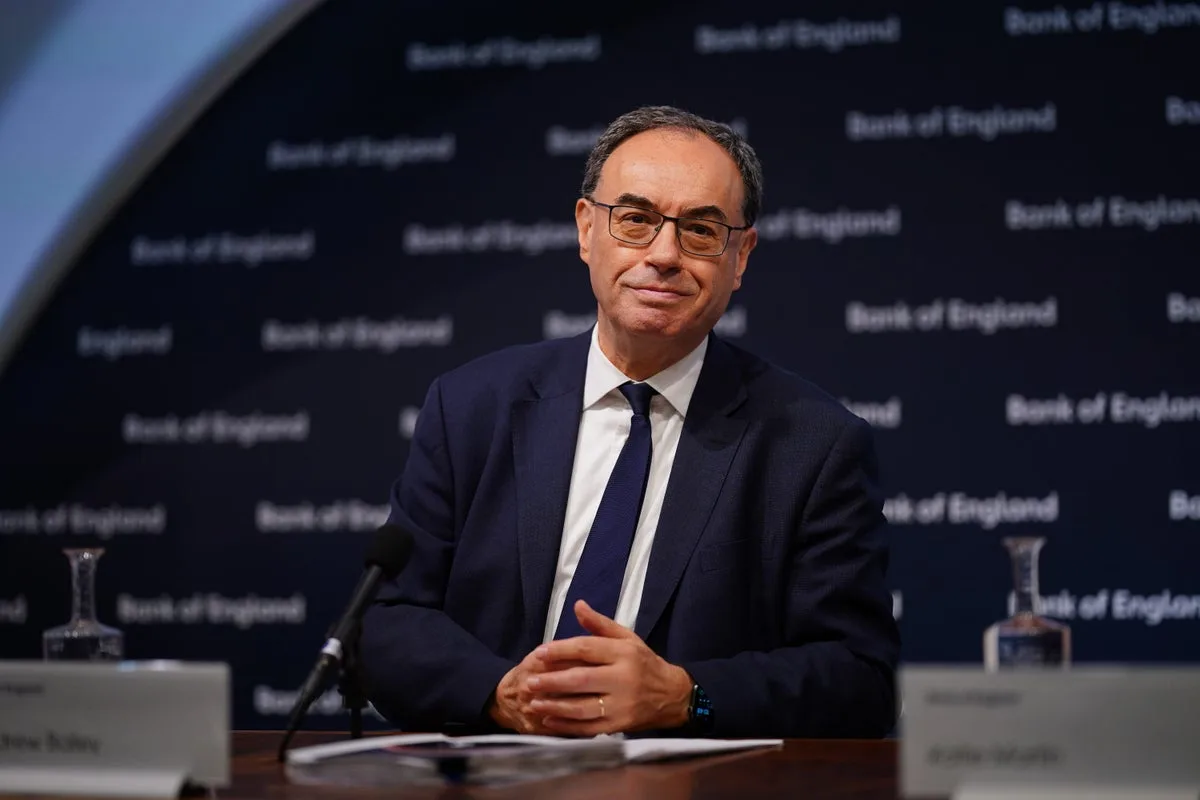
Andrew Bailey, the governor of the Bank of England, has told MPs that the central bank must remain highly vigilant to the potential impact of heightened geopolitical tensions, as US President Donald Trump seeks to take control of Greenland. Speaking to the Treasury Committee in Parliament, Bailey warned that such tensions could have significant consequences for global financial stability.
Bailey highlighted that, despite the tense environment, global financial markets have reacted more calmly than anticipated to Mr Trump's plans and his threats to impose tariffs on countries that oppose him. The President has stated that from next month the UK and other nations would face 10% tariffs on all products, rising to 25% from June 1, unless a deal is reached for Washington to acquire Greenland.
'The level of geopolitical uncertainty and geopolitical issues is a big consideration because they can have financial stability consequences,' Bailey said on Tuesday. He added that while world economic growth had been more stable than expected, and market reactions more muted, 'I take neither of those as a point of assurance. We have to be very alert to these things.'
Financial markets have weakened this week as investors digest the tariff threats. The FTSE 100 index dropped by about 120 points, or 1.2%, shortly after opening on Tuesday, reaching 10,075 points, following a 0.4% fall on Monday. Similar declines were seen on Germany's Dax and France's Cac 40 indices.




