

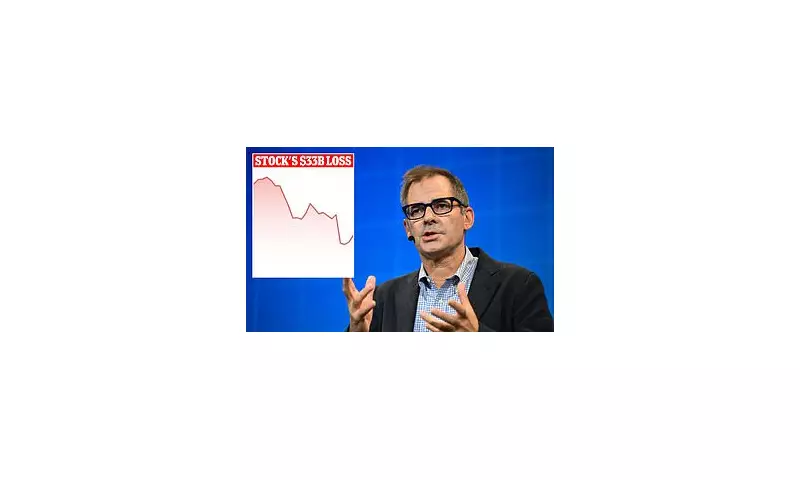
A leading Wall Street favourite in the artificial intelligence sector has transformed into a cautionary tale for investors in a matter of weeks. CoreWeave, a specialised tech infrastructure firm, has seen its stock value collapse by 60 percent since mid-June, vaporising approximately $33 billion in paper wealth and sending a chill through the high-flying AI trade.
From Market Darling to Debt-Fuelled Concern
CoreWeave launched its initial public offering (IPO) in March with shares priced at $40. The market's appetite for anything related to AI was voracious, and the stock soared to a peak of over $183 per share by the middle of June. While the share price remains 67 percent above its IPO level, it has crashed to around $66, marking a precipitous 61.2 percent fall from its high.
The company, founded eight years ago, operates on a simple but capital-intensive model: it does not build consumer-facing AI applications like ChatGPT. Instead, it purchases vast quantities of the most advanced AI chips from Nvidia, installs them in 32 data centres with enormous energy demands, and rents that raw computing power to trillion-dollar clients such as OpenAI, Microsoft, and Meta.

The "Circularity" Problem and Mounting Debt
Financial analysts have grown increasingly uneasy about CoreWeave's deep and complex ties to its main supplier, Nvidia. The chipmaking giant is both a key investor in and the primary hardware supplier to CoreWeave, creating what experts term a significant "circularity" concern.
The cycle works like this: Nvidia invests millions into CoreWeave, which then uses that capital to buy back Nvidia's expensive H100 and Blackwell chips. This effectively returns the investment to Nvidia's sales figures. To fund this relentless pursuit of the latest technology, CoreWeave is reportedly taking on a staggering $18.8 billion in debt, according to market trackers.
CEO Michael Intrator remains publicly optimistic, dismissing balance sheet worries. "If you're building something that accelerates the economy and has fundamental value to the world, the world will find ways to finance an enormous amount of business," he told the Wall Street Journal.
High-Profile Skeptics and Broader Market Jitters
The firm's turbulent ride has attracted notable sceptics. Jim Chanos, the investor famed for predicting the Enron collapse, has revealed a short position against CoreWeave, betting its value will fall further. He joins a chorus of Wall Street voices expressing alarm over the sheer scale of debt underpinning the AI boom.
This unease taps into a broader fear on Wall Street about a potential AI investment bubble, drawing comparisons to the dot-com bust and the 2008 housing crash. The market's performance this year has been heavily reliant on a handful of tech giants and their AI bets. Nearly 30 percent of the S&P 500's value is concentrated in just five companies: Alphabet, Nvidia, Microsoft, Apple, and Amazon. Many of these firms are funnelling vast sums into debt-laden infrastructure companies like CoreWeave and OpenAI.
However, not all investment heavyweights foresee an imminent crash. Steve Eisman, portrayed by Steve Carell in *The Big Short*, argues that AI is already delivering tangible growth. "Look at the speed of adoption of ChatGPT, which reached 800 million users in only three years," he noted. "The internet took 13. AI is already delivering."
The immediate future for CoreWeave, however, looks rocky. In early trading this Wednesday, its stock was down another six percent. The company did not immediately respond to requests for comment on its plummeting valuation.






