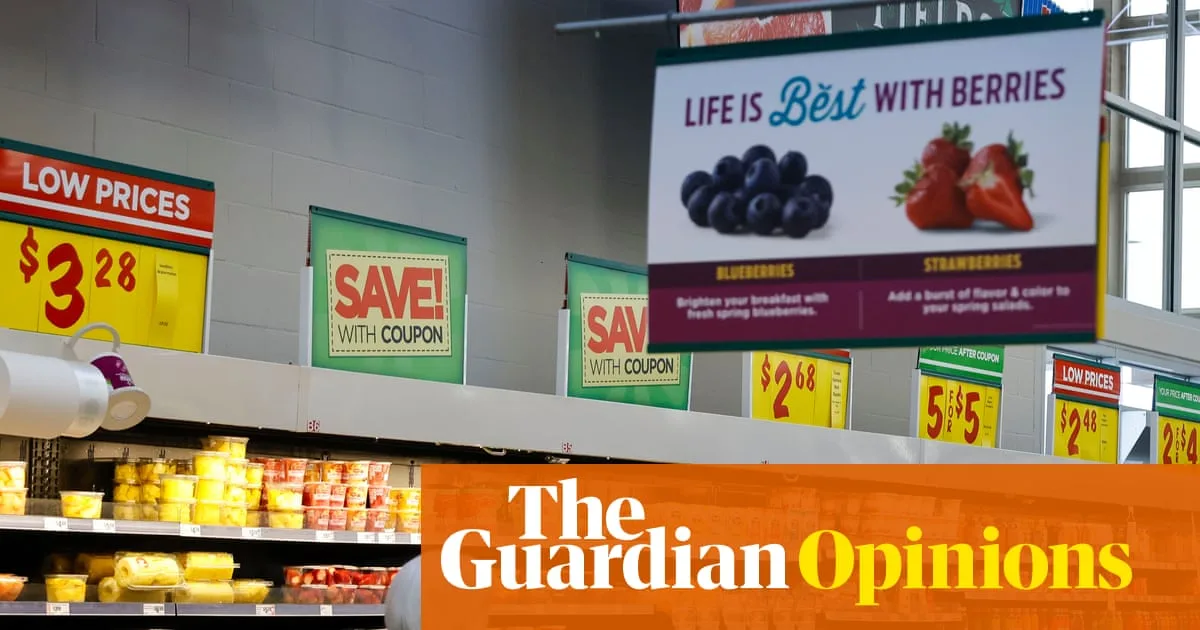
Contrary to claims made by President Donald Trump, supermarket prices in the United States have continued their upward trend. This reality stands in stark opposition to his assertions, as new analysis explores why the severe tariffs imposed in 2025 have not yet crashed the American economy, though a delayed shock may be looming.
The Predicted Economic Storm That Hasn't Arrived
When Donald Trump returned to the White House in January 2025, economists widely forecast a grim scenario. The expectation was that his sweeping tariff increases would act as a major supply shock, driving up costs for both consumer goods and business inputs. This, they feared, would trigger surging inflation, reduce real incomes for households, and potentially lead to job losses, with the Federal Reserve largely powerless to counteract it.
Trump proceeded to implement tariffs at historically high levels, shattering international agreements and the Republican party's traditional stance on free trade. The scale was unprecedented: analysis from the Yale Budget Lab indicates the average effective tariff on US imports skyrocketed from 2% to 18% this year, marking the highest level since the 1930s. Given this severity and the policy uncertainty, a severe economic downturn seemed inevitable.
Why the Damage Has Been Limited... So Far
Surprisingly, the worst predictions have not yet materialised. Official data shows the consumer price inflation (CPI) rate for the year ending November 2025 stood at 2.7% – identical to its level in late 2024. The unemployment rate saw only a modest increase, from 4.1% to 4.6% over the same period. Several key factors explain this muted initial impact.
First, many of the highest tariffs are not yet fully in force. President Trump has repeatedly postponed some duties and, notably, rolled back others on 14 November specifically because they were increasing grocery prices. He also granted major exceptions, such as exempting goods from Mexico and Canada from a 25% levy to protect the integrated North American auto industry.
Second, US businesses engaged in widespread 'front-loading' of imports immediately after Trump's November 2024 election victory. Companies stockpiled goods like Swiss gold and Irish weight-loss drugs before the new tariffs took effect. The Penn Wharton Budget Model estimates this saved importers up to $6.5bn. Consequently, many retailers have been selling from pre-tariff inventories and have been slow to pass increased costs to consumers.
Third, US importers are absorbing a significant portion of the cost increases, much as they do when the dollar weakens. Research using real-time retail data by Alberto Cavallo and colleagues found that prices for tariff-affected goods have risen about 5.4% at retail, contributing 0.7 percentage points to overall CPI. However, this represents only a fraction of the potential passthrough at current tariff levels. This absorption is partly due to uncertainty over how long the tariffs will remain.
The Looming Threat of a 2026 Economic Shock
Economists caution that the apparent resilience may be temporary. The assumption that 'Trump always chickens out' (TACO) has allowed markets to downplay the risk, but the implemented tariffs remain extraordinarily high. Crucially, companies cannot allow tariffs to erode their profit margins indefinitely.
If the tariffs remain in place, the US can expect more significant price increases and downward pressure on real incomes in 2026, once inventories are depleted and businesses are forced to adjust. Furthermore, US economic data has been disrupted by a government shutdown from 1 October to 12 November, which may have obscured the true picture, with some CPI data missing and GDP releases delayed.
In summary, while the immediate economic cataclysm feared in early 2025 has not occurred, the fundamental pressures from record-high tariffs persist. The full consequences for inflation, employment, and household finances may simply be delayed, poised to materialise with full force in the coming year.




