Cornwall's Geothermal Plant Powers National Grid and Extracts Lithium
Just outside the perimeter fence of a new facility near Redruth in Cornwall, the hulking remains of grand stone engine houses stand as a testament to the region's proud tin and copper mining history. Inside, however, lies a shiny new mini power station and lithium extraction plant that is once again accessing rich underground resources in the far south-west of Britain.
From Thursday, the Geothermal Engineering Ltd (GEL) plant will feed electricity created by tapping into hot granite rocks to the National Grid and extract lithium from the mineral-rich water used in the process. This switch-on, the first of its kind in Britain, has been welcomed by the government, which sees projects like this as a way of bolstering energy security, and by local residents, who take pride in their mining heritage and hope for an economic boost in a deprived part of the West Country.
Two Decades in the Making
Ryan Law, chief executive of GEL, expressed overjoy at the launch, which has been almost 20 years in the making. "To finally reach this point is exciting – and a bit of a relief," he said. GEL states that the plant will generate enough renewable electricity to power 10,000 homes, with plans to open more, larger sites in Cornwall. Within a decade, it aims to produce enough lithium carbonate, a key material for rechargeable batteries, to supply about 250,000 electric vehicles annually.

Law noted that it had been challenging at times to convince politicians and investors of the viability of drilling more than three miles into reservoirs of very hot water, around 190°C, found in faults in Cornwall's granite. "With any first technology, you've got to convince everyone," he explained. "But it's like someone has built this enormous nuclear power station underground. We are just tapping into the heat that's generated."
Simple Yet Innovative Process
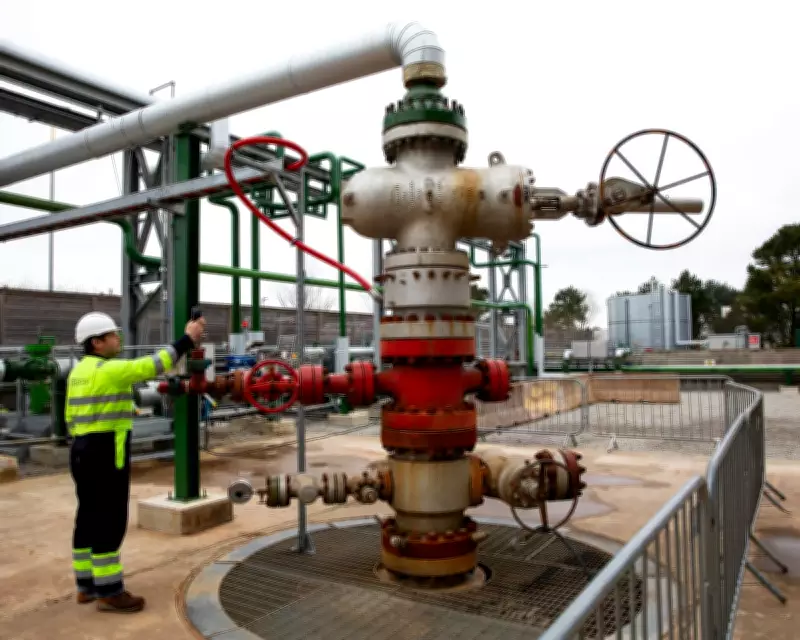
Despite the long journey to this point, Law described the actual process of generating heat and extracting lithium as relatively straightforward. Hot water is pumped from the Porthtowan Fault Zone to the surface via a production well, with steam driving a turbine to produce electricity. At this stage, the water temperature drops to 50°C, which coincidentally is ideal for extracting lithium. Once the lithium is removed, the water is re-injected into the fault line through a second, slightly shallower well, recharging the hot reservoir over time.
The site itself is surprisingly compact, covering only about 0.6 hectares (1.5 acres). "The magic is happening beneath the surface," Law remarked, allowing visitors to touch the warm second wellhead, while the production one remains too hot to handle.
Local Pride and Economic Boost
Charlotte Wilkins, who oversees the lithium plant, highlighted the excitement of building something new. "Not only have we got green electricity, we've got lithium as well. It's the whole package," she said, proudly displaying a tube of tiny needle-shaped lithium crystals. The region, once nicknamed "the richest square mile on Earth" due to its tin and copper reserves, is now seeing a renaissance with about 100 jobs created so far, including roles for engineers, geologists, and chemists. GEL has prioritized sourcing employees, contractors, and raw materials locally where possible.
Greg Foxwell, a member of Gwennap parish council, noted that people are pleased Cornwall's natural resources are being utilized in this way. "People here are proud of their mining heritage," he said. "The company has gone out of its way to recruit some local people and do very good work with the local colleges and schools."
Addressing Concerns and Future Prospects
While some have raised concerns about earthquakes, the company acknowledges that testing and developing geothermal reservoirs in Cornwall may cause minor seismicity, but no issues have arisen so far. Perran Moon, the MP for Camborne and Redruth, emphasized that underground exploration is fundamental to the Cornish psyche. "Mining isn't what we do, it's who we are," he stated, highlighting Cornwall's role in transitioning away from fossil fuels and regenerating communities.

Rachel Reeves, the chancellor, hailed the project as a "pioneering" initiative, noting a huge opportunity for Cornwall to become a vital player in Britain's energy security. Frances Wall, a professor at the Camborne School of Mines at the University of Exeter, called the switch-on a "really significant event" for Cornwall and the UK. Harry Pitts, head of humanities and social sciences at the university, added that this revival aligns with the government's "securonomics" ambition, aiming for greater sovereign capability in critical minerals and energy, while promising skilled jobs for local communities.