The United States has announced it will temporarily pause efforts to guide stranded vessels out of the Strait of Hormuz in order to focus on finalising a peace deal with Iran, according to President Donald Trump. The decision comes after US military leaders and Secretary of State Marco Rubio insisted that a ceasefire in the Middle East was still holding.
Trump Announces Pause in Strait Operations
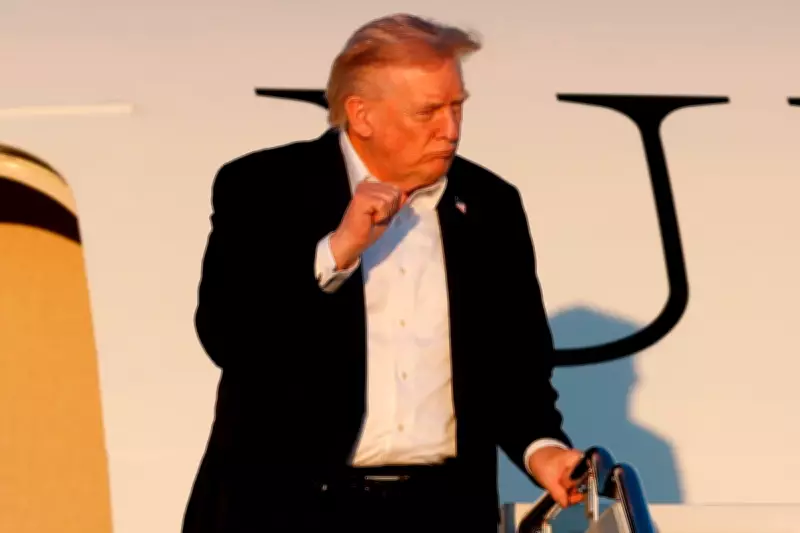
In a Truth Social post on Tuesday, President Trump confirmed that the US blockade of Iranian ports would remain in place while negotiations continue. He stated that the initiative to guide ships through the strategic waterway would be paused for a limited time to allow space for a comprehensive agreement with Iran to end the conflict. Trump wrote: "Based on the request of Pakistan and other Countries, the tremendous Military Success that we have had during the Campaign against the Country of Iran and, additionally, the fact that Great Progress has been made toward a Complete and Final Agreement with Representatives of Iran, we have mutually agreed that, while the Blockade will remain in full force and effect, Project Freedom (The Movement of Ships through the Strait of Hormuz) will be paused for a short period of time to see whether or not the Agreement can be finalized and signed."
Ceasefire Holds as Rubio Outlines Demands
The announcement followed Secretary of State Marco Rubio's insistence that the ceasefire in the region was holding after the initial US military operation against Iran concluded. Speaking at a White House press briefing on Tuesday, Rubio emphasised that for peace to be achieved, Iran must agree to the president's demands on its nuclear programme and reopen the strait. He warned that failure to take action would leave other key maritime trade routes vulnerable, stating: "If we live in a world where a rogue state like this Iranian regime is allowed to claim, as a new normal, control over an international shipping lane, it will not be long before you see that happen in multiple shipping lanes around the world."

Military Leaders Call for International Support
On Tuesday, General Dan Caine, chairman of the Joint Chiefs of Staff, said that now is the time for countries with an "equity stake" in the Strait of Hormuz to assist the US. His comments came as America moved to reopen the strategic waterway to commercial shipping, protected by what Washington described as "a powerful red, white and blue dome". US Defence Secretary Pete Hegseth also repeated that he expected the rest of the world "to step up" and said the US would hand over responsibility "at the appropriate time and soon".
Criticism of Allies' Response
The White House has been deeply critical of the response by the UK and other allies to the Gulf crisis, insisting that other nations needed the strait more than the US. Hegseth recently dismissed efforts led by Britain and France to ensure the future security of the strait as "silly" and said they should have "less fancy conferences in Europe and get in a boat".
Background of the Crisis
The Strait of Hormuz, a major supply line for oil and gas, had been open prior to the US and Israel launching strikes against Iran. In retaliation, Tehran effectively closed the shipping lane and started charging hefty tolls for transit, sparking a global energy crisis that has seen prices rocket. This led the US to impose its own blockade of Iranian ports, leading to a stand-off.
In a bid to break Iran's stranglehold, America this week launched an operation, known as Project Freedom, to create an "enhanced security area" along the strait, aimed at enabling shipping to get through and releasing more than 1,500 vessels trapped by the conflict. While this has triggered fresh attacks by Tehran, the US insists it falls "below the threshold" for resuming hostilities and the existing ceasefire still holds.
Speaking at a Pentagon briefing, General Caine said: "Project Freedom is designed to protect commercial shipping and help restore the flow of commerce through the strait and sustain freedom of navigation. Centcom has established an enhanced security area on the southern side of the strait that is now protected by US land, naval and air assets to help defeat further Iranian aggression against commercial shipping." He added: "Now is the time for those with equity stake in the strait to come assist."

Hegseth also commented: "For too long, Iran has been harassing ships, shooting at civilian tankers from all nations, and trying to impose a tolling system. Iran's plan, a form of international extortion, is unacceptable."