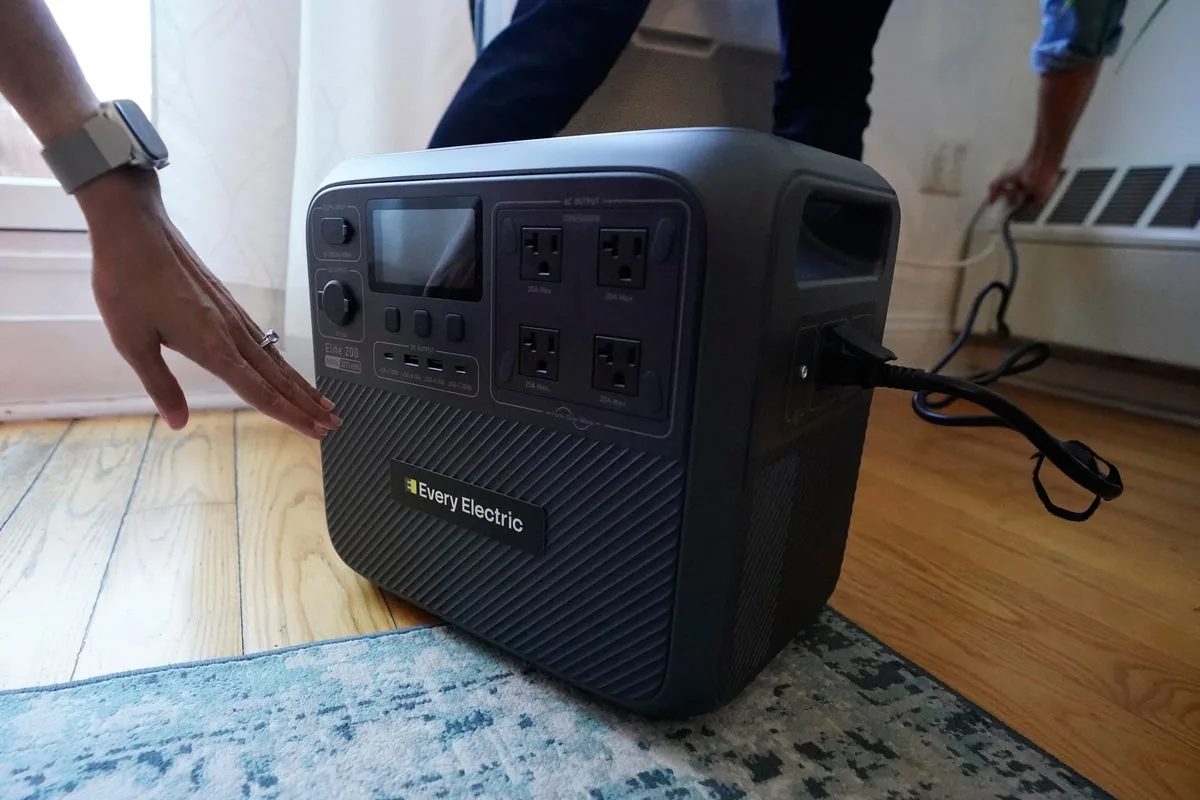
A new pilot programme in New York City is testing plug-in batteries designed to power window air conditioning units during peak electricity demand, offering a renter-friendly alternative to traditional conservation measures. The initiative, led by Every Electric in partnership with utility Con Edison, aims to reduce strain on the electrical grid during heatwaves while keeping residents comfortable.
The devices, described by Every Electric CEO Andrew Wang as “a souped-up version of the power bank you would use to charge your phone,” charge during off-peak hours and then run AC units for several hours when demand spikes. About the size of a microwave, they plug directly into an AC unit and a wall outlet, with a smartphone app managing charging and discharging automatically.
Participants receive financial incentives, such as cash rebates or gift cards, for enrolling. Bianca Pasternack, a New York City renter in the programme, praised its ease of use: “I can’t put solar panels on my roof. This is at least something that’s accessible and easy. It was very set-it-and-forget-it.”
The pilot is expanding from about 200 kilowatts of flexible capacity last year to an anticipated 2 megawatts this summer, with plans to extend to other cities. Kevin Brehm of RMI, a clean energy nonprofit, noted that such solutions address both emissions and affordability concerns, as peak demand often forces utilities to activate inefficient backup plants or build new fossil-fuel infrastructure.
Con Edison confirmed that the batteries help mitigate peak demand, support renewable energy, and reduce the need for new infrastructure. The programme is part of a broader trend toward “virtual power plants,” which coordinate distributed energy resources to stabilise the grid, though unlike many such schemes, this one targets renters without access to rooftop solar.