UK Drivers Urged to Fill Up Now as Petrol Prices Could Soar to £2 a Litre
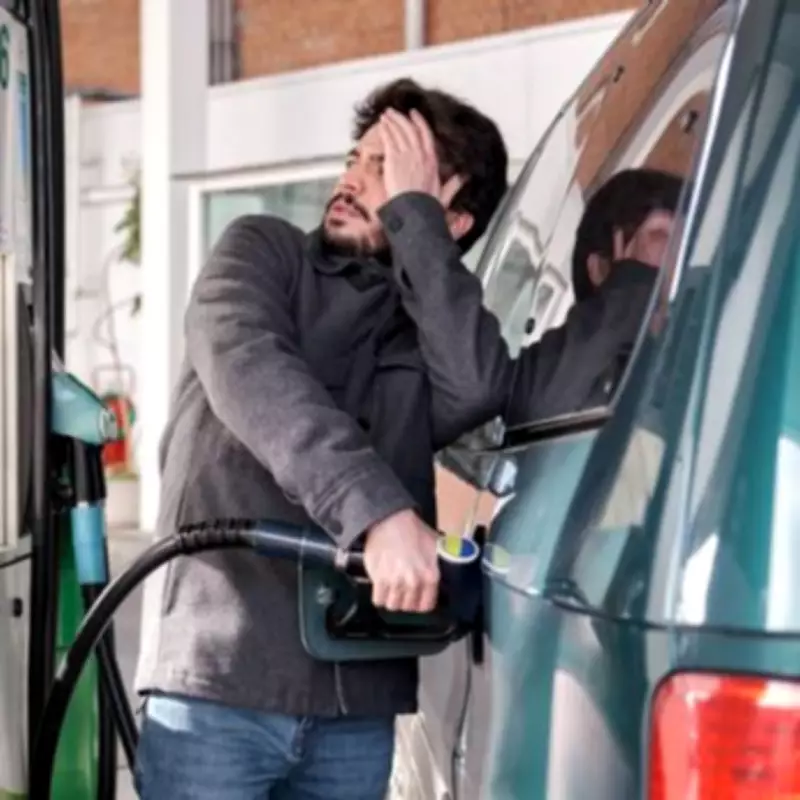
Motorists across the United Kingdom are being strongly advised to fill up their vehicles immediately, as petrol prices continue an upward trajectory with fears mounting that costs could skyrocket to a staggering £2 per litre in a worst-case scenario. This urgent warning comes after months of consistent declines in fuel prices since mid-December, which have now reversed sharply.
Recent Price Increases and Market Volatility
The average price of unleaded petrol has increased for two consecutive weeks, currently sitting at 131.71 pence per litre, up slightly from 131.46 pence on 9 February. Industry experts attribute this sudden reversal to renewed instability in global energy markets, driven by escalating geopolitical tensions.
Brent crude oil has surged past $71 a barrel, marking its highest level since July 2025. This spike is largely due to heightened conflicts in the Middle East and the ongoing Russia-Ukraine war, which continue to disrupt supply chains and inflate commodity prices. Additionally, concerns over former US President Donald Trump's proposed tariffs and their potential impact on worldwide trade are creating further ripples in the markets.

Expert Analysis and Predictions
Tony Redondo, founder of the Newquay-based Cosmos Currency Exchange, emphasised that the recent rise to 131.71p per litre signals a definitive pause in the downward trend enjoyed by UK drivers earlier this year. He explained, "This uptick is primarily driven by global volatility, with Brent crude climbing above $71 per barrel due to heightened tensions in the Middle East and the ongoing Russia-Ukraine conflict."
Redondo added that while the 5p fuel duty cut remains in place until September 2026, retailers are swiftly passing wholesale increases onto consumers at the pumps. Barring a major supply disruption, such as direct military action involving the US and Iran or a blockage of the Strait of Hormuz, prices are expected to settle between 133p and 135p in the short term. "Whilst we aren't approaching the 191p record highs of 2022, the price 'floor' has likely been reached. It is wise to fill up now if you find a station near the current average, as retail prices typically rise much faster than they fall," he cautioned.
Potential for Dramatic Escalation
The Strait of Hormuz, a vital shipping route for global oil supplies, remains a significant point of concern. Any disturbance there could cause crude prices to skyrocket within days, leading to even more dramatic increases at UK petrol stations. Samuel Mather-Holgate, managing director and IFA at Swindon-based Mather and Murray Financial, highlighted the broader economic pressures, stating, "Donald Trump's tariffs really are felt across the globe, even if indirectly, in petrol prices. Increasing uncertainty on the world stage pushed up the price of the commodity that is still the engine juice of the world."
Mather-Holgate warned that with tariffs, global political uncertainty in the Middle East, and issues in Venezuela, it is anyone's guess how much crude might go up. "It's not unthinkable that we could see up to £2 per litre in the UK by the end of the summer," he said. An increase to £2 would represent a rise of more than 50% from today's average and push costs close to the record levels seen during the 2022 energy crisis.
Short-Term Outlook and Consumer Advice
Steven Greenall, adviser at Rayleigh-based Protect & Lend, noted that oil prices have already climbed more than 8% over the past month, making the rise at the pumps unsurprising. He said, "Tension rising in the Middle East and potential threats to shipping through the Straits of Hormuz are causing some jitters. If further conflict breaks out expect further upward pressure but I'd expect it to be temporary."
Despite today's prices being significantly lower than the July 2022 peak of 191.55p per litre, analysts suspect the recent dip may have reached its end. Drivers are therefore urged to take advantage of current prices while they last, as the window for cheaper fuel appears to be closing rapidly amidst ongoing global uncertainties.