Oil and Gas Prices Resume Upward Trajectory Following Iranian Strikes on Production Facilities
Oil and gas prices have experienced a significant resurgence after Iran launched attacks on production facilities for the first time since the onset of the war with the US and Israel. This escalation marks a critical shift in the conflict, directly impacting global energy markets.
Price Increases and Market Reactions
Brent crude, the international benchmark for oil prices, surged by 3% to reach $103.2 (£77.52) per barrel on Tuesday. This represents a nearly 50% increase from pre-war levels recorded before the conflict began on 28 February. Concurrently, wholesale gas prices rose by almost 3%, hitting €52 (£45) per megawatt hour, compared to approximately €30 prior to the war.
Analysts highlight that this is the first instance where Iran has successfully targeted oil and gas production facilities, rather than limiting attacks to refineries, terminals, and storage sites. This development poses a more severe threat to supply chains and market stability.
Targeted Facilities and Operational Disruptions
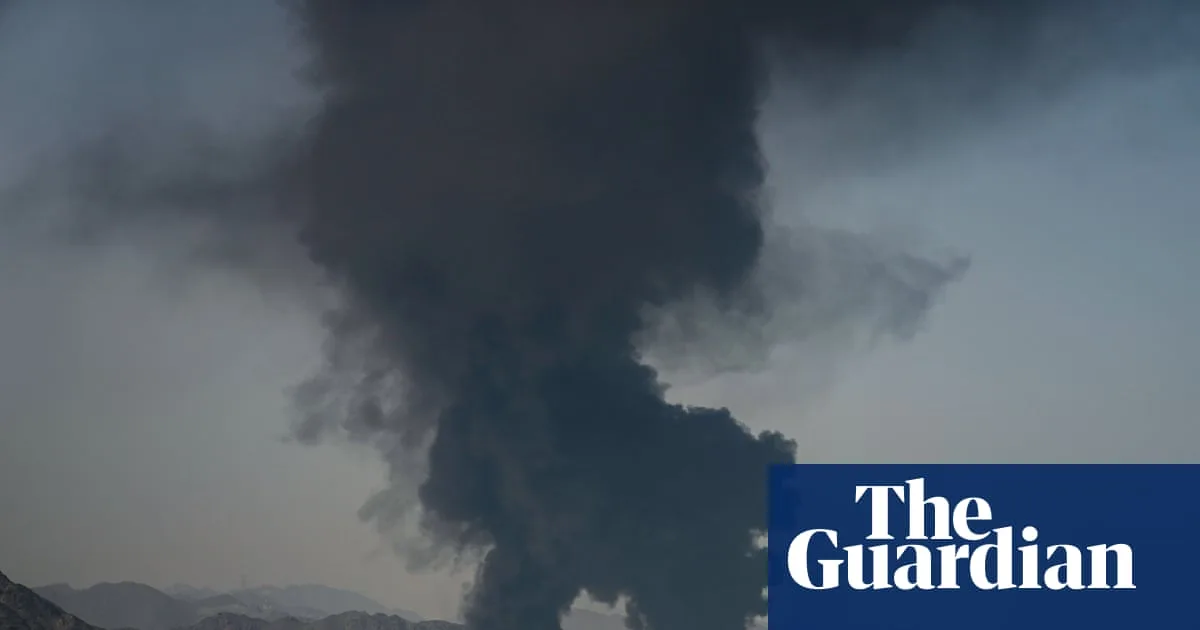
The United Arab Emirates reported that a drone strike hit the Shah natural gasfield on Monday, igniting a fire at one of the world's largest gas facilities. Operations remained suspended on Tuesday as officials conducted damage assessments. Additionally, an oilfield in Iraq, Majnoon, and the UAE's major port and oil storage facility in Fujairah were struck by Iranian drones and missiles as the war entered its third week.
In a related incident, a tanker was hit by an unknown projectile off the port of Fujairah in the Gulf of Oman, causing a fire and halting oil loading by the state company Adnoc. Under normal conditions, Fujairah serves as an outlet for over 1 million barrels of oil daily. These disruptions threaten to sever the UAE's remaining crude export routes from global markets, exacerbating the Middle East crisis.
Impact on UAE Exports and Regional Security
Daily crude oil output from the UAE, the third-largest producer within the Opec cartel, has more than halved since the conflict began. The UAE's other export hubs are situated within the Gulf, which has been effectively isolated due to Iran's control over the Strait of Hormuz. This narrow waterway between Iran and Oman typically facilitates a fifth of global oil shipments and gas supplies.
Since the start of the US-Israeli war on Iran, Gulf Arab states, including the UAE, have endured over 2,000 missile and drone attacks. These assaults have targeted US diplomatic missions, military bases, oil infrastructure, ports, airports, and residential and commercial buildings, highlighting the widespread nature of the conflict.
Analyst Insights and Global Ramifications
Despite the recent spikes, the price of Brent crude remains below the peak of $119.50 per barrel observed during the war. Analysts at Goldman Sachs noted that the largest oil market shock on record is likely to have a more pronounced impact on refined products such as jet fuel and diesel than on crude oil itself. According to Bloomberg, analysts Yulia Zhestkova Grigsby and Daan Struyven stated, "Prices have rallied much more for many refined products than for crude," warning that disruptions in medium-heavy crude supplies could jeopardize the production of diesel, jet fuel, and fuel oil.
Saul Kavonic, head of energy research at Sydney-based MST Marquee, commented, "Mixed messages are coming from the Trump administration on the war's duration, as the market focuses more on the actions on the ground that remain escalatory." This uncertainty continues to fuel market volatility.
Broader Consequences and Regional Responses
The crisis has led to increased blackouts in Asian countries, coupled with a shift towards coal usage, as most oil and gas traversing the Strait of Hormuz typically supplies Asia. In response to energy shortages, Sri Lanka has declared every Wednesday a holiday for public institutions to conserve fuel. President Anura Kumara Dissanayake emphasized, "We must prepare for the worst but hope for the best," during an emergency meeting with senior officials.
Similarly, Bangladesh has advanced Ramadan holidays in universities and implemented planned blackouts nationwide to conserve energy. Thailand has introduced measures such as encouraging civil servants to wear short-sleeved shirts instead of suits to reduce air conditioning reliance and to use stairs rather than lifts, reflecting broader efforts to mitigate the energy crisis.