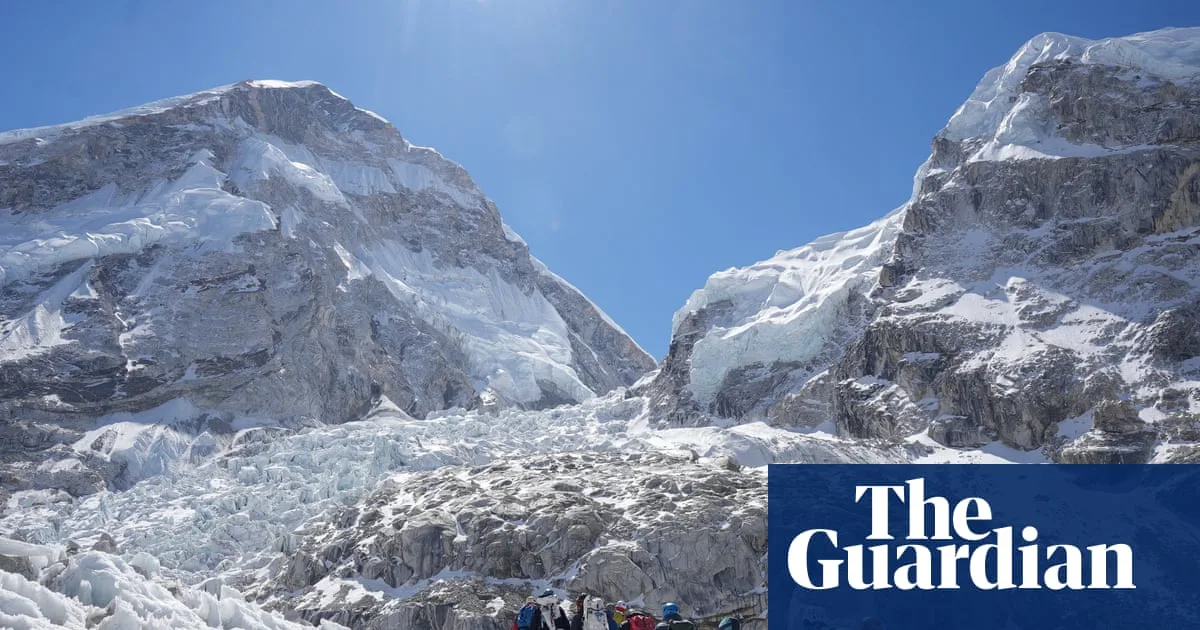
A large ice block on the route just above Mount Everest's base camp has forced hundreds of climbers and local guides to delay their summit attempts. The serac between base camp and camp one was deemed unstable and too risky for climbers, according to Himal Gautam of Nepal's department of mountaineering.
Officials are working with climbers and expedition organisers to assess the situation. The Sagarmatha pollution control committee, which deploys teams to lay the route, plans to conduct an aerial survey of the serac. Committee chair Lama Kazi Sherpa said the risk of avalanche is high and they are waiting for the serac to melt to a safe level.
The serac is part of the Khumbu icefall, a constantly shifting glacier with deep crevasses and huge overhanging ice, often as big as ten-storey buildings. It is considered one of the hardest sections of the climb. In 2014, a chunk of the glacier sheared away, triggering an avalanche that killed 16 Sherpa guides.
Despite the delay, the spring climbing season is underway. According to the department, 410 foreign climbers have been issued permits to attempt the summit by the end of May. Hundreds of foreign climbers and about the same number of Nepalese guides are expected to attempt the climb next month during brief windows of favourable weather.
The 8,849-metre peak was first summitted on 29 May 1953 by Sherpa Tenzing Norgay and Edmund Hillary of New Zealand. Since then, thousands have reached the top.