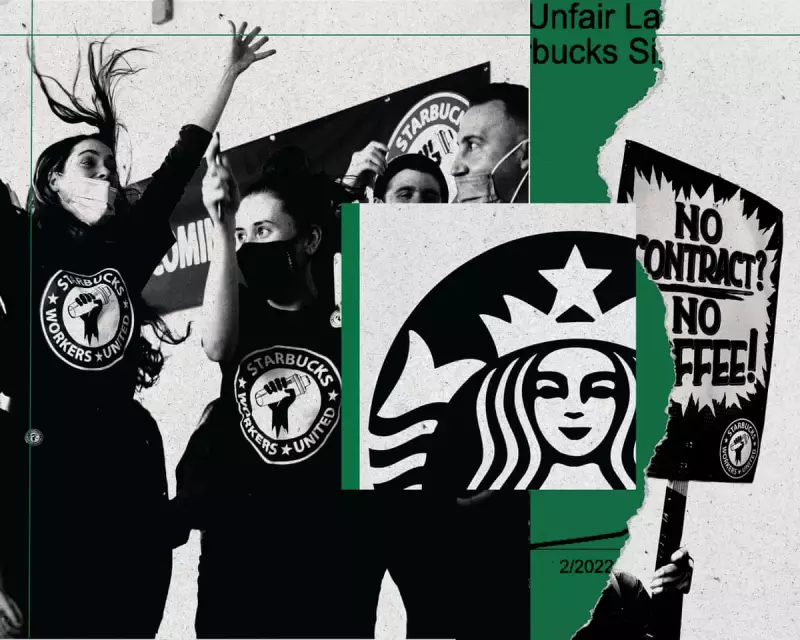
The union representing thousands of Starbucks baristas is threatening to dramatically escalate industrial action, warning the global coffee chain to prepare for the "longest and biggest" strike in its history. This comes as about 2,500 workers across 120 stores in 85 US cities have already walked off the job, urging customers to boycott stores during the crucial holiday trading season.
From Buffalo to a nationwide movement
The current unrest has its roots in a landmark vote four years ago. In December 2021, workers at a Starbucks store in Buffalo, New York, voted 19-8 to unionise, becoming the first company-owned US outlet to do so. This victory, achieved despite what union spokesperson Michelle Eisen called a "vicious union-busting campaign" from management, sparked what she describes as a "whirlwind."
Since that first election, workers have won over 650 union votes, with Starbucks Workers United now representing roughly 11,000 baristas at more than 550 stores. However, nearly 48 months on, not a single store has secured a first union contract with the company.

A cycle of resistance and executive turmoil
Starbucks, which had successfully resisted unionisation for decades under founder Howard Schultz, responded to the initial organising wave with intense opposition. Schultz, who returned for a third stint as CEO in 2022, declared he would never embrace the union and extended new benefits and pay rises exclusively to non-union workers—a move union members saw as punitive.
The company's leadership has been in flux, complicating negotiations. Kevin Johnson stepped down as CEO after the Buffalo vote, followed by Schultz's return, and then Laxman Narasimhan's brief tenure. The current CEO, Brian Niccol, who joined from Chipotle in late 2023, launched a "Back to Starbucks" turnaround plan but, according to the union, allowed bargaining to stall. "The company picked right back up where they left off... violating workers' rights," said Eisen.
Strike action intensifies amid corporate defiance
Frustrated by the lack of progress, union delegates in April rejected a company contract proposal guaranteeing annual raises of at least 2%, calling it insufficient. Strike action began in earnest on the chain's lucrative "Red Cup Day" in November, with over a thousand workers walking out.
The action has since expanded significantly. The union has also blockaded Starbucks' largest East Coast distribution centre in York, Pennsylvania, and rallied outside Niccol's corporate office in Newport Beach, California. Diego Franco, a barista in Chicago, explained the motivation: "You can't expect us to continue to come into work... I would much rather stand outside in the cold and be on strike."
Starbucks has consistently downplayed the strike's impact. A spokesperson, Jaci Anderson, stated that 99% of its 17,000 US locations remain open and reported record holiday sales, adding the company is ready to bargain when the union returns to the table.
Political support and an uncertain future
The standoff is drawing increased political scrutiny. Over 100 members of Congress have signed letters demanding Starbucks resume good-faith negotiations. Figures like New York mayor-elect Zohran Mamdani and Senator Bernie Sanders have joined picket lines, with Mamdani vowing a personal boycott.
Former acting US labor secretary Julie Su highlighted the strategic use of delay, noting the average time to a first contract is 15 months, while Starbucks workers have waited nearly four years. "The company tries to wait out its employees, hoping that they leave before a contract is reached," she said.
With the union filing hundreds of unfair labour practice charges and vowing to escalate further, the stage is set for a prolonged confrontation. Michelle Eisen, who left Starbucks in May after 15 years, summarised the workers' resolve: "Workers are done... they are prepared to make this the longest and biggest strike in company history if the company doesn't return to resolve these remaining issues."