
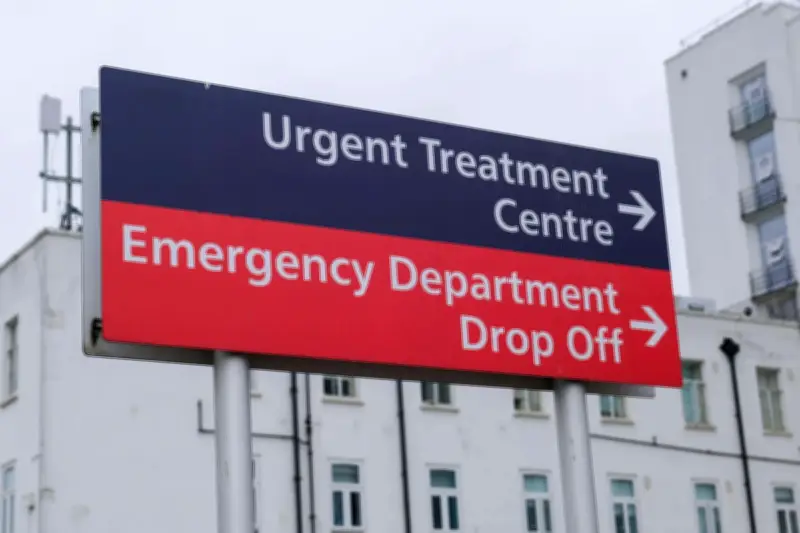
St Helier Hospital has secured a significant £57 million investment for a major A&E expansion after inspectors found the department routinely operating at more than ten times its intended capacity. The Sutton hospital’s emergency department, designed to accommodate just 24 patients, frequently cares for up to 250 individuals daily.
Funding Amid CQC Downgrade
The funding announcement comes on the same day that the Care Quality Commission (CQC) announced it had downgraded the South London hospital’s overall rating from ‘Good’ to ‘Requires Improvement’. The CQC cited serious concerns regarding patient care and "significant" overcrowding, which has led to patients receiving care in corridors.
In its report published on Thursday, CQC inspectors said the hospital’s urgent and emergency care services were particularly affected by capacity pressures. Between June and November 2025, patients spent an average of nearly 25 hours in the emergency department, with one mental health patient waiting up to 160 hours in a recliner chair before being transferred to specialist care.
Safety Risks and Privacy Concerns
CQC inspectors said these pressures meant patients were often placed on trolleys in corridors leading to fire exits, creating potential safety risks during an evacuation. The report also described how a shortage of inpatient beds left some patients using urine bottles behind inadequate screens that failed to ensure privacy, while others reported that confidential medical conversations could be easily overheard.
Expansion Plans
Hospital leaders are hopeful that the expansion and new facilities will significantly reduce waiting times and enhance patient care, with construction anticipated to commence in spring 2027. Recent data published by the NHS showed that the Epsom and St Helier University Hospitals Trust was now ranked among the worst for corridor care in England and Wales. Corridor care is defined as when patients spend more than 45 minutes being treated in make-shift areas or when they are left on or near wards with no bed.
The £57 million investment from NHS London is intended to tackle the growing problem of corridor care by expanding and modernising St Helier’s emergency department. The scheme will deliver a larger, redesigned facility with upgraded clinical spaces, alongside a new Urgent Treatment Centre and enhanced Same Day Emergency Care services aimed at reducing avoidable admissions and overnight stays.
Political Reaction
Reacting to the announcement, the Liberal Democrat MP for Carshalton and Wallington, Bobby Dean, told the Local Democracy Reporting Service (LDRS): “This is great news for our hospital. Finally we have a big injection of money to upgrade A&E, which will go a long way to ending corridor care. Over the past months, I have heard many heartbreaking stories from people sharing their anger and embarrassment at being treated publicly in hospital corridors. St Helier Hospital has been overwhelmed for far too long.”
Mr Dean, who led a campaign to improve the hospital site, added: “I am going to keep the pressure on to make sure that we see spades in the ground as quickly as possible, and will keep people updated every step of the way.”
Medical Director's View
Dr Amir Hassan, Divisional Medical Director for Medicine and ED Consultant at Epsom and St Helier Hospitals, said: “This is a significant and very welcome investment in the future of St Helier. It reflects both the growing demand on our services and the incredible efforts of colleagues who continue to deliver high-quality care every day, despite the challenges of working in an ageing and often overcrowded environment.”
The project is subject to a number of approvals before construction can begin. If all plans are approved, building work could start in spring 2027, with work carried out in phases to ensure care can continue throughout.
Full CQC Report Findings
The hospital was assessed alongside Queen Mary’s Hospital for Children, located on the same Wrythe Lane site. Elsewhere in its report, the CQC raised concerns about the hospital estate, warning that the ageing site was having a negative impact on patient care. St Helier’s main building was constructed in 1940, making it older than the NHS itself.
Inspectors said the ageing and cramped estate had left some operating theatres cluttered, while staff moving between clean and contaminated areas were required to use the same routes, increasing the risk of infection. They also noted that the site had trouble with temperature control and pests in the maternity wing.
The LDRS has previously reported how the trust’s ageing estate has continued to affect patient care, despite more than £60 million being spent on improvements over the past six years.
Delayed Discharges and Capacity Issues
Delayed patient discharges remained a major challenge, with medically fit patients waiting for social care support and acute medical units used for longer stays than their intended 72-hour purpose. In one instance, leaders on one elderly care ward found that nearly a third of their patients were medically fit for discharge but could not leave.
A lack of rehabilitation facilities and internal therapy provision were blamed for these delays, while inspectors found the hospital’s own discharge lounge was not being used effectively, sitting empty at times when the rest of the hospital was facing extreme bed pressures.
Staff Conduct Concerns
Inspectors cited isolated incidents of staff bullying and discriminatory behaviour in the trust’s surgical services. Despite praising its internal accountability, they found evidence of a lack of respect towards disabled colleagues, leading to the service’s leadership being rated ‘Requires Improvement’.
Positive Highlights
Despite these challenges, the CQC also highlighted several areas where the hospital was performing well, rating it ‘Good’ for being effective, caring and responsive. Inspectors noted particular improvements in maternity care, with the service regaining its ‘Good’ rating after previously being downgraded to ‘Requires Improvement’.
This improvement was achieved through a series of interventions, including the introduction of a transitional care model which reduced the number of babies separated from their mothers for admission to the neonatal unit.
Inspectors also noted improvements to maternity triage processes, ensuring women were assessed promptly by midwives on arrival. Elsewhere, bereavement facilities were upgraded with separate entrances and soundproofing to provide greater privacy for families.
Inspectors reported how patients frequently described care from doctors and nurses as exceptional, with staff consistently demonstrating empathy, kindness and compassion. They also praised the trust’s work with community partners to improve patient flow and reduce delays.
Ongoing Challenges
Despite this, inspectors noted that capacity risks identified in 2019 remain unresolved. The trust is now pursuing recruitment initiatives to help address these ongoing pressures.
Alex Shaw, Interim Managing Director for Epsom and St Helier University Hospitals NHS Trust, said: “We are pleased that the CQC’s overall rating reflects our safe and compassionate care and are very proud of our maternity teams for the hard work they have done to drive significant improvements since the last inspection. We are addressing areas where we need to go further, such as improving patient experience during periods of increased pressure, including directing more patients to our Urgent Treatment Centre, which is already seeing a reduction in corridor care and length of stay.”




