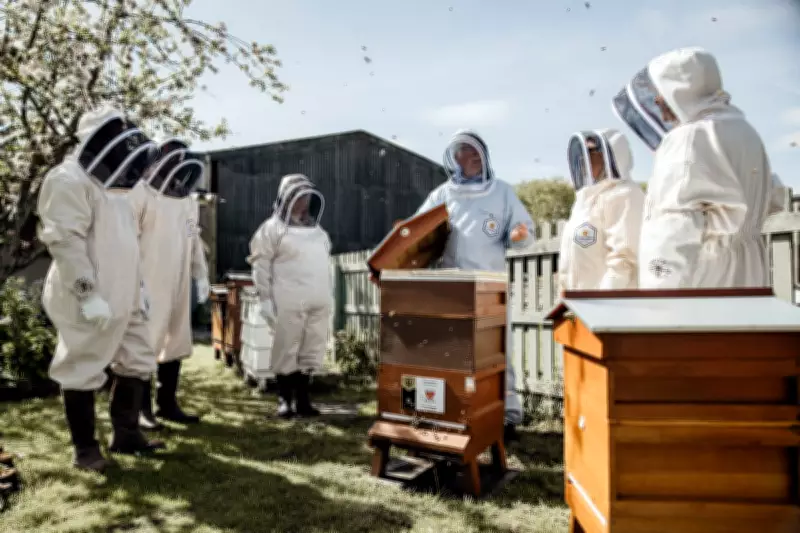
UK Employers Embrace Office Beehives to Enhance Workplace Wellbeing and Foster Community Spirit
Across the United Kingdom, a quiet revolution is taking place in corporate environments. The traditional lunchtime soundtrack of rustling sandwich wrappers and keyboard clicks is being supplemented, and sometimes replaced, by the gentle, persistent hum of honeybees. Employers from Manchester to Milton Keynes are increasingly turning to professional beekeeping services to install hives on office rooftops, in courtyards, and even repurposed car park spaces.
This movement positions beekeeping not as a mere novelty or quirky corporate perk, but as a strategic initiative designed to alleviate workplace stress, strengthen team bonds, and reconnect employees with the natural world. In an era defined by hybrid work models and widespread reports of professional burnout, these buzzing office additions offer a tangible link to nature.
The Business Case for Bees: Purpose, Autonomy, and Communication
"There is something profoundly special—almost spiritual—about enabling your staff to step away from their desks and witness how nature operates," explained Chris Payne, a co-founder of Green Folk Recruitment. "A beehive represents the ultimate model for a successful organisation. It operates on shared, purpose-driven objectives, features decentralised decision-making where individuals act autonomously for the collective good, and relies on honest, constant communication."

Payne's firm is deeply invested in this philosophy. Twice annually, he organises a four-hour round trip for his employees to Buckley's Bees in Crewe, Cheshire. There, they participate in hands-on beekeeping workshops and learn the craft of hive construction. "Once we are fully qualified, we will transport the hives we have built back to our own offices," Payne revealed. "It promises to be a truly magical moment for the entire team."
Providers Report Surging, Organic Demand for Corporate Apiaries
The market for office beekeeping is experiencing significant growth. Emma Buckley, Chief Executive of Buckley's Bees, currently serves approximately twenty-four UK clients and more than ten international organisations. Her business has expanded so rapidly that she is actively recruiting additional staff to meet the escalating demand.
"Our primary motivation is enhancing people's mental health, and forward-thinking employers now recognise the intrinsic link between wellbeing and nature," Buckley stated. "It is incredible to observe the immediate engagement on people's faces when we begin discussing bees. They become completely absorbed in this fascinating world, momentarily setting aside their daily worries and stresses."
Buckley's Bees enhances the experience by conducting lunchtime educational workshops and installing specialised cameras inside the hives. This allows employees to observe the bees' intricate activities directly from their computer screens. "We even have one corporate client that livestreams the hive feed into their staff break room," Buckley added.
Beyond Novelty: Calming, Educational, and Unifying Experiences
Mark Gale, Founder and Managing Director of BeesMax Ltd, described the beekeeping experience as uniquely calming, highly educational, and surprisingly effective at fostering team unity. It provides a rare opportunity for employees to disconnect from digital screens and collectively care for something delicate and alive.
"It is unlike anything else you could possibly encounter during a standard working day," said Gale, whose company manages hives for prestigious clients including the QEII Centre in London, video game developer Codemasters, and the DoubleTree by Hilton hotel chain. "One moment, staff are eating lunch at their workstation. The next, they are clad in full protective suits with thousands of bees buzzing around them—a transformative experience."
Gale confirmed that demand has increased so substantially through organic, word-of-mouth referrals that he is now hiring new, full-time employees to manage the expanding workload.

Creating Shared Stories and Environmental Stewardship
Advocates for office apiaries emphasise that their appeal extends far beyond simple novelty. They deliver measurable benefits in workplace wellbeing, act as powerful team-building exercises, and provide companies with tangible evidence of their environmental commitment—a valuable asset for both client relations and staff recruitment.
Phillip Potts, General Manager of Park House on London's Oxford Street—a seven-floor office building with a rooftop garden apiary—contrasted this initiative with more conventional perks. "A gym membership discount or a complimentary fruit bowl is pleasant, but the bees create a shared narrative and a genuine sense of stewardship among our tenants," he noted. "Our occupants report it is the most unusual and memorable workplace benefit they have ever encountered. Our queen bee, affectionately named Philippa, has even developed a devoted cult following within the building."
Damson Tregaskis, founder of Hive5 Manchester, has also witnessed a notable uptick in corporate enquiries. "Employers are actively seeking ways to encourage their workforce to forge stronger connections with the natural environment," she observed.
Navigating Environmental Concerns and Biodiversity Impacts
However, as the trend of office beekeeping proliferates, it brings important ecological questions to the fore. Conservation experts and ecologists caution that the rapid expansion of managed honeybee colonies, particularly in urban and suburban settings, may not be an unequivocal positive when examined through a biodiversity lens.
The concern is relevant across the UK, from major regional cities to smaller market towns. Any location with limited green space risks placing additional foraging pressure on already declining populations of wild insects, including native bumblebees, solitary bees, butterflies, and hoverflies.
Tregaskis is acutely aware of these potential issues. "I have engaged with very large corporations whose initial motivation could be described, frankly, as greenwashing," she admitted. "Nevertheless, even in such scenarios, it is possible to connect with the individuals on the ground and ensure the initiative creates a genuine, positive impact."
Emma Buckley similarly underscores a responsible approach, citing research indicating that in areas with a high density of honeybee hives, competition for limited nectar and pollen resources can intensify, potentially disadvantaging local wild pollinators. "We exercise considerable caution and deliberately avoid taking on business in locations that are already densely populated with existing beekeepers or have limited floral resources," she explained.
Ultimately, the rise of the office apiary addresses two distinct modern anxieties: the corporate imperative to improve employee wellbeing and mental health, and the growing pressure on businesses to demonstrate proactive environmental stewardship. In the space of a single lunch break, the quiet, industrious hum of bees offers a potent moment addressing both concerns, creating pockets of calm and purpose amidst the urban landscape.