

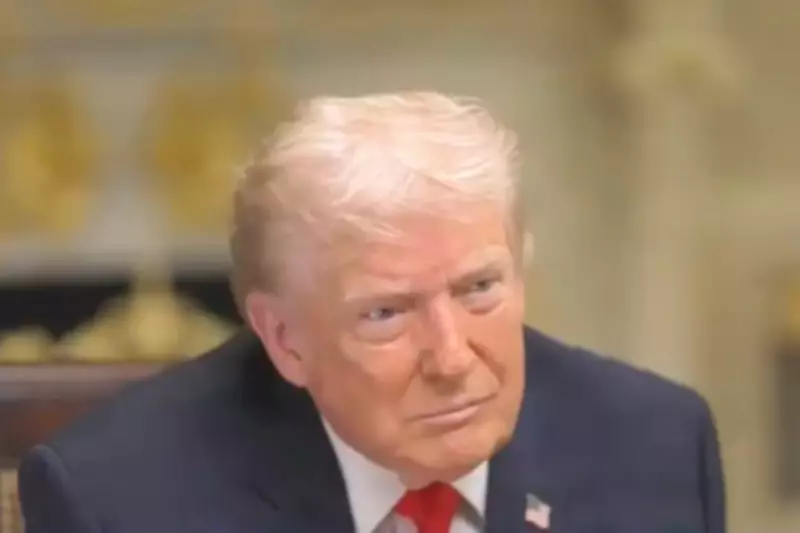
Former President Donald Trump has once again sowed confusion over his much-publicised pledge to send Americans $2,000 tariff dividend cheques, failing to provide a clear timeline or commitment during a recent television interview.
Contradictory Statements in NBC Interview
During an appearance on NBC Nightly News on Wednesday, Trump initially reaffirmed his promise to distribute the substantial payments to citizens. However, in a characteristic pivot, he immediately qualified this by stating he "may" make the commitment, leaving viewers and analysts uncertain about his true intentions. This pattern of ambiguous messaging has become a hallmark of Trump's economic policy announcements, creating significant uncertainty for households anticipating financial relief.
History of Deflection and False Claims
This is not the first instance where Trump has obfuscated details regarding the tariff cheques. When previously pressed on the subject, he has deflected questions by referencing a separate $1,776 "warrior dividend" for military service members. In doing so, he falsely claimed this military benefit was funded by tariff revenues, a statement fact-checkers have challenged. The conflation of these distinct proposals has further muddied the waters surrounding his original $2,000 pledge.

Timeline Remains Entirely Unclear
The potential distribution schedule for these cheques appears to shift with each presidential utterance. During a January interview with The New York Times, Trump initially denied having promised the checks at all, before suggesting they might be distributed "toward the end of the year." This lack of a consistent timeline frustrates both supporters awaiting the funds and economists attempting to model the policy's potential impact on consumer spending and inflation.
Constitutional and Legislative Hurdles
Adding another layer of complexity, a significant disagreement exists within the administration regarding the legal pathway for issuing these payments. President Trump maintains that congressional approval is not required to authorise the tariff cheque scheme, suggesting he could enact it through executive action. Conversely, his Treasury Secretary, Scott Bessent, has indicated that new legislation would indeed be necessary, highlighting a fundamental rift in the interpretation of presidential powers concerning fiscal policy.
This internal discord suggests that even if Trump definitively commits to the $2,000 payments, substantial bureaucratic and legal obstacles could delay or even prevent their issuance. The ongoing confusion underscores the challenges of implementing major economic policies amidst conflicting statements and uncertain constitutional authority.






