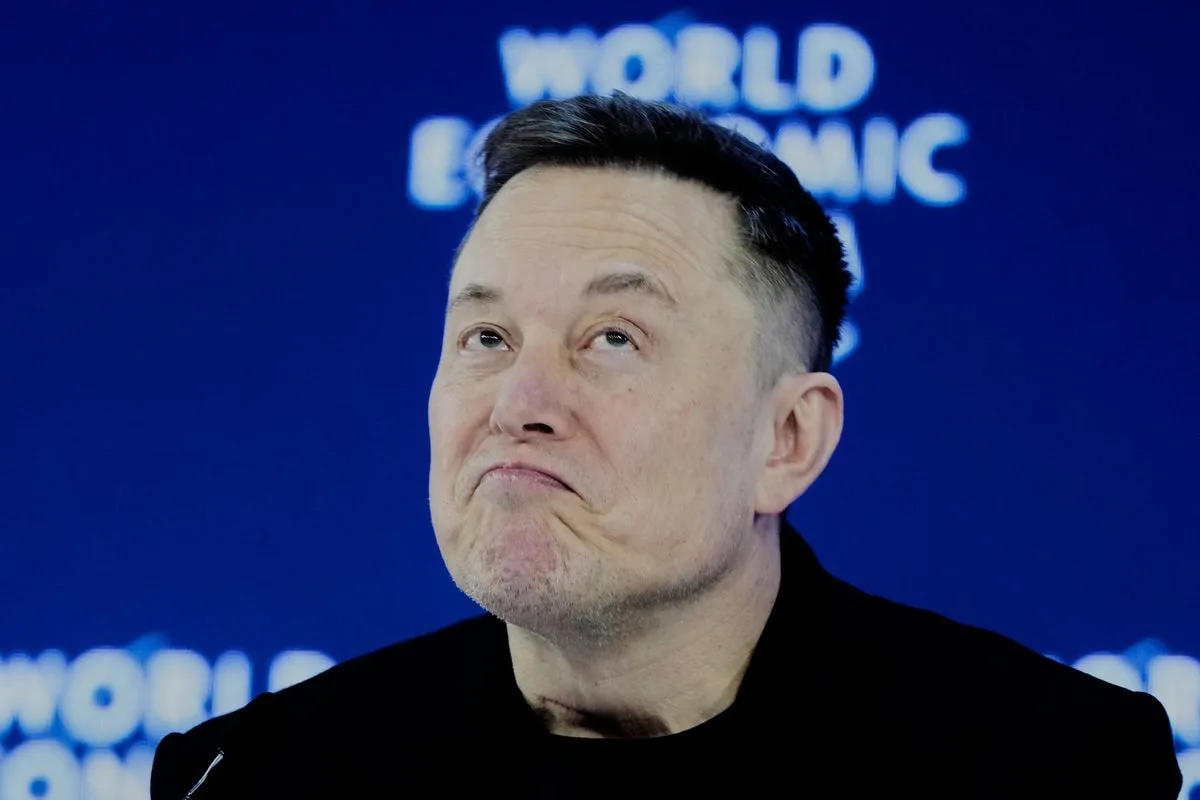
Tesla's annual profit has plunged to its lowest level since the pandemic, marking a significant downturn for the electric vehicle giant as it faces mounting challenges in the global market. The company, led by Elon Musk, reported a sharp decline in net income, ceding its position as the world's biggest EV maker to a Chinese competitor while grappling with sales boycotts that have hammered its financial performance.
Financial Performance and Market Position
Tesla disclosed on Wednesday that its net income for the last year dropped by a staggering 46% to $3.8 billion. This represents the second consecutive year of steep declines, underscoring a troubling trend for the automaker. The fall in profit occurred despite the introduction of more affordable models and Musk's public commitment to refocus his efforts on the company following a controversial foray into U.S. politics.
In the fourth quarter alone, Tesla's net income plunged by 61% to $840 million, equating to 24 cents per share. When excluding one-time charges, the adjusted net income stood at 50 cents per share, which slightly exceeded analysts' forecasts of 45 cents. However, this minor beat does little to offset the broader narrative of struggle.
Analyst Insights and Brand Challenges
Telemetry analyst Sam Abuelsamid highlighted several core issues facing Tesla. "They've got aging product that is less and less competitive as other manufacturers come out with new models, then there is the general brand destruction," he noted. "Musk's involvement in politics has turned off customers." This sentiment reflects a growing concern that Musk's polarising political stances and advisory role in the Trump administration have alienated a segment of potential buyers, leading to organised boycotts.
One positive note in the report was Tesla's gross profit margins, which leapt to 20% in the last quarter from 16% a year ago. This improvement suggests some operational efficiencies, but it has not been enough to counteract the overall profit slump.
Investor Sentiment and Future Prospects
Despite the financial setbacks, Tesla investors have maintained their faith in Musk and the company's long-term vision. The stock has risen by 9% over the past year, buoyed by optimism around future innovations. Musk has been actively redirecting investor focus away from traditional car sales and towards what he describes as a transformative future.
This future includes ambitious plans for robotaxis that could ferry millions in driverless vehicles, potentially without steering wheels, and advanced robots designed for domestic tasks like watering plants or assisting the elderly. Investors and analysts anticipate more details on these initiatives during a conference call scheduled for later on Wednesday.
Strategic Shifts and Competitive Pressures
The loss of Tesla's title as the world's leading electric vehicle maker to a Chinese rival signals intensifying competition in the EV sector. This shift comes as global manufacturers ramp up their electric offerings, putting pressure on Tesla's market share. Additionally, Musk's previous promises have faced delays; for instance, European regulators have not yet approved Tesla's partial self-driving software within the anticipated three-month timeframe, missing a potential sales boost.
On the robotaxi front, while initial launches included safety drivers as a precaution, Tesla recently announced it is removing these supervisors in Austin, where the service began in June. The company has vowed to aggressively expand this driverless service to other cities in the coming year, a move that could revitalise investor enthusiasm.
Broader Implications and Industry Outlook
Dan Ives of Wedbush Securities, one of Wall Street's most bullish analysts, projects that robotaxis will be operational in more than 30 cities by the end of this year. He further predicts that Tesla could capture 70% of the global self-driving car market within a decade. Such forecasts help explain the sustained investor confidence despite recent profit declines.
Another area of strength for Tesla is its energy storage business, which posted robust numbers last quarter with revenues surging 25% to $3.8 billion. This segment is benefiting from massive demand as data centres across the U.S. expand, driving need for efficient energy solutions.
Leadership Focus and Potential Distractions
Musk's renewed focus on Tesla, after spending early last year leading a government cost-cutting team in Washington, has been cited as a reason for the stock's resilience. However, uncertainties loom regarding his continued undivided attention. Plans to take his rocket company, SpaceX, public in a potential blockbuster IPO around June could distract him. This move might make Musk the world's first trillionaire but also risks diverting his focus from Tesla's immediate challenges.
The latest financial figures represent a clear setback for Tesla, which had generated significant optimism a year ago. Following Donald Trump's election, investors had pushed the stock higher on bets that Musk's advisory role would benefit the company. Instead, this association backfired, sparking customer boycotts. As Tesla navigates these turbulent waters, its ability to innovate and execute on futuristic promises will be critical in determining whether it can reclaim its former glory and profitability.