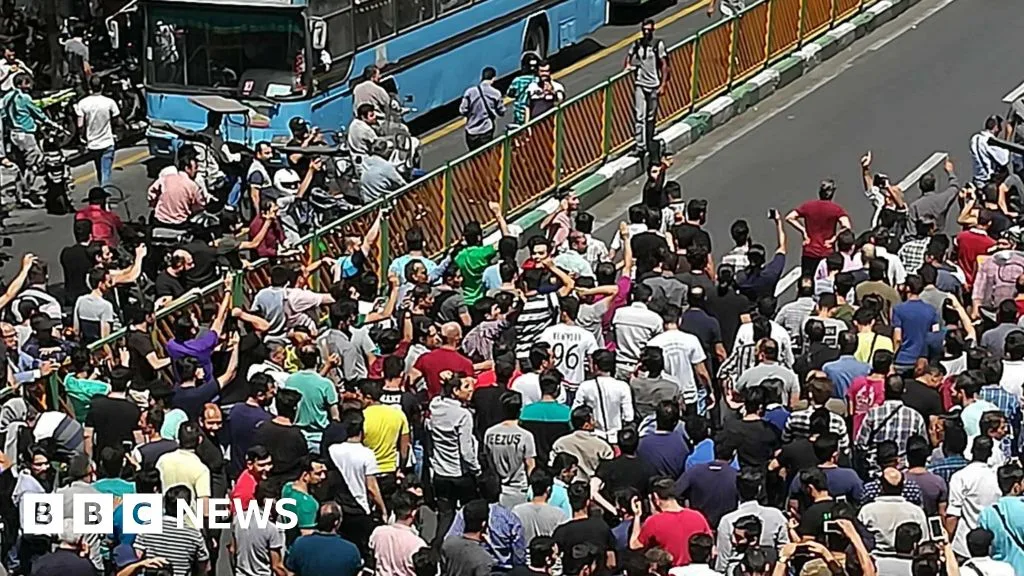
Traders at Tehran's Grand Bazaar have staged a major protest against rising prices and the plummeting value of Iran's currency, the rial. Shops were closed and thousands took to the streets of the capital. Riot police later fired tear gas to disperse demonstrators as they marched towards parliament.
The protest is the largest in Tehran since 2012, when international sanctions related to Iran's nuclear programme crippled its economy. Those protests led to a change in government and Iran agreeing to substantive nuclear talks. The 2015 nuclear deal saw sanctions lifted in 2016, but US President Donald Trump withdrew from the accord in May.
Fears over the reinstatement of US sanctions in August have driven the rial to a record low on the unofficial market. A dollar now buys up to 90,000 rials, compared with 65,000 before Mr Trump's announcement and 42,890 at the end of 2017.
The currency's fall also prompted protests at two mobile phone shopping centres on Sunday. Information and Communications Technology Minister Mohammad Javad Azari-Jahromi said merchants returned to work after he promised to help them access hard currency for imports.
Iranian authorities tried to halt the rial's slide in April by unifying official and black market rates and banning trade outside the official rate of 42,000 rials to the dollar. Dealers say authorities have failed to meet demand for hard currency since then.
The protests follow large-scale anti-government demonstrations fuelled by economic woes in late December and early January, which were focused on provincial towns rather than Tehran.