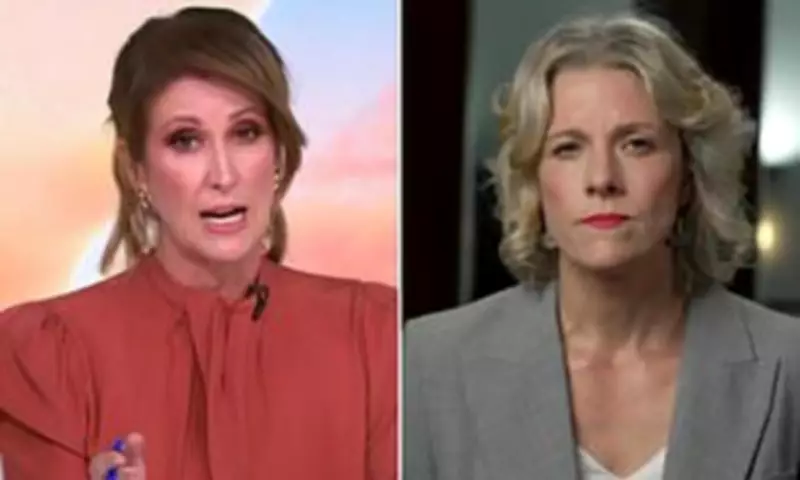
Sunrise Host Nat Barr Clashes With Housing Minister Over Cost-of-Living Crisis
In a tense television exchange that laid bare the political tensions surrounding Australia's economic challenges, Sunrise host Nat Barr has publicly challenged Housing Minister Clare O'Neil during a discussion about cost-of-living relief for families. The confrontation occurred as Australian households grapple with the latest interest rate increase announced by the Reserve Bank of Australia.
Minister Diverts Discussion to Previous Government's Record
Minister O'Neil appeared on the Seven Network programme to discuss the government's response to the RBA's decision to lift interest rates by twenty-five basis points. However, the conversation quickly turned contentious when the minister began reviewing the fiscal situation inherited from the Coalition government in 2022.
This prompted host Nat Barr to interject firmly, stating: 'You know what, I'm thinking four years in, there's more to talk about now.' Barr had earlier reminded the minister that Australian families are primarily concerned with solutions rather than political blame, emphasising: 'Australians don't care who started this, or the actual details, they just want it fixed.'

Barr Demands Concrete Action on Inflation
The Sunrise host pressed the Housing Minister for specific government measures to address the inflation crisis, asking pointedly: 'It's costing too much. Interest rates are now going up. What is your government doing to bring down inflation?'
Minister O'Neil acknowledged the difficult circumstances facing households, responding: 'This is a really tough moment for Australian households and will be very unwelcome around kitchen tables around the country.' She outlined the government's position, stating their objective was to 'provide as much cost of living support for families to help them manage this change without contributing to the inflation problem.'
Nationals Senator Enters Fray With Strong Criticism
The discussion intensified further when Nationals Senate Leader Bridget McKenzie joined the debate, attributing the RBA's decision directly to government spending policies. Senator McKenzie presented a detailed critique, citing warnings from international organisations including the IMF and OECD.
'We've seen warnings from the IMF, from the OECD, from international ratings agencies, from economists for a long time, telling the treasurer that this will lead to a spike in inflation,' McKenzie asserted. She directly challenged the government's accountability, stating: 'You can't squib this any more, you can't say that you're not in charge, that you're not responsible for the situation that our economy faces right now.'
The Nationals leader specifically referenced what she described as a '$57 billion black hole' and criticised environmental policies that she claimed had proven more expensive than promised.
Exchange Descends Into Personal Accusations
The political discussion deteriorated into personal accusations, with Minister O'Neil responding sharply to Senator McKenzie's criticisms. 'That is an outrageous comment from someone who's in a political party that's coming to Canberra every week, not even thinking about the people they represent here, but instead playing ridiculous parlour games, focusing on careers and ambitions,' O'Neil retorted.
She defended her government's approach, stating: 'At least my party's doing the hard yards, making sure we take responsibility for what's happening in the country and every single day focusing on the citizens who send us here and representing them properly. We behave responsibly.'
Senator McKenzie countered simply but effectively: 'And yet here we are, with rates going up.'
Practical Consequences for Mortgage Holders
The political debate unfolded against the backdrop of immediate financial consequences for Australian homeowners. Within hours of the RBA announcement, all four major banks confirmed they would increase home loan interest rates by 0.25 percent.
Commonwealth Bank, ANZ, and NAB will implement changes effective February 13, with Westpac following on February 17. According to financial calculations, these increases will have significant practical impacts:

- Homeowners with a $600,000 mortgage and 25 years remaining will see minimum monthly repayments increase by approximately $90
- Those with a $1 million loan will face monthly mortgage increases of around $150
The rate rise follows inflation reaching 3.8 percent by December, despite the RBA board's ongoing efforts to maintain inflation within their target range. This economic context provided the backdrop for the heated political exchange that played out on national television, highlighting the intense pressure on all sides to address Australia's cost-of-living crisis.