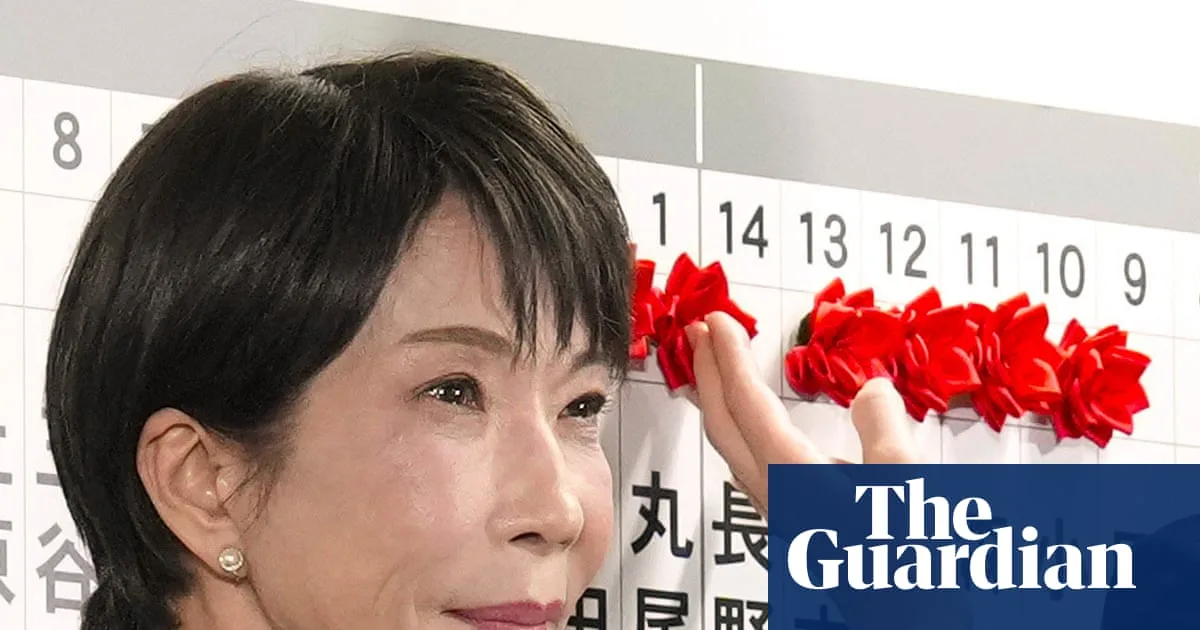
Japan's stock market hit a record high on Monday after Prime Minister Sanae Takaichi's Liberal Democratic Party (LDP) won a landslide victory in Sunday's general election. The LDP secured 316 of the 465 seats in the lower house, marking the first time a single party has achieved a two-thirds majority since Japan's parliament was established in 1947. Together with coalition partner Japan Innovation Party, which won 36 seats, the ruling bloc holds a supermajority of 352 seats.
The Nikkei share average surged past 57,000 points in early trading before closing up 3.9% at 56,363 points. The yen initially weakened against the dollar but later strengthened 0.5% to 156.43 yen. Other Asian markets also rose, with South Korea's Kospi up 4.4%, Hong Kong's Hang Seng gaining 1.8%, and Australia's S&P/ASX 200 rising 1.9%.
Takaichi, Japan's first female prime minister, called a snap election in January and now has the legislative power to override the upper chamber, which she does not control. She plans to push through a 21 trillion yen (£99 billion) stimulus package and has promised to suspend Japan's 8% sales tax on food for two years. However, investors are concerned about the lack of clarity on how the government, which has the highest debt burden in the developed world, will fund the proposal.
The yield on 10-year Japanese government bonds rose six basis points to 2.282%, while the 30-year yield increased four basis points to 3.55%, reflecting market jitters about Takaichi's fiscal plans. Analysts warned that the bond market could act as a check on her agenda. Fred Neumann, chief Asia economist at HSBC, noted that while Takaichi has a strong political mandate, she faces opposition from markets if her policies are deemed fiscally too ambitious.
Government spokesperson Minoru Kihara said Japan is monitoring foreign exchange markets with a high sense of urgency. Takaichi has ruled out issuing new debt to fund the tax cut, which would cost about 5 trillion yen annually, but has not specified alternative funding sources, saying details will be worked out through cross-party debates.