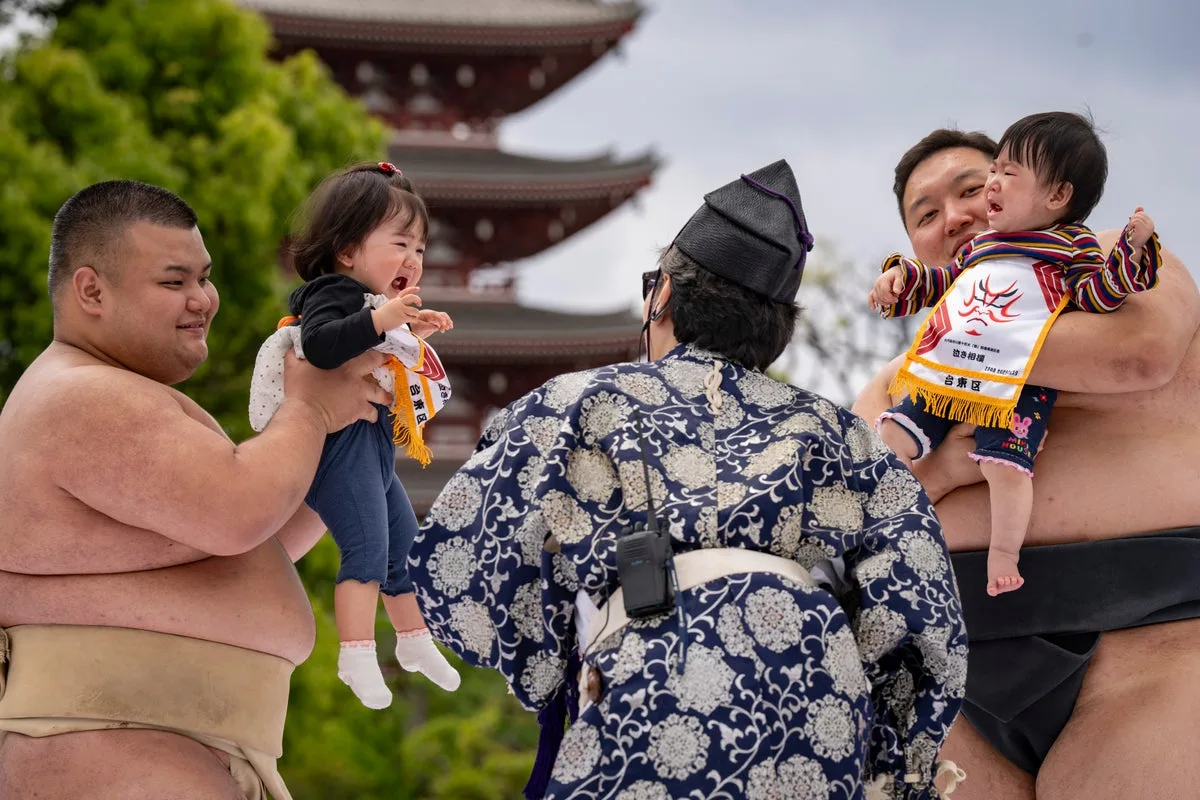
Japan's child population has fallen to a record low, continuing a 45-year decline that deepens the country's demographic crisis. According to data released by the internal affairs ministry on Monday, there were 13.29 million children aged 15 and under as of 1 April 2026, down 350,000 from the previous year.
The figure is the lowest since recordkeeping began in 1950 and represents the 45th consecutive year of decline. Children now account for 10.8 per cent of Japan's total population, the smallest proportion ever recorded. The estimates include foreign residents and are based on census-linked population data.
By gender, there were 6.81 million boys and 6.48 million girls. The data also showed a stark age imbalance, with 3.09 million children aged 12 to 14 compared to just 2.13 million aged 0 to 2. Separate preliminary health ministry data revealed that births in 2025 fell to a record low of 705,809, declining for the tenth consecutive year.
Japan's child population peaked at 29.89 million in 1954 and began falling in 1982. The proportion of children relative to the total population has been declining for 52 straight years since 1975. The government has identified the period through 2030 as a “final opportunity to reverse the trend”, though measures such as expanded financial support for families have yet to yield results.
According to a United Nations survey, Japan now has the second-lowest share of children among countries with populations over 40 million, behind only South Korea, where the ratio is 10.2 per cent. Last January, an expert warned that if the birthrate continues to decline, Japan could be left with just one child under 14 by 5 January 2720.