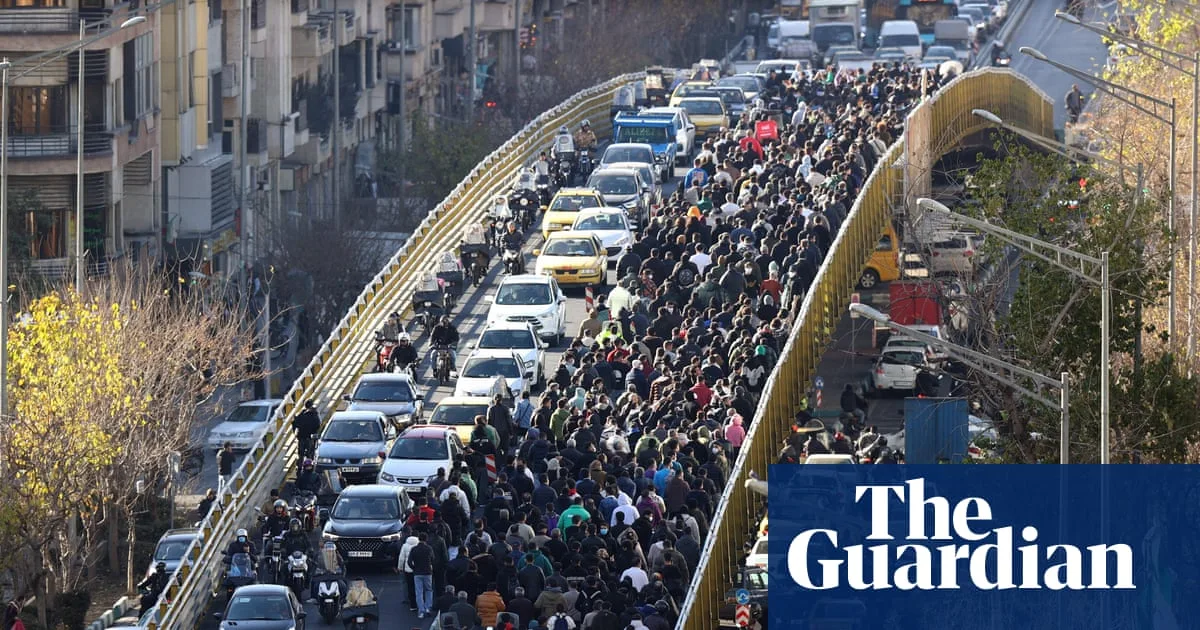
Demonstrations against deteriorating living conditions have swept across Iran, with merchants closing their shops and students occupying university campuses. The protests, now in their fourth day, have spread from Tehran to cities nationwide, marking the largest unrest since the 2022 Mahsa Amini protests.
The crisis was sparked by the Iranian rial plunging to a historic low of 1.42m to the US dollar on Sunday, a 56% drop in six months. Food prices have soared by 72% year-on-year, while intense international sanctions have exacerbated inflation and limited access to frozen funds and foreign exchange.
Protesters have chanted slogans such as “death to the dictator” and “woman, life, freedom”, expanding their grievances from economic hardship to broader criticism of Iran’s governance. Social media videos show demonstrators throwing stones at security forces and blocking streets.
Iran’s president, Masoud Pezeshkian, has called for dialogue, saying the government should listen to “legitimate demands”. However, protesters are wary, believing the offer is an attempt to co-opt their movement. “You must be naive to think Iranians trust this government or the regime,” said Farhad, a 19-year-old student.
Security forces have used teargas, confiscated student IDs, and arrested protesters. A protester in Tehran shared a picture of a metal pellet they claimed was fired at them. The government has not commented on these allegations.
“We wanted this regime gone and now there’s no way this regime will continue,” said Alborz, a textile merchant in Isfahan, speaking under a pseudonym. The protests come after a 12-day war with Israel in June that further strained the regime.