

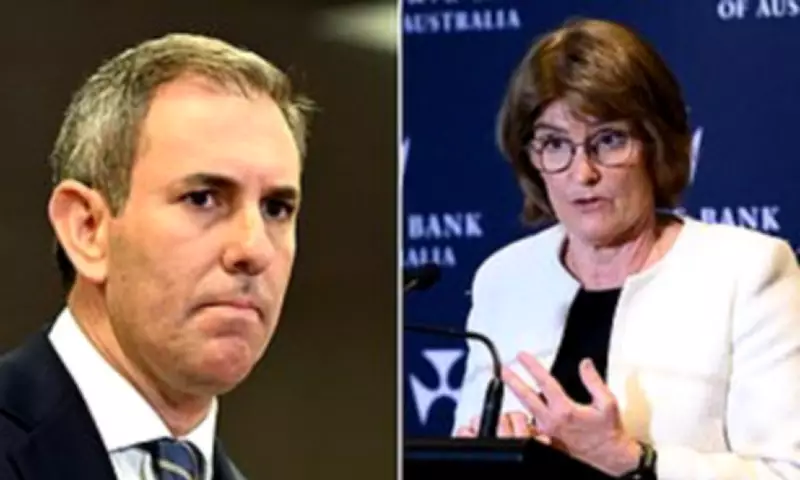
Government expenditure is facing renewed examination following the release of disappointing inflation statistics that have all but guaranteed an interest rate increase when the Reserve Bank convenes next week. This development threatens to intensify the financial pressure on households already grappling with escalating living costs.
Economists Sound Alarm Over Inflation Data
Financial experts have characterised the latest figures as profoundly concerning news for both commercial enterprises and families across the nation. With headline inflation reaching 3.8 per cent for the year concluding in December 2025—significantly exceeding the Reserve Bank's target band of 2-3 per cent—the stage is set for monetary policy tightening. Underlying inflation measures also showed an upward trajectory, climbing from 3.2 to 3.3 per cent on a monthly basis.
Banking Sector Predictions Converge on Rate Rise
All four of Australia's major financial institutions have now aligned in forecasting a February rate adjustment. Westpac's chief economist, Luci Ellis, described the inflation data as "the casting vote" for what she termed a "one-and-done" hike next week, though she cautioned that persistent price pressures could necessitate further increases.

ANZ economist Adam Boyton echoed this sentiment, suggesting a 25-basis-point rise appears probable as a form of "insurance tightening" to demonstrate the central bank's commitment to controlling inflation. Meanwhile, National Australia Bank's Taylor Nugent maintained his institution's projection of consecutive rate rises in February and May, which would elevate the cash rate to 4.1 per cent.
"This represents a measured response to inflation exceeding forecasts, alongside strengthening private-sector activity and limited spare capacity throughout the economy," Nugent explained. The Commonwealth Bank has similarly indicated expectations for February monetary policy tightening.
Political Battle Lines Drawn Over Spending
The Opposition has capitalised on the inflation surge, directly criticising the government's fiscal management. They contend that insufficient spending restraint, combined with specific housing and migration policies, is exacerbating supply shortages and driving up costs.
"Housing and rental expenses have emerged as principal inflation drivers, creating additional burdens for families confronting back-to-school expenditure," opposition representatives argued. Opposition Leader Sussan Ley emphasised the tangible impact, stating: "This isn't abstract economics, it's the weekly shop, the power bill and the mortgage repayment. Families are paying more because this government refuses to get its spending under control."
Treasurer Defends Government's Fiscal Position
Treasurer Jim Chalmers has firmly rejected suggestions that Labor's spending decisions contributed to the inflation spike, characterising the latest outcome as "unwelcome but unsurprising." He specifically dismissed claims that public sector demand is fuelling inflationary pressures.
"The Reserve Bank hasn't been highlighting public spending as a factor in their decisions, not in their public statements, not privately as well," Chalmers asserted. "The big story is the recovery in the private sector. It's contributed more to growth than public demand for the last four quarters."
Addressing criticism from AMP chief economist Shane Oliver—who argued on Sky News that the public sector "needs to get out of the way and make room for the pick-up in the private sector" while noting government spending remains near record highs at 28.5 per cent of GDP—Chalmers presented contrasting data.
"If you look at the contribution from public demand, that was shrinking. The contribution from private demand was growing quite quickly, particularly in those most recent national accounts," the Treasurer responded during his own Sky News appearance.
As the Reserve Bank's meeting approaches, the intersection of monetary policy, fiscal management, and household financial wellbeing continues to dominate economic and political discourse, with families bracing for potential further interest rate increases amid already challenging cost-of-living conditions.






