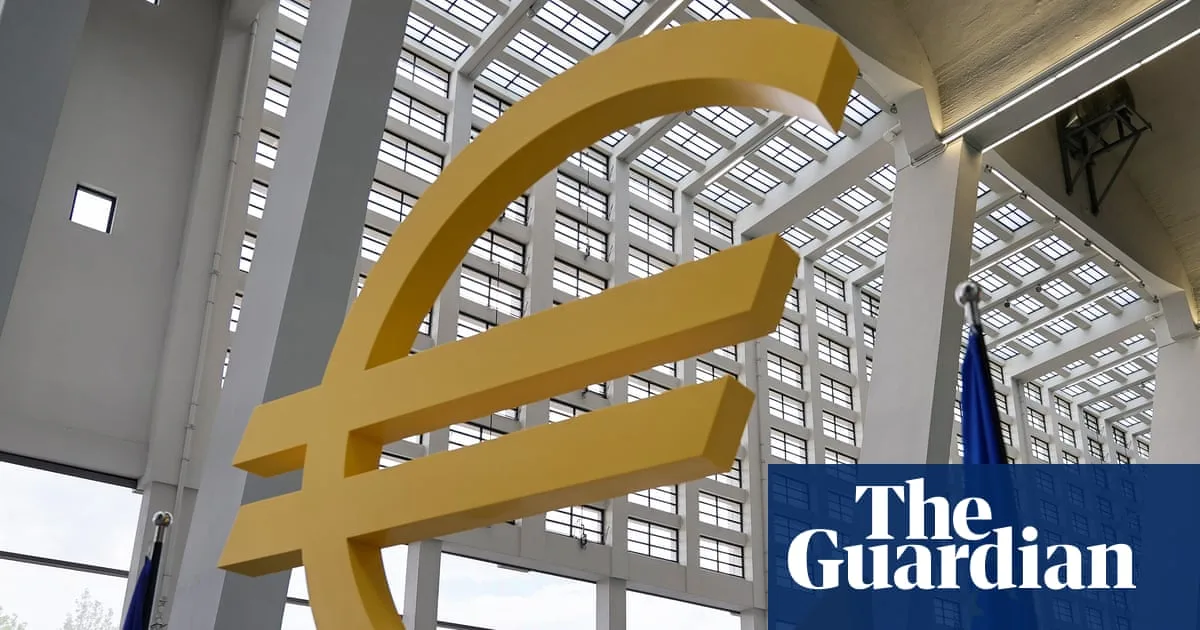
The European Central Bank has opted to maintain its current interest rate policy, leaving the benchmark deposit rate unchanged at 2% during its latest meeting. This decision comes as the economy across the 21 nations using the euro currency continues to display a surprising degree of resilience, navigating past significant external challenges.
Steady Monetary Policy Amid Economic Stability
The ECB's key deposit rate has remained at 2% since June, following a series of reductions from a peak of 4% that began in mid-2024. This period of monetary easing has provided crucial support to the eurozone's economic activity, particularly in sectors sensitive to borrowing costs.
The relatively low rate environment has successfully reignited mortgage lending, stimulating both home sales and new construction projects across the region. By reducing credit costs for businesses and consumers alike, this policy has contributed to a steady, if modest, pace of economic expansion.
Supporting Factors for Continued Growth
Several key factors are underpinning the eurozone's current economic stability. Notably, unemployment levels remain low across many member states, sustaining consumer demand for goods and services. This robust domestic consumption is helping to maintain economic momentum without requiring additional stimulus through further rate cuts.
Energy costs, which spiked painfully following Russia's invasion of Ukraine in 2022, have now significantly abated. This relief from high energy prices has removed a substantial burden from both households and businesses, contributing to improved economic conditions.
Navigating International Trade Challenges
The eurozone economy has demonstrated particular resilience in weathering international trade uncertainties. Europe faced months of disruption as former U.S. President Donald Trump threatened to impose tariffs that could have severely hampered transatlantic commerce.
Ultimately, an agreement between the European Union's executive commission and the U.S. administration capped the tariff rate at 15%. While this represents a sharp increase from the previous 4.8% rate, it avoided the worst-case scenarios that had been feared. The resolution of this uncertainty has allowed businesses to plan with greater confidence, despite brief subsequent threats regarding additional tariffs on some EU nations.
Positive Economic Indicators and Forecasts
Recent economic data supports the ECB's decision to maintain its current policy stance. The eurozone recorded stronger-than-expected growth of 0.3% in the final quarter of 2025, with forecasts suggesting the region could achieve growth of 1.3% for the full year.
Growth prospects have been further brightened by anticipated increases in infrastructure and defense spending in Germany, the eurozone's largest economy. Meanwhile in France, the resolution of a protracted budget battle has removed uncertainty from the region's second-largest economy, potentially unlocking further economic potential.
Inflation Control and Future Outlook
Inflation has continued its downward trajectory, falling to 1.7% in January – below the ECB's target of 2%. This controlled inflationary environment provides the central bank with additional flexibility in maintaining its current monetary policy stance.
Analysts from Berenberg bank suggest the ECB may keep rates unchanged well into 2027, with the first potential rate hike not expected until mid-2027. Such increases would typically be implemented to combat inflation by raising credit costs and moderating demand for goods purchased on credit, ranging from residential properties to new industrial facilities.
The eurozone's demonstrated economic resilience, combined with controlled inflation and improving growth prospects, suggests that the current period of monetary policy stability may extend for some time, providing a predictable environment for businesses and consumers across the region.