

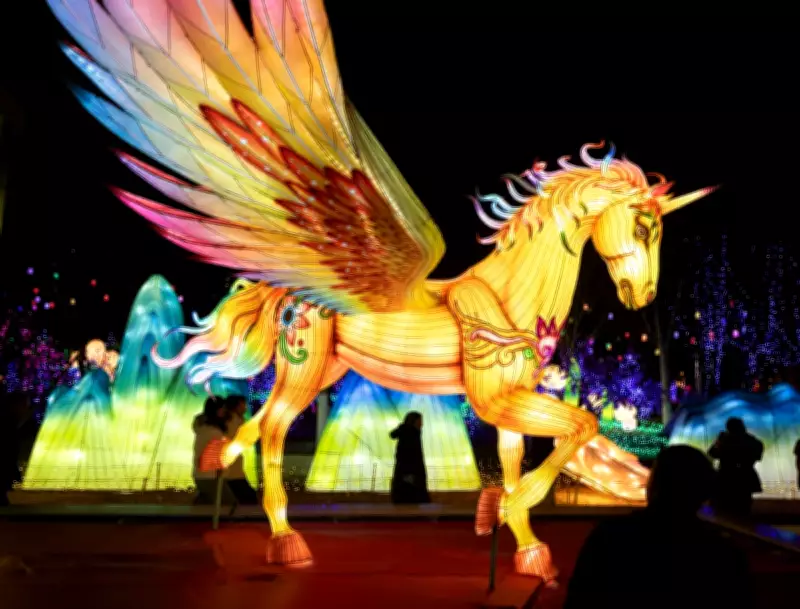
China's Lunar New Year Migration Aims to Spur Economic Growth in Year of the Horse
As China welcomes the lunar new year and the year of the horse, symbolising optimism and opportunity, authorities are banking on an extended holiday period to inject vitality into the nation's economy. The government has highlighted increasing domestic spending as a critical priority for the coming year, with the festive season seen as a key catalyst.
Record-Breaking Migration and Extended Holiday
During the 40-day spring festival period, China expects a staggering 9.5 billion passenger trips, up from 9 billion last year, marking the world's largest mass migration despite the country no longer being the most populous. Hundreds of millions of citizens are traversing the country to reunite with families for the celebrations, often their sole annual homecoming.
The official lunar new year holiday spans nine days this year, from 15 to 23 February, with New Year's Day on 17 February, providing an extra day for festivities compared to the typical eight. This longer break is designed to encourage spending, particularly through traditional hongbao red packets of cash gifted to relatives.

Economic Optimism and Government Initiatives
In a recent article, Jiangsu province's propaganda department emphasised the holiday's role in activating domestic demand, stating it would "unleash the surging vitality that propels China's economy forward," using an idiom akin to "ten thousand horses galloping forwards." To translate this astrological symbolism into economic reality, the central government plans to issue over 360 million yuan ($52 million) in consumer vouchers in February.
George Magnus, a research associate at Oxford University's China Centre, noted that lunar new year significantly boosts retailers and consumer service providers, offering a respite from an otherwise dull February. However, macroeconomic challenges persist, with Chinese households saving around a third of their income, while GDP growth remains reliant on exports.
Focus on Domestic Demand and Service Sectors
Last year, national retail sales grew by 3.7%, lagging behind the overall GDP growth rate of 5%. In response, boosting domestic demand will be a cornerstone of China's next five-year plan, set for approval by parliament in March, with the Communist party pledging to "vigorously boost consumption." The National Development and Reform Commission is formulating a five-year action plan to expand domestic demand.
Opportunities abound in the service sector, including elderly care, entertainment, and healthcare, which grew by 5.5% last year. These areas are relatively underdeveloped compared to consumer goods, offering substantial growth potential. For instance, cinema remains a popular new year activity; last year, the animation Ne Zha 2 earned 4.8 billion yuan in its first week and over 14 billion yuan total, becoming China's highest-grossing film.
Festive Innovations and Cultural Reactions
This year's film releases, such as the comedy-action Pegasus 3 and national security blockbuster Scare Out, aim to replicate that success. Meanwhile, innovative services emerged briefly, like UU Paotui's "proxy Chinese new year visits," where for 999 yuan ($145), customers could hire someone to perform traditional kowtowing rituals for elderly relatives via livestream. However, public outcry over the degradation of traditions led to the service's withdrawal.
As China navigates the year of the horse, the combination of massive migration, extended holidays, and targeted economic policies underscores a concerted effort to harness festive spirit for broader economic gains, though long-term challenges in household savings and export dependency remain.






