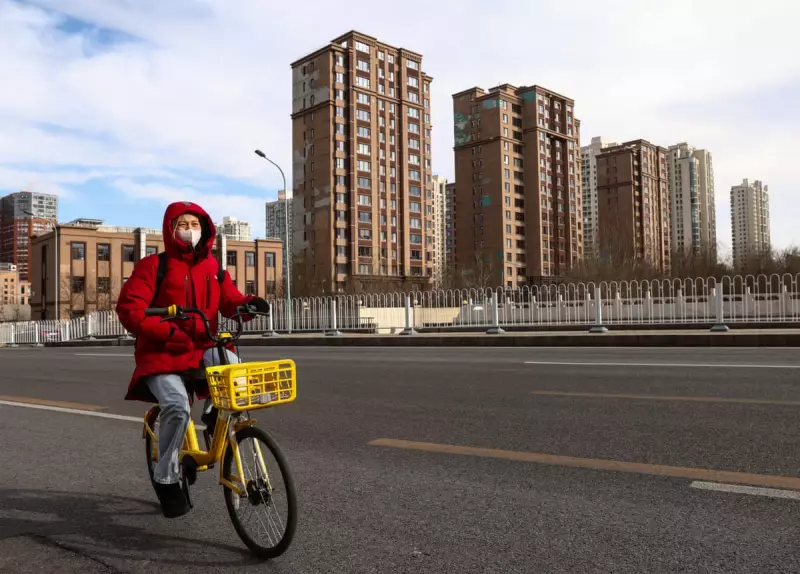
China's economy successfully navigated a turbulent year to achieve its official growth target, even as a profound domestic property crisis and fraught international trade relations created significant headwinds. Official data confirms the world's second-largest economy expanded by 5% in 2025, matching the previous year's pace and hitting the government's goal of growth "around" that figure.
Defying Geopolitical and Domestic Pressures
The performance comes despite a backdrop of punitive trade measures from the United States under Donald Trump, which many analysts predicted would severely impact Chinese output. Contrary to those expectations, China recorded its largest-ever trade surplus of $1.2 trillion as it diversified export markets and the impact of American tariffs proved less severe than initially feared.
Luke Yeaman, Chief Economist at the Commonwealth Bank of Australia, noted that while navigating geopolitical tensions remains a "major wildcard," China's economy is positioned for continued growth into 2026. However, he issued a stark warning regarding persistent internal issues, stating "the structural challenges plaguing China’s domestic economy are not going away."

The Shadow of the Property Meltdown
Foremost among these challenges is the ongoing housing market collapse, now in its fourth year. Home prices have plummeted by more than 20% since their 2021 peaks, crushing consumer confidence among homeowners and creating a looming debt crisis within the property sector. This depression in household spending is a major drag on economic vitality.
Compounding the issue is the threat of deflation. While much of the developed world battles inflation, China's consumer prices rose a mere 0.8% in 2025. Yeaman drew a sobering parallel with Japan's "lost decade," cautioning that "even without a banking collapse, property busts can suppress growth for years."
A K-Shaped Recovery and Data Reliability Questions
The headline annual figure masks a concerning slowdown in the final quarter of 2025, where growth dipped to 4.5% year-on-year—the weakest performance since late 2022. Analysts at Citi describe a "K-shaped" recovery, where strong exports and manufacturing contrast sharply with disappointing retail sales.
Further clouding the picture are longstanding doubts about the reliability of official Chinese statistics. Research firm Capital Economics estimates the latest growth numbers could be inflated by as much as 1.5 percentage points.
In response to weak domestic demand, authorities have pledged to "significantly" increase the share of household consumption in the economy. Currently, household spending accounts for under 40% of output, far below the global average of 60% for a country at China's income level. Measures like a 300-billion-yuan (£43bn) subsidy scheme for appliance trade-ins have been introduced, but as Moody's Analytics notes, households and businesses in early 2026 are once again questioning whether government rhetoric will be matched by decisive action.