

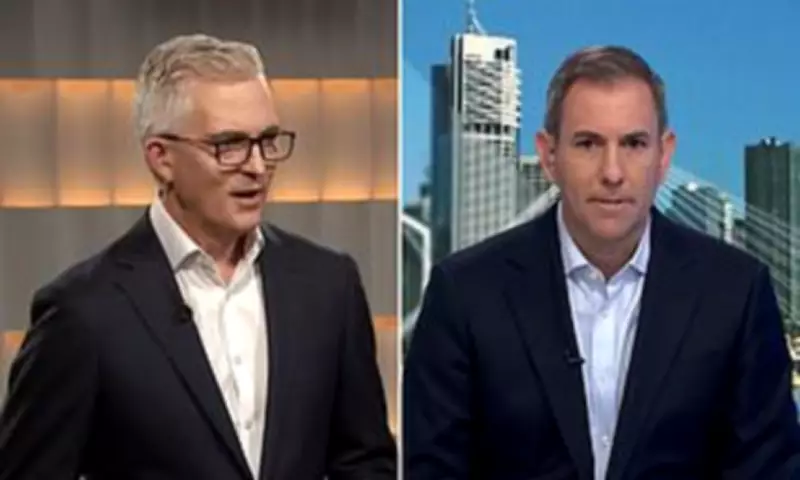
Treasurer Jim Chalmers Condemns 'Deliberate and Dishonest' Political Attacks Over Interest Rate Rise
Treasurer Jim Chalmers has launched a fierce defence of the government's economic management, accusing political opponents of being 'deliberate and dishonest' in their efforts to blame public spending for the latest interest rate increase. The sharp criticism came during a detailed interview on ABC's Insiders programme, where Chalmers faced persistent questioning about the role of government expenditure in inflationary pressures.
Reserve Bank Decision Sparks Political Debate
The Reserve Bank of Australia's decision to lift the cash rate by 0.25 basis points to 3.85 per cent on Tuesday has ignited significant political controversy. This move represents the first rate rise since 2023 and reverses several months of earlier cuts, following a sharp increase in inflation during late 2025. Several prominent economists, including EY chief economist Cherelle Murphy, have warned that elevated government spending could potentially fuel further interest rate hikes later this year.
During his appearance on Insiders, Chalmers was pressed repeatedly by host David Speers about whether public demand, effectively government spending, continued to rise during the second half of last year. The Treasurer responded with a robust defence of the government's fiscal position, stating emphatically that 'Our political opponents and their acolytes are deliberately and dishonestly trying to conflate two different things.'

Private Demand Versus Public Spending
Chalmers insisted that the Reserve Bank had made it explicitly clear that stronger-than-expected private demand, rather than government spending, was behind the surprise rate hike. 'The question isn't whether public demand can create inflationary pressures,' Chalmers explained. 'The question is whether it did towards the end of last year and caused the independent Reserve Bank to hike interest rates.'
The Treasurer pointed to specific Reserve Bank commentary, noting that 'The Reserve Bank Governor actually pointed out that public demand retreated quicker than they were anticipating... private demand accelerated faster than they thought.' Chalmers expressed frustration that this crucial distinction 'has not been mentioned... in the stories we've been reading in recent days.'
Conceding Ground on Public Demand Growth
When Speers questioned whether public spending was still climbing, Chalmers initially responded that 'Public demand growth last year was slowing. It was less than a third of what it was the year before.' However, when the interviewer pointed out that slower growth still constitutes growth, the Treasurer conceded the point. 'Public demand growth might have been slowing but public demand itself was growing. Public spending was increasing,' Chalmers acknowledged.
He quickly added the crucial qualification that 'What matters is the contribution that public demand growth is making... Public demand was retreating, private demand was accelerating.' Chalmers further accused Opposition critics of hypocrisy, arguing that the same individuals remained silent about public spending when inflation declined and the Reserve Bank was cutting rates.
Capital Gains Tax and Future Reforms
The interview also covered potential changes to the capital gains tax discount, following the government's refusal to rule out modifications. Parliamentary Budget Office figures indicate that approximately 60 per cent of the benefits flow to the top one per cent of earners. Chalmers responded by reiterating the government's existing tax priorities. 'We have got a tax policy already... and a major part of that is cutting income taxes three times. That is the primary focus of our efforts when it comes to tax,' he stated.
The Treasurer acknowledged wider intergenerational challenges in both housing and taxation policy, but emphasised that the government is addressing these through comprehensive reforms to housing policy and superannuation arrangements. When questioned about the concentration of capital gains tax discount benefits among high-income earners, Chalmers stressed that fairness would be central to any future reform considerations.

'When we consider next steps in tax reform, obviously, issues around intergenerational equity are front and centre,' Chalmers affirmed. However, when asked whether he could guarantee that any changes would not be retrospective, the Treasurer declined to make that specific promise. 'I'm not going to get into hypotheticals... Any governments that consider these type of steps would work through any transitional arrangements,' he said, adding firmly that 'We haven't changed our policy.'
The federal budget is scheduled to be handed down later this year in May, setting the stage for further economic and political debates about fiscal management and inflationary pressures.





