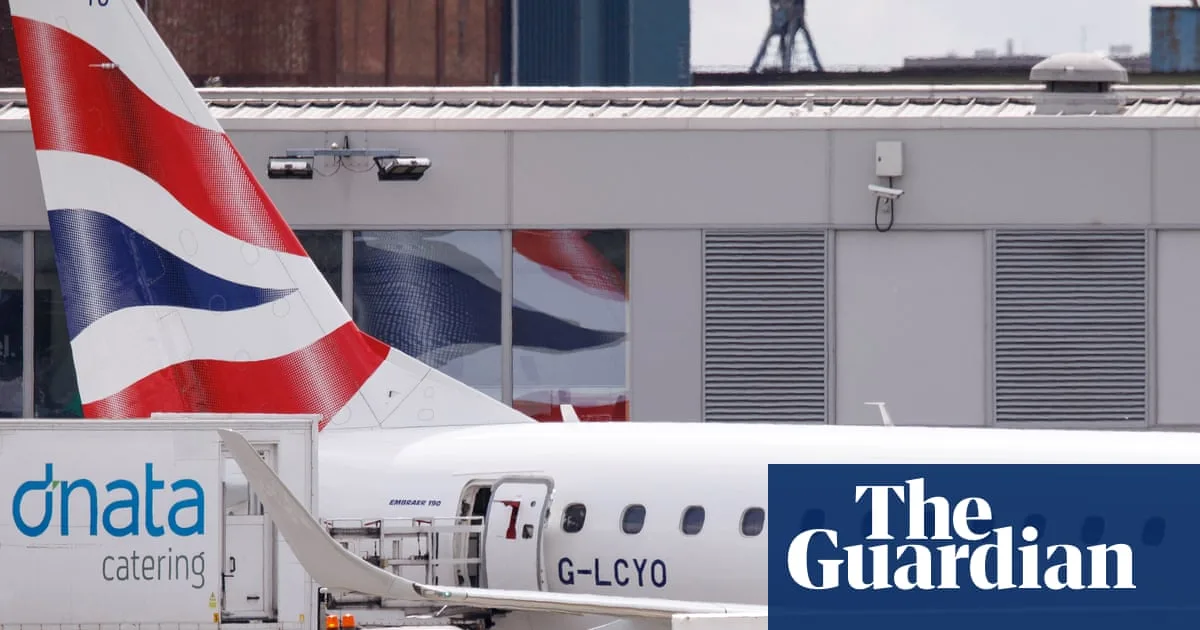
Airlines and other companies are increasingly using fuel surcharges to cover soaring costs, a survey has found, in a further sign of Iran war-linked inflation hitting the economy. A poll of companies in the services sector, which includes airlines, found rising fuel prices had contributed to businesses raising prices at the fastest pace in more than three years in April.
Nearly six in 10 firms surveyed by S&P Global said average costs rose last month, mostly driven by fuel and higher wages, but also in part by metals and plastics getting more expensive. IAG, the conglomerate that owns British Airways, Iberia, Aer Lingus and Vueling, said last month it would make “some pricing adjustments to reflect these higher fuel costs”, although it stopped short of labelling the move as a surcharge.
Meanwhile, Virgin Atlantic has added a charge of £360 to business class tickets, falling to £50 for economy. Its new chief executive, Corneel Koster, told the Financial Times in April that it would still be “hard to make a profit this year”. Tim Moore, S&P Global’s economics director, said the rise in costs was “overwhelmingly linked to greater transportation bills and increased salary payments”.
“A number of firms also noted that they had brought in fuel surcharges for their customers, which led to a spike in prices-charged inflation across the service economy to its highest for over three years in April,” Moore added. Despite this, firms reported slightly better business than expected last month, with the pollster’s gauge of activity rising to 52.7 across the sector, up from an 11-month low of 50.5 in March.
Moore warned that the improvement “could easily prove short-lived”, however, as new business remained subdued compared with the start of the year, with the Iran war weighing heavily on firms’ confidence to make investment decisions. Moreover, the widespread price rises will further pressure the Bank of England to raise interest rates – its main weapon in tackling inflation – despite policymakers voting to keep borrowing costs on hold last week.
Brent crude, the global oil price benchmark, fell below $100 a barrel due to fresh hopes that US efforts to reopen the strait of Hormuz could come to fruition. But prices have swung sharply in recent months amid a fast-changing situation in the Middle East, and analysts said much will hinge on how the war, and its effect on the price of energy, continues to evolve.