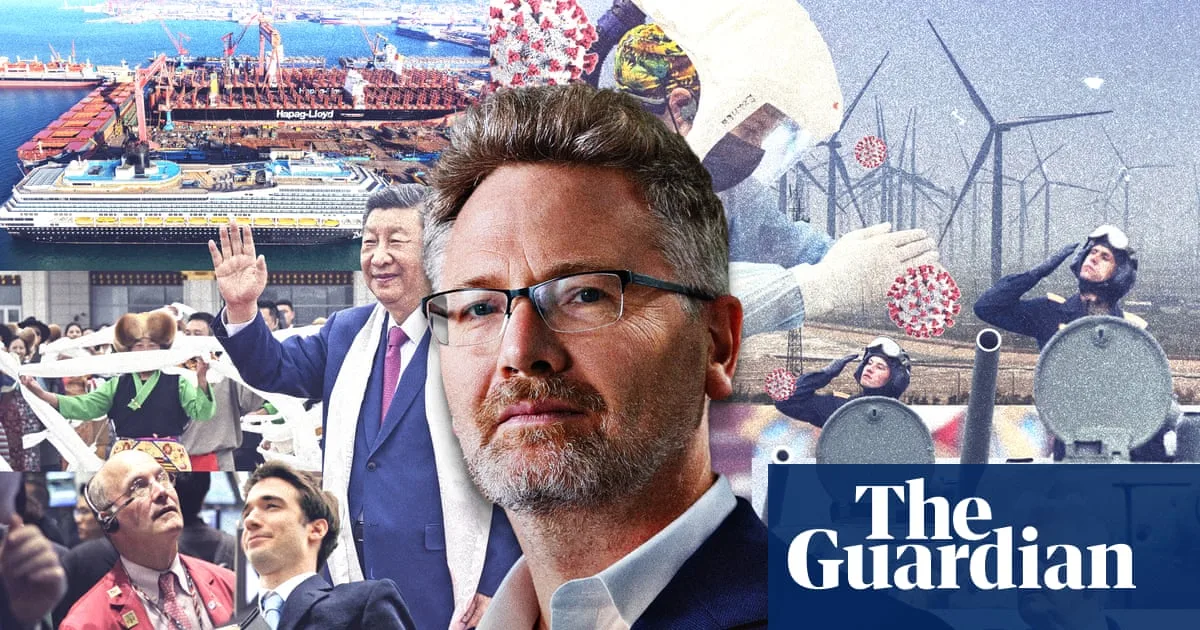
In a world reeling from financial shocks, climate breakdown, and a crumbling international order, one historian has emerged as the indispensable interpreter of our chaotic times. Adam Tooze, the British-born academic and commentator, has transitioned from a specialist in European economic history to a universal intellectual, guiding policymakers and the public through the radical novelty of the 21st century.
A Bruising Encounter in Brussels
The clash was stark. In late January 2025, just ten days after Donald Trump's second inauguration, former Biden administration officials gathered in Brussels to discuss the global economy. They spoke of "worker-centred trade policy" and touted late-term achievements, with ex-US Trade Representative Katherine Tai quoting Dylan Thomas: "We did not go gently into that good night."
Then Adam Tooze joined the panel remotely. The Columbia University professor did not mince words. He stated flatly that the Biden team had "failed in its absolutely central mission, which was to prevent a second Trump administration." He argued that the veterans on stage, far from defending the liberal world order, had hastened its dismantling through their confrontational stance towards China.
Tai's retort was personal. Recalling a parable from actor Martin Sheen, she turned to Tooze: "Where are your scars, Adam? I can show you mine." Months later, Tooze remained flabbergasted by the exchange, seeing it as emblematic of a self-satisfied liberal elite clinging to a sentimental vision of power. "If you had any self-respect," he reflected, "you would not be on any podium again, ever, sounding off about anything."
From Obscure Academic to Global Intellectual
Tooze's journey to this position of influence is remarkable. A decade ago, he was a respected but largely unknown economic historian. The publication of Crashed in 2018, his contemporary history of the 2008 financial crisis, changed everything. It established him as a leading commentator, analysing the global economy as a matrix of corporate balance sheets rather than just comparing national economies.
Today, his reach is vast. He writes for the Financial Times and London Review of Books, hosts podcasts, and publishes the wildly popular Substack newsletter Chartbook, sent daily to over 160,000 subscribers including Nobel laureate Paul Krugman. A Chinese-language version garnered an estimated 30 million impressions last year.
His influence seeped into the highest levels of policy. In 2019, Senate Democratic leader Chuck Schumer invited him to Washington. After Tooze advocated for a massive investment surge over debt concerns, Schumer reportedly told his colleagues, "Next time we have a chance, we go big." During the pandemic, Tooze acted as an informal messenger between German and Italian governments and was later summoned to White House consultations.
The All-Consuming Rise of China
While American politics dominates headlines, Tooze's primary obsession is what he sees as the defining dynamic of our age: the unprecedented rise of China as an economic superpower. He argues that Western policymakers, fixated on Trump, often fail to grasp this fundamental shift.
His analysis is grounded in startling data. He frequently cites a graph of global coal production since 1700. While Western nations saw their lines leap during industrialisation, China's line, ramping up from 1950, overtook the US around 1990 and became almost vertical after 2000. China now produces at least triple the US's peak annual coal output, powering the urbanisation of over 800 million people.
Yet, simultaneously, China is leading the green energy transition. "China is the climate crisis and its solution," Tooze asserts. He notes that where the US's total installed solar capacity is around 250GW, China can manufacture 1,200GW of photovoltaic panels in a single year. This dual reality—being both the primary driver of emissions and the engine of renewable technology—forces a stark choice upon the West.
Confronting the Radical Present
Tooze's core intellectual wager is to "bias toward the thought that it might be unprecedented." He believes the "radicalism of the present" blinds us, causing us to interpret new crises through outdated analogies. Hence his reluctance to label Trump's government "fascist," not to minimise its threat, but to avoid shoehorning the present into the past. He keeps models of Soviet T-34 tanks in his office to remind visitors that it was the Red Army, not Western ideals alone, that defeated the Nazis.
This principle extends to climate policy. The book he is completing argues that serious climate action in the West forces a "popular front question": whether to engage in hard-power competition or find an accommodation with a China that includes "proper Stalinists." He is no naive apologist, describing modern China's Pharaonic ambition and visible inequality with sadness, but insists on a clear-eyed realism.
"My deep conviction," Tooze says, "is that the west needs to accept the end of its era of global domination." This doesn't mean surrendering values, but embracing a humbling new reality. As he told a sold-out lecture at New York's New School, "Ours is a bit part and not the starring role... This song is not about us." In an age of confusion, Adam Tooze's mission is to pin our eyes open, make us look unflinchingly at the data, and articulate the unprecedented world we now inhabit.