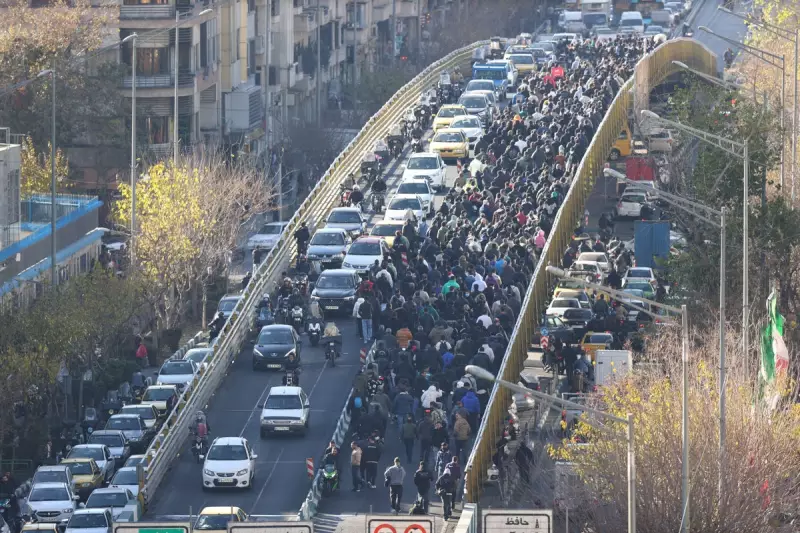
Iran has been rocked by a fresh wave of violent protests, with at least seven people killed as public anger over a severe cost-of-living crisis boiled over in the first days of 2026.
Economic Despair Fuels Nationwide Unrest
The demonstrations, which took place on Wednesday and Thursday, represent the largest outbreak of civil unrest in the country since 2022. The trigger was not political dissent but profound economic hardship, including soaring inflation and the dramatic collapse of the national currency.
The Iranian rial has plummeted to an unprecedented 1.4 million to the US dollar, evaporating savings and pushing basic goods out of reach for ordinary citizens. This economic pressure cooker finally erupted in at least four cities across rural provinces, though the protests did not reach the scale or intensity of the nationwide movement that followed the death of Mahsa Amini in 2022.

Casualties and the Official Response
The violence resulted in significant casualties on both sides. Authorities confirmed that a volunteer from the Basij force, a paramilitary arm of the Revolutionary Guard, was among the dead. In total, thirteen other security personnel were injured during the clashes.
The government has blamed 'rioters' for the death of the Basij volunteer and moved swiftly to quell the disturbances. Officials announced a series of arrests, including 20 individuals in the city of Kouhdasht. In a move apparently designed to prevent further large gatherings, a public holiday was declared.
A Pattern of Protest and Repression
These latest protests underscore the persistent and deep-seated frustrations within Iranian society, where periodic eruptions of anger over economic mismanagement and international sanctions are met with a familiar pattern of suppression. While the immediate spark was financial, the underlying tensions speak to a broader discontent with the state of the nation.
The deployment of security forces and the immediate attribution of blame to 'rioters' follows a well-established government playbook. However, the explicit linkage of the unrest by officials to significant economic pressures highlights the regime's acknowledgment of the crisis, even as it seeks to control its consequences.
As buildings were reported damaged and families mourned the dead, the events of early January 2026 serve as a stark reminder that Iran's internal stability remains tightly bound to the health of its ailing economy.