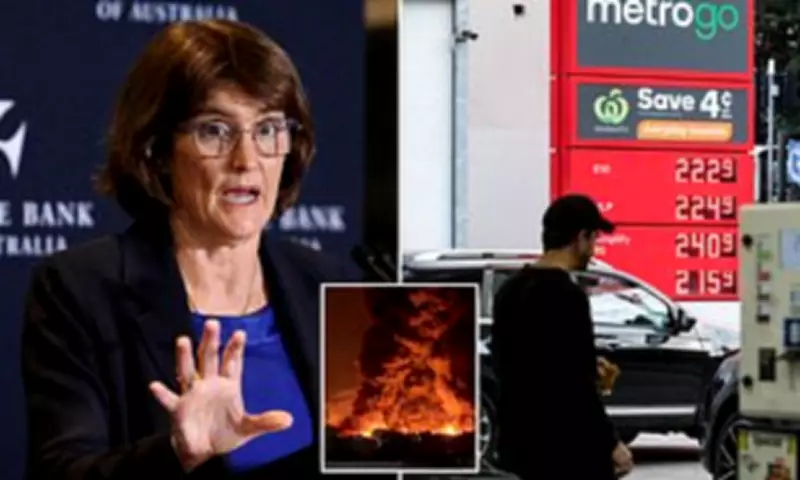
RBA Braces for Double Rate Hike as Inflation Fears Mount
In a significant shift from earlier predictions, leading Australian banks Westpac and the National Australia Bank are now forecasting that the Reserve Bank of Australia (RBA) will implement interest rate hikes in both March and May. This revised outlook suggests the cash rate could peak at 4.35%, marking a stark departure from previous expectations of a single adjustment in May alone.
Impact on Mortgage Holders and Household Budgets
If the RBA proceeds with these increases, borrowers will face substantial additional costs. For instance, a homeowner with a $600,000 mortgage and 25 years remaining could see their monthly repayments rise by approximately $180, equating to roughly $2,160 annually if lenders fully pass on both hikes. This would compound the rate rise already enacted in February, bringing the total increase in repayments to about $270 per month compared to last year.
It is important to note that while the official cash rate might peak at 4.35%, borrowers typically pay higher effective interest rates due to banks adding their own margins. Sally Tindall, data insights director at Canstar.com.au, advises homeowners to stress-test their budgets against potential rate increases. 'For example, if you're now sitting on a rate of 5.75 per cent, test it out at 6.25 per cent - even 6.50 per cent – to see if it stacks up against your budget,' she recommended.

Drivers Behind the Revised Forecast
The updated predictions reflect the RBA's growing unease over a resurgence in headline inflation, largely propelled by soaring oil prices. Crude oil surged to nearly $US120 a barrel earlier this week as escalating conflict in the Middle East threatens prolonged disruption to the Strait of Hormuz, a critical corridor for about 20% of the world's energy supply.
Luci Ellis, chief economist at Westpac, highlighted the economic context. 'Australia's robust economy and jobs market, coupled with core inflation that is moving in the wrong direction, and likely to continue to do so, paint a strong case for a March hike,' she stated. However, Ellis also noted the uncertainty clouding the outlook, with the war in the Middle East casting a significant shadow over the RBA's decision-making process.
Uncertainty and Economic Tightrope
The split among forecasts from major banks underscores the current unpredictability. The RBA is navigating a delicate balance between addressing persistent inflation and avoiding excessive economic strain. A cash rate hike next week is not guaranteed, as the conflict's short-term impact on prices, particularly fuel, contrasts with unclear longer-term effects on the economy and job market.
Consumer confidence is also wavering, with households growing increasingly nervous as petrol prices rise. If Westpac and NAB's forecasts prove accurate, the RBA would deliver three consecutive rate hikes across February, March, and May, intensifying pressure on already stretched household budgets. A family with a $600,000 mortgage isn't just looking at a few extra dollars each month. If the RBA ends up rolling out three successive hikes through to May, they're looking at an extra $272 just as winter sets in.
RBA's Stance and Historical Context
RBA Deputy Governor Andrew Hauser has warned that the spike in oil prices will push inflation higher, indicating that the board will debate whether to raise rates next week. Luci Ellis added, 'The effect of higher oil prices on headline inflation is large but temporary. The RBA Monetary Policy Board will nevertheless feel compelled to react, especially given the hit to confidence and financial markets has so far not been severe.'
This potential move follows the RBA's recent rate increase to 3.85% last month, as inflation reaccelerated after three reductions last year. In January, headline inflation stood at 3.8%, with the trimmed mean measure edging up to 3.4%, above the target band of 2% to 3%. The upcoming decisions will be crucial in shaping Australia's economic trajectory amid global uncertainties.