Australians Urged to Avoid Panic Cancelling Flights as Middle East Tensions Escalate
Australians with upcoming travel plans are being strongly advised not to engage in 'panic cancelling' their flights due to the escalating conflict in the Middle East. Industry experts emphasise that hasty cancellations could jeopardise refund and rebooking rights, urging travellers to wait for official airline notifications instead.
Repatriation Flights Continue Amid Aviation Disruptions
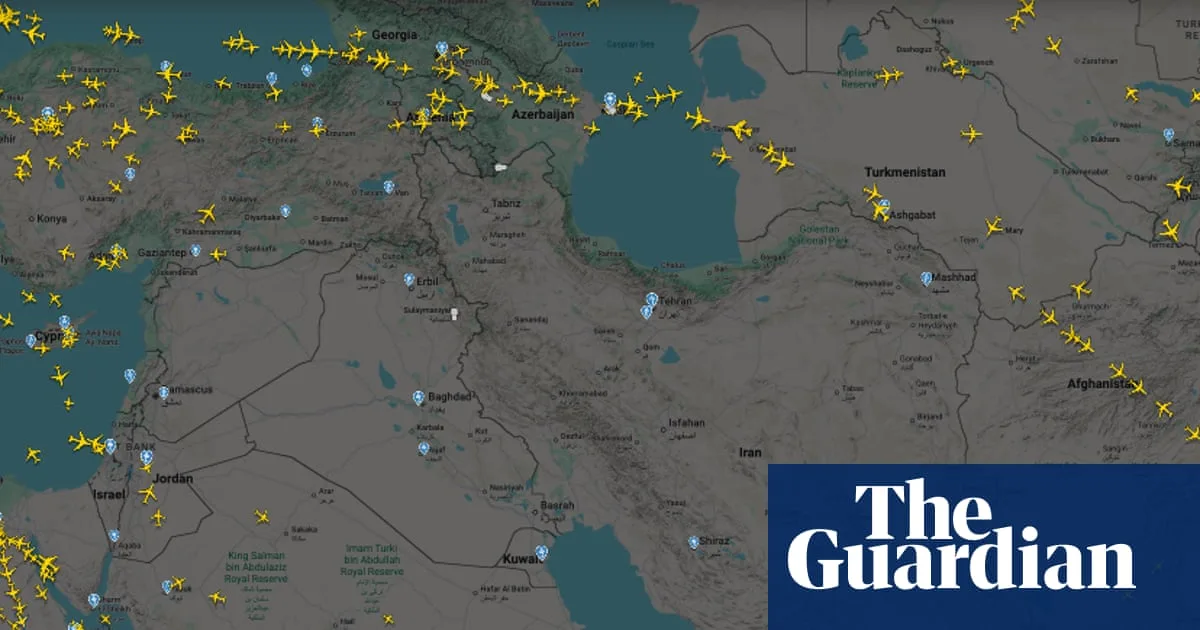
The first commercial flight from the region to Australia since the outbreak of conflict involving the US, Israel, and Iran arrived late on Wednesday. Another flight from Dubai is scheduled to land in Sydney on Friday, facilitating the reunion of previously-stranded Australians with their families. Prime Minister Anthony Albanese expressed hope on Thursday that two additional flights from Dubai, planned for the same day, would proceed as scheduled.
Dean Long, chief executive of the Australian Travel Industry Association, confirmed that the aviation sector is adapting to the situation. He noted that carriers such as Etihad, Emirates, and some Asian airlines are operating normally, albeit with expected delays and increased disruption. "We have flights coming out of the Middle East," Mr Long stated. "There will be some delays and a bit more disruption than what we're used to, but no one in the travel industry is going to put you in a place where it's unsafe."
Critical Advice for Travellers Booked via the Middle East
Mr Long issued a crucial warning to Australians planning to travel in the coming weeks and months: "If you're booked to travel shortly via the Middle East, it is critical that you do not panic-cancel but rather wait for your airline to cancel as otherwise you are erasing all of your rights of a refund or rebook." This advice aims to protect consumers from financial losses during uncertain times.
Aviation expert Steven Leib highlighted that airlines conduct meticulous risk assessments before operating in contested airspace. "The carriers that are based there will be very eager to restart operations because of the intense impact to them, whereas foreign carriers might be much more hesitant," he explained. Dr Leib estimated it could take several weeks to bring all Australians home, though added that increased stability and additional repatriation flights could significantly accelerate the process.
Wider Implications for Travel and Airfares
The conflict has prompted warnings for Australians heading to Europe in the next five months to reconsider their travel plans, as major aviation hubs face disruptions. Professor Ron Bartsch, chairman of Avlaw Consulting and former head of safety and regulation at Qantas, cautioned that the situation could lead to 'months' of skyrocketing airfares. "The longer this military operation goes on means airfares will increase accordingly. The cost of aviation fuel is going to increase, and also because the number of flights will be restricted through supply and demand… that's going to have a knock-on effect to Australian travellers for at least the next four to five months I'd say," he said.
Foreign Affairs Minister Penny Wong echoed these concerns, urging Australians to "think very carefully" about upcoming travel plans. She noted, "The conflict has spread much more quickly and much more widely than we anticipated." Currently, there are approximately 24,000 Australians in the UAE, comprising travellers and residents, with about 115,000 across the broader Middle East region.
Government Response and Political Criticism
The federal government has deployed military assets to assist stranded Australian citizens and permanent residents, including a Royal Australian Air Force C17A Globemaster heavy transport aircraft and a KC-30A multi-role tanker transport as precautionary measures. However, Prime Minister Albanese faced criticism from the opposition for urging Australians to heed travel advice and utilise commercial options to return home.
Liberal defence spokesman James Paterson argued, "The government is failing to respond adequately. Every other nation of comparable size and civilians is either chartering aircraft or sending their military planes." In contrast, the New Zealand government announced on Thursday it would send two defence force aircraft to repatriate its citizens. Opposition foreign affairs spokesman Ted O'Brien pointed out that military planes have been used previously for evacuations from Israel in 2025, New Caledonia in 2024, and Afghanistan in 2021, suggesting a precedent for more direct intervention.
As the situation evolves, travellers are encouraged to stay informed through official channels and exercise patience while airlines and authorities work to manage the disruptions caused by the Middle East conflict.