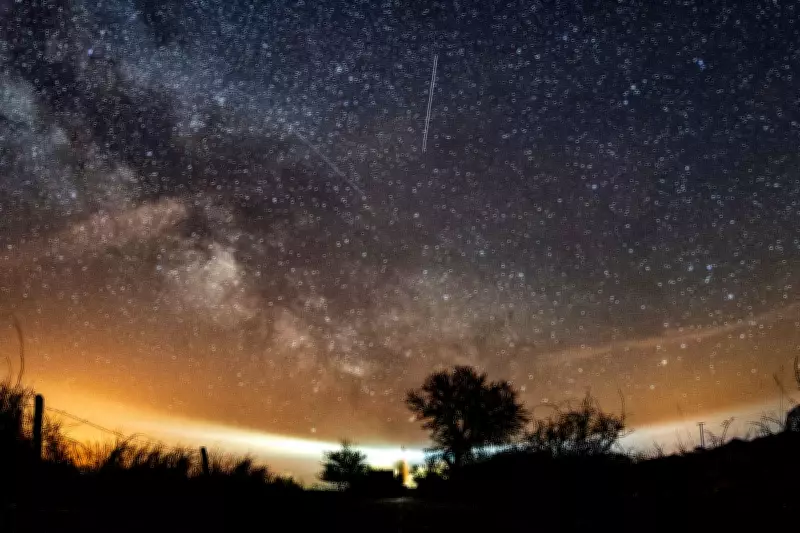
The annual Lyrid meteor shower delivered a breathtaking celestial spectacle this week, peaking from Tuesday night through Wednesday morning. Stargazers across the globe were treated to a dazzling display of shooting stars lighting up the night sky.
A Historic Celestial Phenomenon
The Lyrid meteor shower represents one of humanity's oldest recorded astronomical events, with documented observations stretching back more than 2,500 years. This ancient shower occurs when Earth passes through the debris trail left behind by Comet Thatcher, creating the brilliant streaks of light that captivate observers.
Optimal Viewing Conditions
Observers in the Northern Hemisphere enjoyed particularly favorable viewing conditions, with optimal visibility allowing them to witness between 10 and 20 meteors per hour during the peak period. While random meteors can be spotted on any given night, predictable meteor showers like the Lyrids create concentrated displays that transform ordinary stargazing into extraordinary experiences.

The Science Behind the Spectacle
These celestial fireworks result from tiny particles—remnants of Comet Thatcher's icy nucleus—burning up in Earth's atmosphere. As our planet orbits through this debris field each April, these particles create the brilliant streaks commonly called shooting stars, though they're actually meteors vaporizing high above us.
What Comes Next for Stargazers
Celestial enthusiasts won't have to wait long for another major meteor display. The Eta Aquarid meteor shower, created by debris from the famous Halley's Comet, will reach its peak in early May, offering another opportunity for skywatchers to enjoy nature's cosmic light show.
Meteor showers like the Lyrids remind us of our planet's continuous journey through space and the ancient cosmic debris that occasionally intersects our path. These events connect modern observers with stargazers from millennia past who witnessed the same celestial phenomena, creating a timeless bridge across human history.