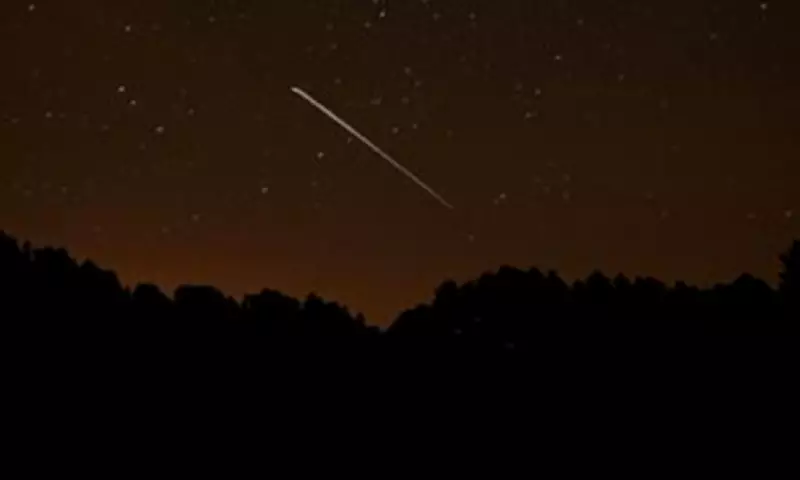
British stargazers are poised for a breathtaking celestial spectacle this week, with the Lyrid Meteor Shower reaching its dazzling peak. Offering up to 20 shooting stars per hour, this astronomical event promises to be a visual feast for observers across the United Kingdom.
What is the Lyrid Meteor Shower?
Like all meteor showers, the Lyrids occur annually when Earth passes through a patch of rocky debris orbiting the sun. As our planet sweeps through this cosmic dust cloud, tiny meteorites are captured at incredible speeds, reaching up to 31 miles per second (50 km/s).
Friction with Earth's atmosphere heats these particles to approximately 1,600°C (2,912°F), vaporising them in brilliant flashes we perceive as shooting stars.

Dr Shyam Balaji of King's College London explains: 'The Lyrids are caused by Earth passing through the dusty trail left by Comet C/1861 G1 Thatcher, a long-period comet that orbits the Sun roughly every 415 years. Lyrid meteors are known for being bright and fast, often leaving glowing trails in the sky that linger for a few seconds.'
Remarkably, the Lyrids represent the oldest known meteor shower still active today, with Chinese astronomers documenting the first recorded sighting in 687 BC.
Optimal Viewing Conditions and Timing
The shower reaches its absolute peak on Wednesday, April 22, though significant activity will occur on surrounding days. The most favourable viewing window begins after midnight when the moon has set, particularly from approximately 02:00 onwards on Wednesday and Thursday mornings.
This timing coincides with Earth swinging to face the oncoming debris cloud directly, while minimal moonlight ensures darker skies for optimal meteor visibility.
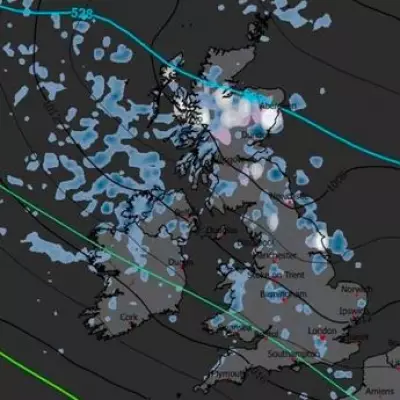
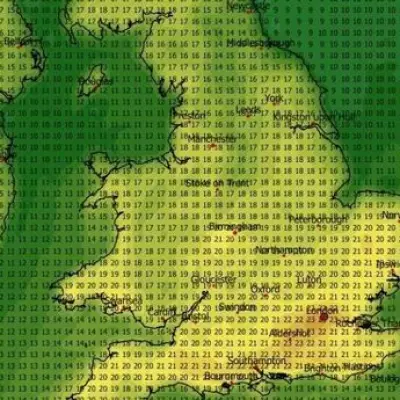
A Met Office spokesperson confirms: 'The chance for clear skies improves further tomorrow night, with much of England and Wales likely to be cloud-free, however high-level cloud will affect the far South West. Further north, cloud will thicken across Scotland and northeast England overnight Tuesday, limiting the chances here significantly.'
They add: 'Cloud cover will increase generally overnight Wednesday with a lot of high-level cloud covering the country, so Tuesday night promises the best chance for most.'
Essential Viewing Tips
- Seek darkness: Avoid city lights and light pollution whenever possible
- Allow eye adjustment: Give your eyes 20-30 minutes to fully adapt to darkness
- No equipment needed: Your natural vision provides the widest field of view
- Get comfortable: Use a reclining chair or blanket for extended viewing
- Practice patience: Meteor showers occur in bursts; allow at least one hour
Locating the Lyrids in the Night Sky
Dr Balaji advises: 'The meteors appear to radiate from the constellation Lyra, near the bright star Vega, which rises in the northeast during the late evening. However, you don't need to look directly at Lyra, meteors can appear in all parts of the sky, so a wide, dark, unobstructed view is best.'
While the Lyrids are particularly bright, they remain challenging to spot against background light pollution. Observers should minimise exposure to artificial light sources including street lamps, buildings, and vehicle headlights.
Future Meteor Shower Opportunities
For those who miss the Lyrids, the next significant meteor shower will be the Eta Aquariids, peaking on May 5 with up to 40 meteors per hour. This display originates from debris associated with Halley's Comet and can produce spectacular coloured fireballs.
Following this, the Alpha Capricornids will appear on July 30, featuring slow, yellow fireballs across the night sky.

2026 Meteor Shower Calendar Highlights
- Lyrids: April 22 (20 meteors/hour)
- Eta Aquariids: May 5 (40 meteors/hour)
- Perseids: August 13 (150 meteors/hour)
- Geminds: December 14 (120 meteors/hour)
Understanding Space Terminology
Asteroids are large rocky remnants from early solar system collisions, primarily located between Mars and Jupiter. Comets are icy rocks containing methane and other compounds, following elongated orbits extending far beyond the solar system.
Meteors describe the atmospheric flash when space debris burns up, while the debris itself constitutes a meteoroid. Should any fragment survive atmospheric entry and reach Earth's surface, it becomes classified as a meteorite.
Most meteor showers occur when Earth traverses comet tails, with debris particles igniting in our atmosphere to create these magnificent celestial displays.