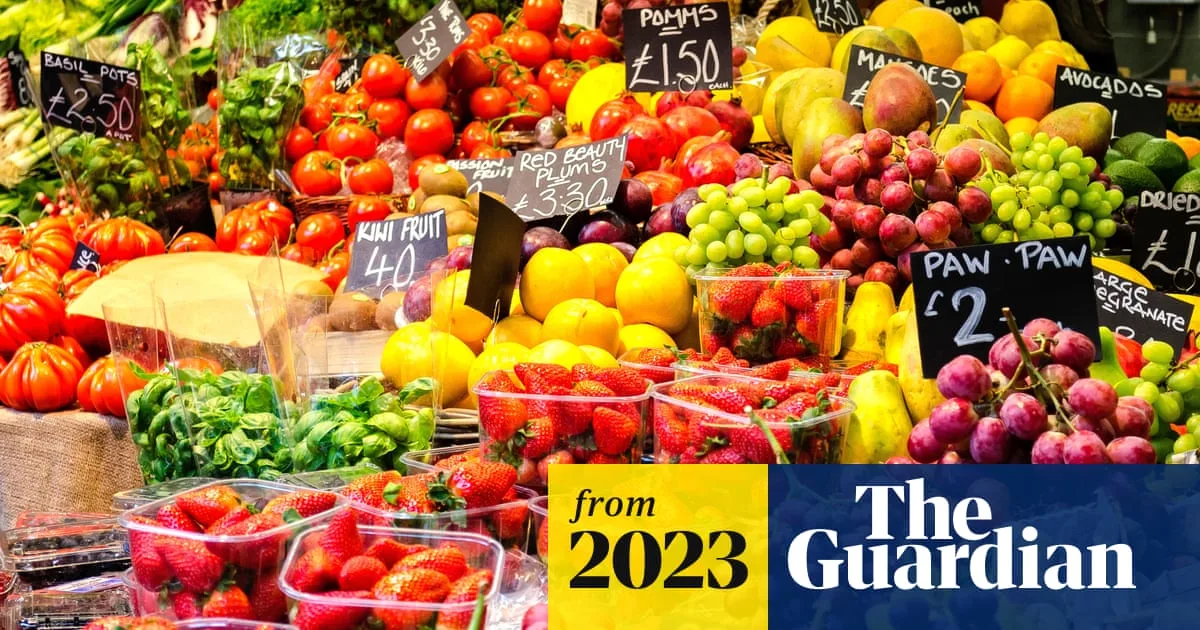
Fresh fruit and vegetables from Europe will become more expensive as drought and wildfires shrink supplies, putting a healthy diet in the UK at risk, experts have warned. A report by the Energy and Climate Intelligence Unit (ECIU) highlights that extreme heat is reducing yields of Mediterranean produce, on which the UK heavily relies.
Many imported foods, such as cauliflowers, broccoli, strawberries, cucumbers, and tomatoes, cannot be grown in the UK for at least part of the year or require energy-intensive indoor cultivation. The UK imports nearly two-thirds of its cucumbers and tomatoes from the Mediterranean, along with over half of its lemons and sweet peppers, two-thirds of oranges, and 40% of table grapes.
Olive oil, of which the UK sources 80% from the region, has seen sharp price increases this year, contributing to inflation. In 2022, over a quarter of UK food imports—9.8 billion kg worth over £16 billion—came from the Mediterranean, with Spain alone accounting for £4 billion.
Gareth Redmond-King, head of the international programme at ECIU, said: 'As well as a climate crisis, we’re in a public health crisis too. Most of us already don’t eat enough fruit and veg, and often healthier diets already tend to cost more. As the impacts of climate change are likely to make the healthy food we should be eating more of even more expensive, it becomes even less accessible to the poorest in society.'
He added that many crops cannot be grown year-round in the UK at required levels, so if Europe burns, the country will face worsening shortages. 'The heat we’ve seen in Europe this summer and in April would be all but impossible without climate change,' he said. 'The only sure-fire way to avoid even worse impacts is to keep global temperature rises to 1.5C by cutting emissions to net zero.'
Previous ECIU analysis found that the climate crisis and fossil fuel prices added over £400 to household shopping bills in 2022, increasing the total annual UK food shopping bill by about £11.4 billion.