Sakurajima Volcano Erupts Again, Disrupting Flights and Coating Kagoshima in Ash
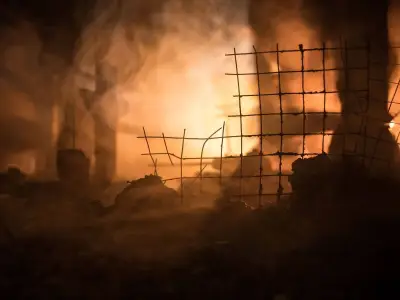
Japan's most active volcano, Sakurajima, erupted on Saturday afternoon, marking its first major eruption of the year and the second in just four months. The explosive event sent a towering ash plume soaring 3.4 kilometres into the sky, grounding flights at Kagoshima Airport and blanketing the surrounding city of Kagoshima in a thick layer of debris.
Immediate Impacts and Safety Warnings
The eruption originated from the volcano's Minamidake crater shortly after noon local time, with debris landing up to a kilometre away. In response, the Japan Meteorological Agency swiftly raised the volcanic alert to level 3 on its five-level scale. This warning urges people not to approach the volcano due to significant dangers posed by falling rocks and potential pyroclastic flows.
Travel disruptions were widespread, with flights at Kagoshima Airport either grounded or delayed. Road closures were reported across Kagoshima and in nearby areas such as Tarumizu and Kanoya, where ash accumulation made driving conditions hazardous. Authorities emphasised the risks to public safety and advised residents to stay indoors and avoid unnecessary travel.
Geological Context and Historical Activity
Sakurajima, located approximately 8 kilometres from the centre of Kagoshima—one of the largest cities in the Kyushu region—has a long history of activity. The volcano has been depositing ash on the city regularly since the 8th century. Originally an island, a major eruption in 1914 produced lava flows that connected it to the mainland, resulting in 58 fatalities and ashfall as far north as Honshu.
The volcano has been in a state of near-continuous activity since 1955, with recent eruptions including a November 2025 event that sent an ash plume 4.4 kilometres high and ejected rocks nearly 1.2 kilometres from the crater. In May 2025, multiple smaller eruptions similarly disrupted local air travel. A notable eruption in August 2013 produced the highest recorded ash plume since 2006, rising 5 kilometres and casting parts of Kagoshima city into darkness.
Scientific Insights and Future Risks
According to the Japan Meteorological Agency, this latest eruption helped ease most of the crustal deformation—a build-up of pressure inside the volcano caused by accumulating magma—that had been developing within Sakurajima. This was the first explosive eruption since 13 December last year, as reported by Yomiuri Shimbun.
Scientists remain vigilant about future risks. In 2015, the meteorological agency issued a level 4 alert, warning that a major eruption could be imminent. Researchers from Bristol University and the Sakurajima Volcano Research Centre stated in 2016 that the volcano could produce a major eruption within 30 years, and several large eruptions have occurred since then.
Sakurajima lies within the Aira Caldera, a 25-kilometre-wide depression in Kagoshima Bay formed around 28,000 years ago when an enormous eruption ejected several hundred cubic kilometres of ash and pumice, causing the magma chamber beneath to collapse. The volcano is situated on Japan's seismically active Pacific Ring of Fire, a belt of volcanoes and fault lines that encircles much of the Pacific Ocean and accounts for the majority of the world's volcanic eruptions and earthquakes.