This week, a delicate sliver of the moon joins the brilliant beacon of Venus for a captivating twilight conjunction. The moon, just over three days old, will have only 11% of its visible surface illuminated.
Celestial Pairing in Cancer
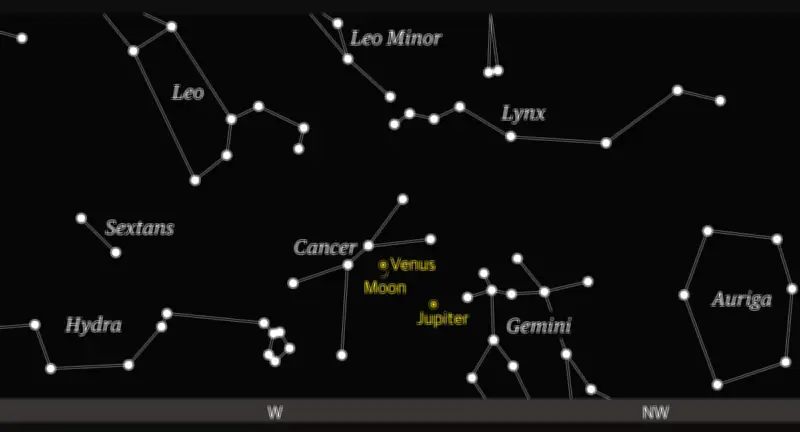
Venus will shine brightly, positioned less than a moon's width from our natural satellite. The pair will reside in the constellation of Cancer, the crab. The chart shows the view looking west from London at 21:45 BST on 17 June 2026.
From the UK, the pairing will appear low in the sky, so choose the clearest western horizon you can find. As with any young moon, watch for Earthshine on the unilluminated portion of the lunar disc as the sky darkens. This phenomenon occurs when sunlight reflects off Earth onto the moon and back again.
Observing Tips
This conjunction is also an excellent target if you have a pair of binoculars. However, do not sweep them across the sky until the sun has completely set below the horizon. Even a brief glimpse of the sun through any optical device can permanently damage your eyesight.
For observers in the southern hemisphere, the conjunction should be easier to see because it occurs earlier in the evening and sits somewhat higher in the sky.