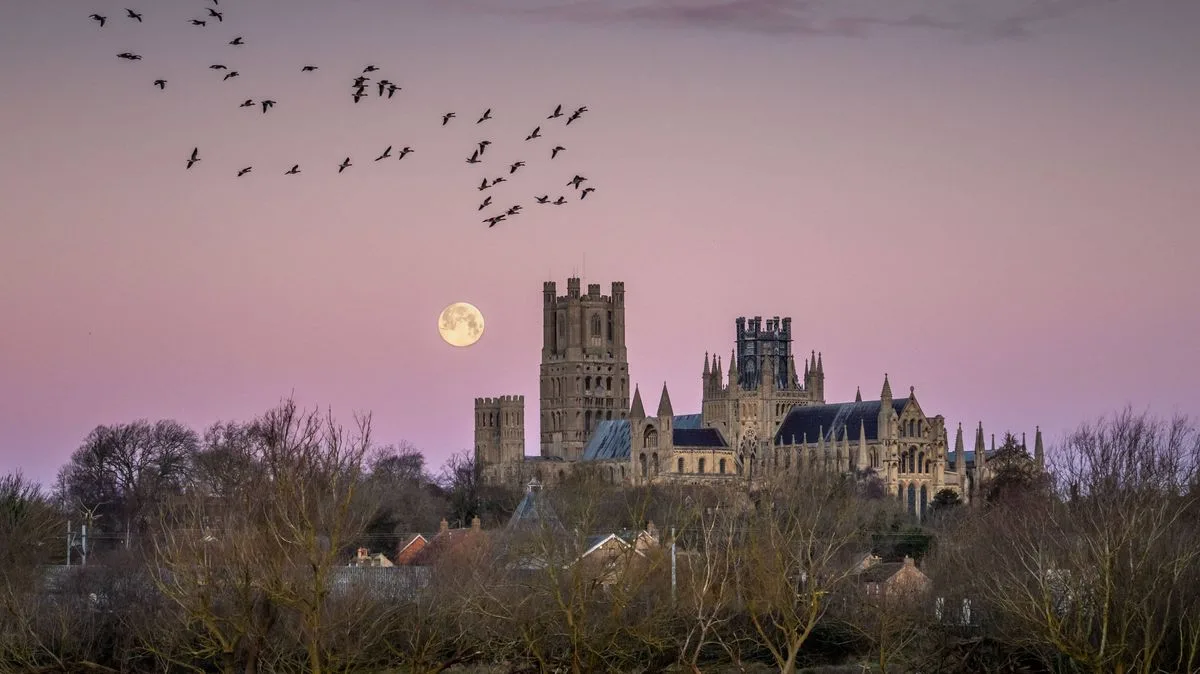
The first full moon of 2026, known as the Wolf Moon, lit up clear skies across Britain on Saturday, offering spectacular views despite freezing temperatures. The supermoon reached its peak fullness at around 10am, according to the Royal Observatory in Greenwich.
This marked the fourth consecutive supermoon, following October's Harvest Moon, November's Beaver Moon, and December's Cold Moon. A supermoon occurs when a full moon coincides with its closest approach to Earth, making it appear up to 14% larger and 30% brighter than usual.
The name 'Wolf Moon' originates from the howling of hungry wolves during the depths of winter, as explained by the Royal Observatory. Astronomer Jess Lee noted that each full moon has a unique nickname, and the January full moon is traditionally called the Wolf Moon.

Overnight temperatures fell below freezing for many areas, hovering around 0°C at the moon's peak. However, south-west England and west Wales experienced milder conditions, with some locations reaching 4°C. Lee advised that no special equipment is needed to enjoy the view, as it is visible in both cities and rural areas.
Those who missed the spectacle will have to wait until November for the next supermoon. However, May 2026 will feature two full moons, making it an exceptional year with 13 full moons instead of the usual 12.