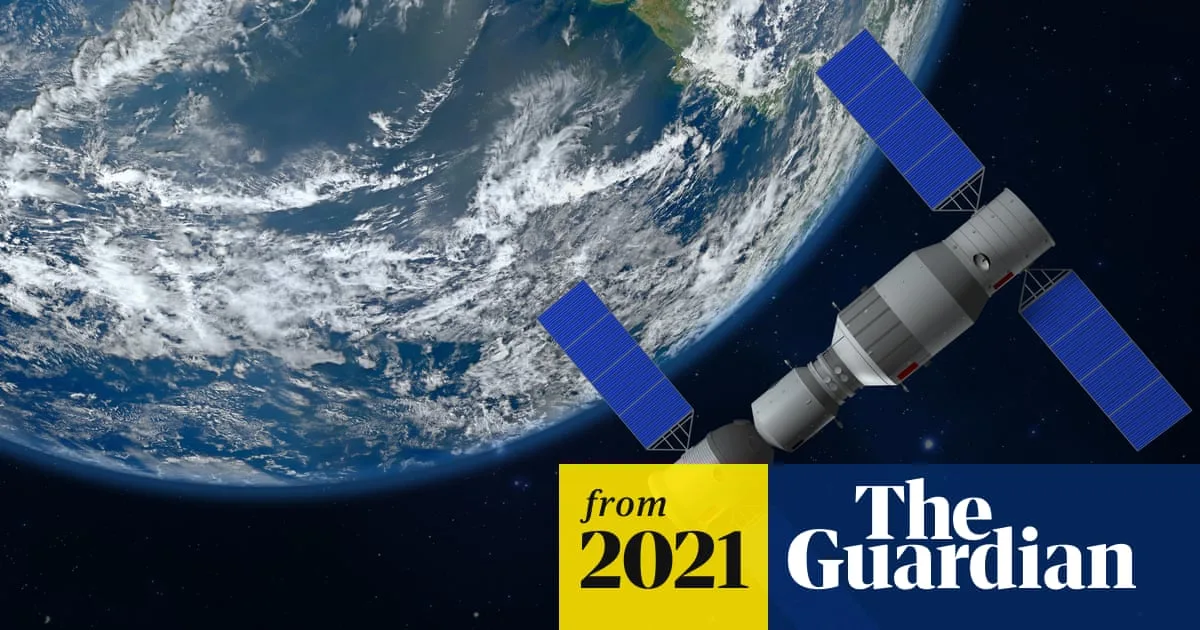
China has accused the United States of ignoring international treaty obligations after two near misses between its space station and satellites operated by Elon Musk's SpaceX company. The incidents, involving Starlink satellites in July and October, forced the Tiangong space station to take evasive manoeuvres to avoid collision, according to a Chinese note to the UN Committee on the Peaceful Uses of Outer Space.
Foreign ministry spokesperson Zhao Lijian said on Tuesday that China urges the US to act responsibly, as the close encounters posed a serious threat to the lives and safety of astronauts. The Chinese note stated that the Starlink satellites moved into orbits that required Tiangong's operators to change its course, with the October incident involving a satellite whose manoeuvre strategy was unknown and orbital errors hard to assess.
Starlink, a division of SpaceX, has launched over 1,600 satellites as part of a programme to provide global internet access, with US approval for up to 12,000. China's note emphasised that state parties to the Outer Space Treaty bear international responsibility for activities of both government and non-governmental bodies.

Jonathan McDowell of the Harvard-Smithsonian Center for Astrophysics said evasive manoeuvres are becoming more frequent due to the number and speed of satellite launches, with Starlink a major contributor. He noted that any collision could completely demolish the Chinese space station, but also highlighted China's own contribution to space debris, including the 2007 anti-satellite test that created the largest debris event ever.
The complaints have sparked criticism of Musk on Chinese social media, with some users calling for a boycott of Tesla. One hashtag on Weibo recorded 90 million views, with users expressing irony that Chinese customers fund Starlink through Tesla purchases, only for it to nearly crash into China's space station.