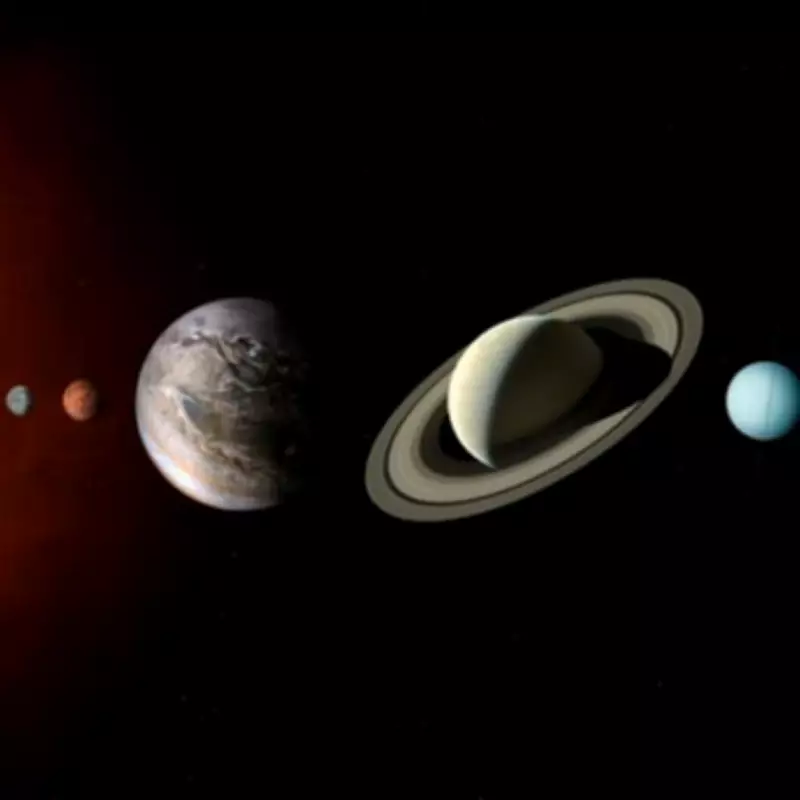
Rare Six-Planet Alignment to Illuminate UK Skies This Month
Astronomy enthusiasts across the United Kingdom are in for a celestial treat this month, as a rare 'Planetary Parade' is set to grace the night sky. This captivating event will feature six planets appearing to align in a straight line from Earth's perspective, creating a stunning visual spectacle for stargazers.
When and How to Witness the Planetary Parade
The planetary alignment will be visible just after sunset on February 28, 2026. The participating planets include Mercury, Venus, Saturn, Jupiter, Uranus, and Neptune, though spotting all six will present a challenge even for experienced observers.
According to experts at Royal Museums Greenwich, while the alignment will technically be visible, "it's definitely a challenge to see all six." Mercury, Venus, Saturn, and Neptune will appear in the west relatively close to the horizon shortly after sunset. However, Neptune will require a telescope for proper observation.

Viewing Tips for Optimal Stargazing
For those hoping to catch this rare celestial display, experts recommend several strategies to maximize visibility:
- Find a dark location with minimal light pollution and an unobstructed view of the sky
- Lie back and allow your eyes to adjust to the darkness
- Consider bringing a comfortable chair and warm clothing, as you may need to wait for optimal viewing conditions
- The best viewing window falls between midnight and dawn when the radiant near the constellation Boötes reaches its highest point
Jupiter is expected to be the easiest planet to spot, appearing high in the sky throughout most of the night within the constellation Gemini. To the naked eye, it will resemble a particularly bright star. Uranus, positioned higher in the sky within the constellation Taurus, will set around midnight and requires a telescope for proper observation.
Additional Astronomical Events in 2026
This planetary parade adds to an already impressive lineup of celestial events for 2026. The year has already featured a supermoon, with more meteor showers, a blue moon, and a significant solar eclipse still to come.
Dr. Shyam Balaji, a research fellow at King's College London, highlights an upcoming annular solar eclipse on February 17 that will create a spectacular 'ring of fire' effect. "An annular solar eclipse occurs when the Moon passes directly in front of the Sun but is slightly farther from Earth in its elliptical orbit," explains Dr. Balaji. "Because it appears a little smaller in the sky, it does not completely cover the Sun's disk."
Dr. Balaji emphasizes crucial safety precautions for eclipse viewing: "It is not safe to look at the eclipse with the naked eye. At no stage of an annular eclipse is it safe to look at the Sun without proper solar filters. The exposed ring is still intensely bright and can cause permanent eye damage."
Whether you're an experienced astronomer or simply enjoy marveling at the night sky, February's planetary alignment offers a unique opportunity to witness a rare celestial phenomenon right here in the UK.