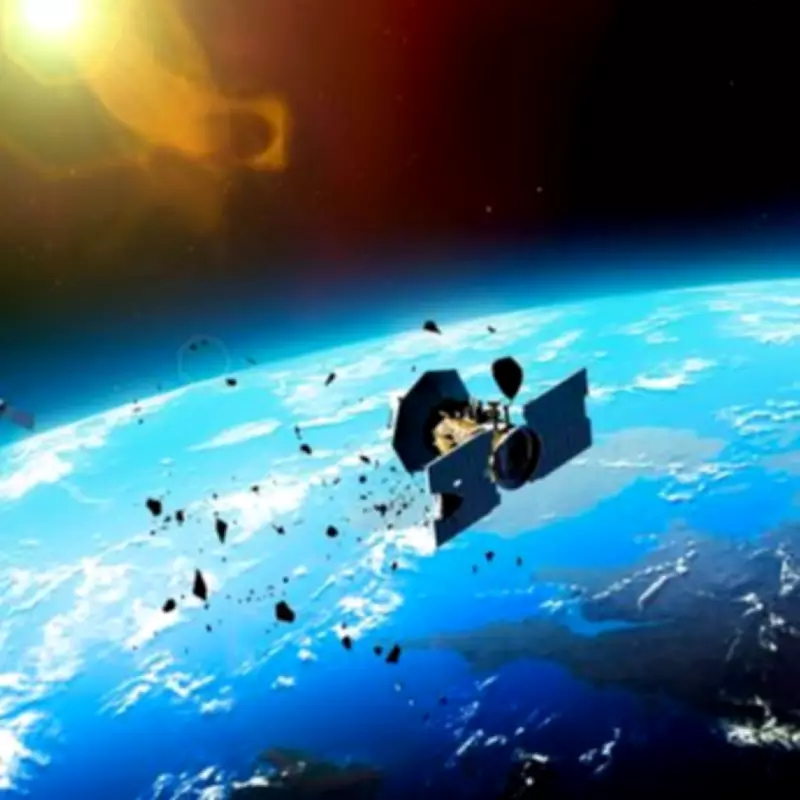
Security officials across Europe have issued a stark warning about Russia's escalating space capabilities, revealing that Russian space vehicles now possess the ability to manipulate the trajectories of key European satellites and potentially crash them into Earth. This alarming development follows confirmation that at least two Russian objects have been actively intercepting the communications of over a dozen vital satellites orbiting over Europe.
Interception and Intelligence Gathering in Orbit
According to Major General Michael Traut, head of the German military's space command, both Russian satellites are suspected of engaging in signals intelligence operations, commonly referred to as sigint. In an interview with the Financial Times, Traut detailed how these vehicles practice staying in close proximity to Western communications satellites, enabling them to monitor and intercept sensitive data transmissions.
A Direct Threat to Critical Infrastructure
The capability to alter satellite trajectories represents a significant escalation in space-based threats. Security analysts emphasise that such manipulation could disrupt essential services including telecommunications, navigation, and military communications across Europe. The potential for crashing satellites poses not only a technological risk but also a physical danger if debris were to impact populated areas.

European security agencies have been monitoring Russian space activities with increasing concern over recent months. The revelation about the interception capabilities confirms long-standing suspicions about Russia's expanding space warfare programme. Officials stress that this represents a threat to all nations relying on satellite infrastructure, which has become fundamental to modern economies and security systems.
Growing Concerns About Space Security
The development highlights the urgent need for enhanced space security measures and international agreements governing activities in Earth's orbit. As nations become increasingly dependent on satellite technology for everything from banking transactions to emergency services, the vulnerability of these systems to hostile interference has become a pressing security concern.
Military strategists note that the ability to intercept communications and potentially disable satellites represents a new frontier in geopolitical tensions, with space becoming an increasingly contested domain. The situation underscores the importance of developing robust defensive capabilities to protect critical space infrastructure against emerging threats.