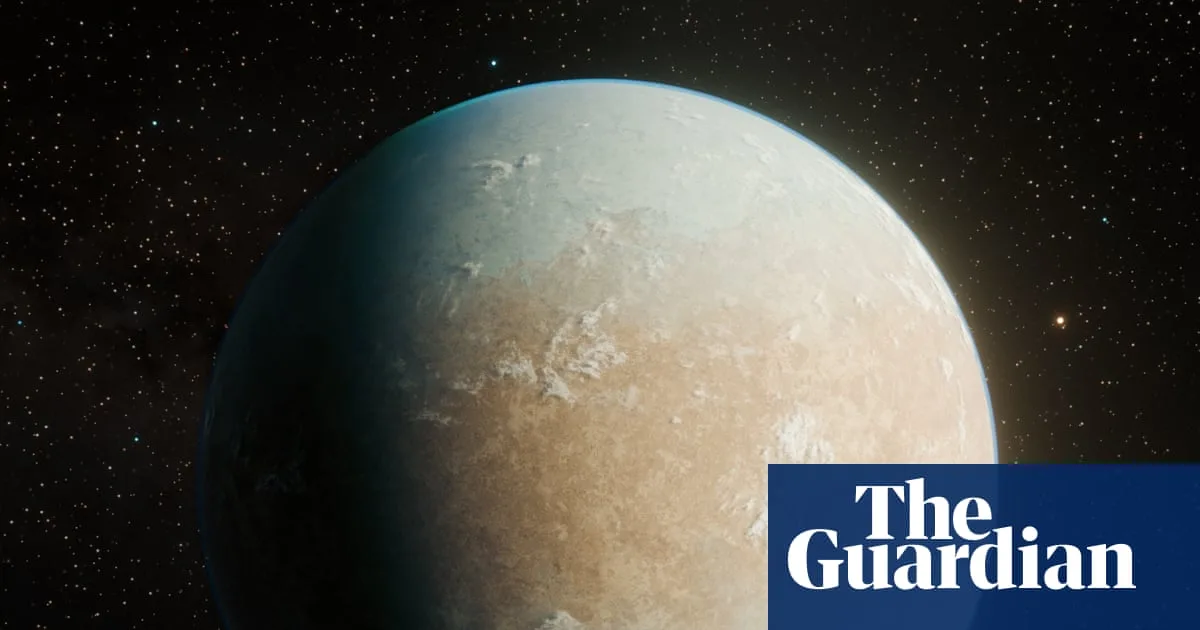
In a groundbreaking astronomical find, an international team of scientists has uncovered a new Earth-sized planet located approximately 146 light-years from our solar system. Named HD 137010 b, this candidate exoplanet orbits a sun-like star and presents a tantalising possibility for habitability, despite potential frigid surface conditions akin to those on Mars.
Discovery and Characteristics of HD 137010 b
The discovery was made by researchers from Australia, the United Kingdom, the United States, and Denmark, utilising data from NASA's Kepler space telescope during its extended K2 mission in 2017. Dr Chelsea Huang, a researcher at the University of Southern Queensland in Australia, highlighted that HD 137010 b is estimated to be about 6% larger than Earth and completes an orbit around its star in roughly 355 days, similar to Earth's annual cycle.
What sets this planet apart is its placement within the habitable zone of its star, with scientists calculating a 50% probability of it residing in this region where liquid water could exist. However, the star is cooler and dimmer than our sun, leading to surface temperatures that might plummet to as low as -70 degrees Celsius, creating an environment more comparable to Mars than Earth.
Citizen Science and Detection Methods
The initial detection of HD 137010 b was facilitated by citizen scientists, including Dr Alexander Venner, who participated in the Planet Hunters project while still in secondary school. Venner, who later earned a PhD, described the experience as instrumental in sparking his research career. The planet was spotted through a transit event, where it passed in front of its star, causing a slight dimming that was captured by the Kepler telescope.
Dr Huang recounted the team's initial scepticism, stating their first reaction was disbelief, but rigorous verification confirmed it as a classic planetary transit. The brightness and proximity of the star make HD 137010 b a prime target for future observations with next-generation telescopes, potentially offering deeper insights into its composition and atmosphere.
Expert Insights and Future Implications
Dr Sara Webb, an astrophysicist at Swinburne University not involved in the study, praised the discovery as very exciting but cautioned that further detections are needed to confirm it as an exoplanet. Currently, only one transit has been observed, whereas the gold standard in planetary science typically requires three. Webb suggested alternative possibilities, such as HD 137010 b being a super snowball—a large, icy world rich in frozen water.
Despite its relative closeness in galactic terms, reaching HD 137010 b with current technology would take tens to hundreds of thousands of years, underscoring the vast distances involved in space exploration. The research findings have been published this week in the Astrophysical Journal Letters, marking a significant contribution to our understanding of exoplanets and their potential for life.
This discovery not only highlights the collaborative efforts of global scientific teams and citizen scientists but also opens new avenues for studying Earth-like worlds beyond our solar system, with HD 137010 b poised to be a focal point for future astronomical advancements.