NASA Sounds Alarm Over Unseen 'City Killer' Asteroids
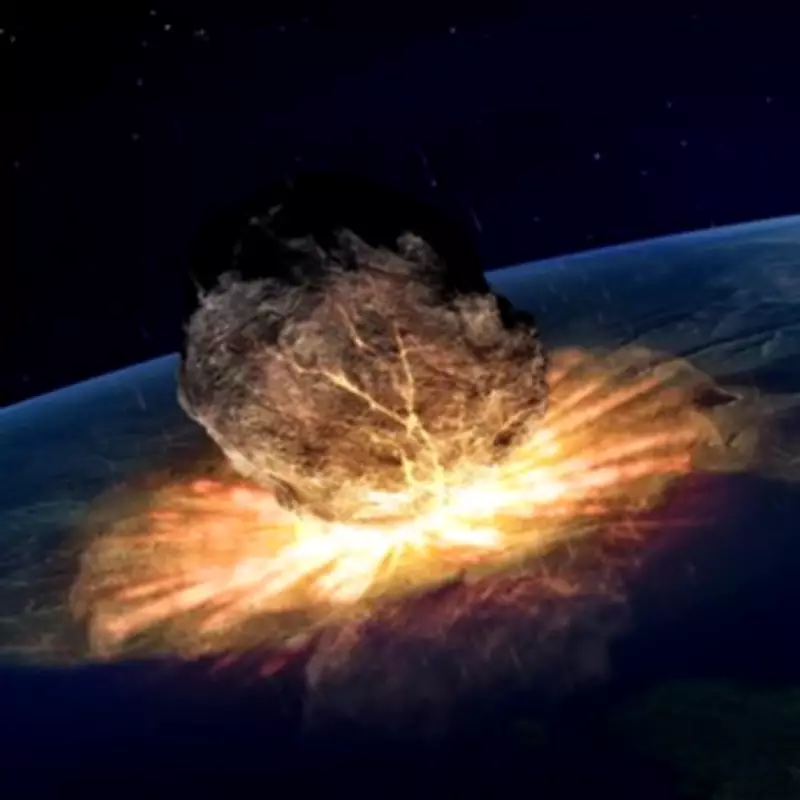
Space agency officials have issued a stark warning about thousands of mid-sized asteroids, colloquially termed 'city killers', that continue to evade detection as they orbit perilously close to Earth. These celestial bodies, measuring approximately 140 metres in diameter, possess the potential to inflict catastrophic regional damage should they collide with a populated area.
The Scale of the Unseen Threat
Dr Kelly Fast, who leads NASA's efforts to monitor near-Earth objects, disclosed that an estimated 15,000 of these medium-sized space rocks remain unaccounted for. Speaking at the American Association for the Advancement of Science conference in Arizona, Dr Fast expressed profound concern, stating, "What keeps me up at night is the asteroids we don't know about."
She elaborated that while smaller asteroids frequently enter Earth's atmosphere and larger ones are well-documented, it is the intermediate category that presents a significant blind spot. "It's the ones in between, about 140 metres and larger, that could really do regional rather than global damage and we don't know where they are," Dr Fast emphasised.

Earth's Current Defenceless Position
Experts have unanimously highlighted that humanity currently lacks any operational system to actively deflect an incoming asteroid of this magnitude. Dr Nancy Chabot, a planetary scientist at Johns Hopkins University who led NASA's Double Asteroid Redirection Test (DART) mission, underscored this vulnerability.
"We worry about these city killer asteroids," Dr Chabot admitted. "DART was a great demonstration but we don’t have that sitting around ready to go if there was a threat we needed to use it for." The DART mission successfully altered the orbit of the asteroid moonlet Dimorphos by crashing a spacecraft into it, proving the concept of kinetic impact deflection.
However, Dr Chabot cautioned that no such spacecraft is currently available for immediate deployment. "We would not have any way to go and actively deflect one right now. We could be prepared but I don’t see that investment being made," she stated, pointing to a critical gap in planetary defence readiness.
The Tracking Challenge and Statistical Reality
The difficulty in locating these asteroids stems from the immense scale of space and the limitations of current telescopic technology. Dr Fast noted that of an estimated 25,000 asteroids in the 140-metre-plus category, only about 40% have been identified. "It takes time to find them, even with the best telescopes," she explained.
This tracking deficit means that approximately 50% of all 140-metre asteroids remain undetected, a statistic that Dr Chabot described as "a concern." The absence of comprehensive monitoring leaves Earth exposed to potential impacts with little to no advance warning.
The implications are clear: without significant investment in detection and deflection capabilities, our planet remains vulnerable to a class of asteroid that could devastate cities or entire regions. The warnings from NASA's top planetary defence experts serve as a urgent call to action, highlighting a celestial threat that, while statistically rare, carries consequences too grave to ignore.