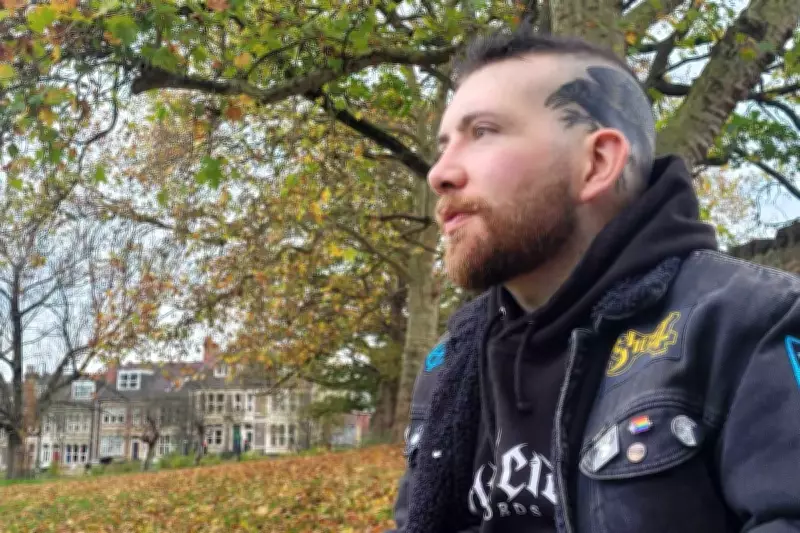
In a remarkable fusion of technology and human spirit, a musician who lost his voice to motor neurone disease has triumphantly returned to singing through groundbreaking artificial intelligence. Patrick Darling, a 32-year-old composer and performer from Bristol, received a devastating MND diagnosis at the age of 29, which gradually stripped him of his ability to sing and left him capable of speaking only a few words.
A Lifelong Passion Silenced by Illness
Before his illness, Mr Darling was the lead singer of the Irish folk group The Ceili House Band, having been a musician since his teenage years. He taught himself to play multiple instruments, including bass guitar, acoustic guitar, electric guitar, piano, melodica, mandolin, and tenor banjo. However, singing remained his greatest love, with most of his musical life dedicated to live performances. The progression of motor neurone disease completely robbed him of this ability, along with his capacity to play instruments, leading to a deeply profound and devastating personal impact.
Technological Breakthrough Enables a Comeback
The turning point came with advanced AI tools developed by ElevenLabs. Mr Darling, who communicates via assistive technology, had previously created a digital replica of his speaking voice using the company's software. Building on this foundation, ElevenLabs' AI music generator allowed him to transform recordings from his past performances into a singing voice that is virtually indistinguishable from his original one. This technological feat enabled his return to the stage, where he captivated an audience with his recreated voice during a live show in London.

At an event on Wednesday, Mr Darling performed alongside Ceili House Band guitarist Nick Cocking and violinist Hari Ma, debuting the song Ghost Of A Man I Never Met. This marked the first time he had been able to perform with the band since his diagnosis forced him into retirement. He composed the music using ElevenLabs' technology and combined the score with original lyrics he wrote himself.
Emotional Impact and Family Support
Mr Darling expressed his gratitude, stating, "The ElevenLabs singing voice that we've created is wonderful and definitely sounds like me. The technology created by ElevenLabs changes lives. It provides hope, support and meaning to people in ways that you can't fully appreciate unless you've lived it yourself." His family, who had not heard him sing since the effects of his MND diagnosis, were present in the audience to witness this emotional performance.
Expert Insights on the Technology
ElevenLabs' technology enables users to take previous recordings of natural speech or sound from any audio source and generate accurate digital replicas of their own voice. Speech therapist Richard Cave, who worked closely with Mr Darling to design his AI voice, highlighted the significance of this development. "Motor neurone disease is a devastating illness, especially for people like Patrick, who started experiencing the disease at an unusually young age," he said.
Mr Cave added, "I've worked with MND patients for many years, and rarely do we see developments that make such a huge difference to the lives of patients as we have with voice AI technology. The quality of ElevenLabs' voices is unmatched. Working with Patrick to give him back his singing voice after a lifetime making music has been an absolute privilege, and watching the song performed on stage with a live band is a moment I'll never forget."
This story underscores the transformative potential of AI in healthcare and personal expression, offering new avenues of hope for individuals facing similar challenges with motor neurone disease and other voice-affecting conditions.