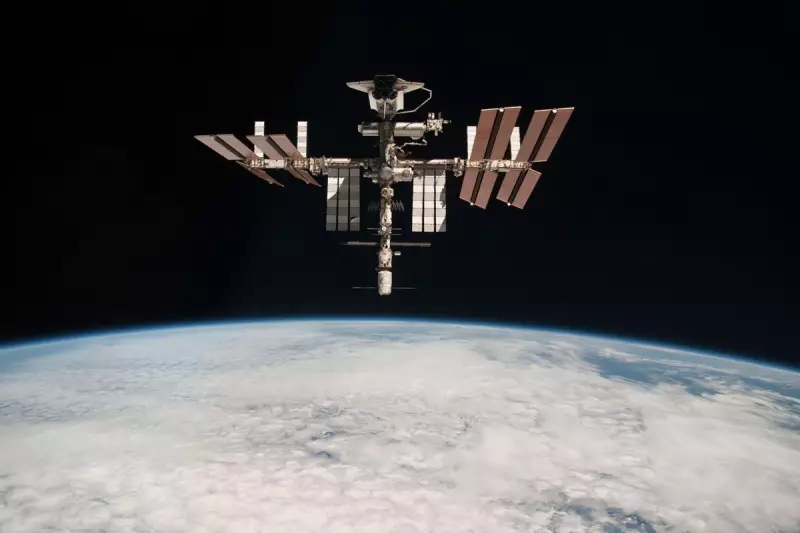
NASA has confirmed plans to close the International Space Station (ISS) after three decades of continuous operation, with the iconic orbital laboratory scheduled for decommissioning in 2030. This announcement marks the end of an extraordinary chapter in human space exploration that has seen uninterrupted human presence in low-Earth orbit since November 2000.
A Quarter-Century of Unbroken Human Presence
For 24 hours a day, seven days a week since the year 2000, NASA and its international partners have maintained a continuous human presence approximately 250 miles above Earth's surface. This remarkable streak will soon reach 25 years, representing one of humanity's most significant achievements in spaceflight history.
The International Space Station stands as a shining example of international cooperation, bringing together the scientific and engineering capabilities of the United States, Europe, Canada, Japan and Russia. As an aerospace engineer who has contributed to ISS hardware and experiments over many years, I recognise the emotional significance of this decision for the global spaceflight community.

Scientific Legacy and Research Achievements
Since the first components launched in 1998, the ISS has served as an unparalleled research platform across multiple scientific domains. More than 4,000 experiments have been conducted aboard the station, resulting in over 4,400 peer-reviewed publications that have advanced our understanding of numerous physical, chemical and biological processes.
The unique microgravity environment of low-Earth orbit has enabled breakthroughs that include:
- Improvements in cancer-fighting drug crystallisation processes
- Advances in artificial retina growth techniques
- Development of ultrapure optical fibre processing methods
- Innovations in DNA sequencing technology for space applications
- Enhanced understanding of thunderstorm dynamics and Earth observation
This research has not only improved life on Earth but has also paved the way for future deep space exploration missions by demonstrating the value of sustained scientific investigation in orbital environments.
The Transition to Commercial Space Stations
NASA is not abandoning low-Earth orbit following the ISS retirement. Instead, the agency is spearheading a transition to commercially operated space stations that will continue humanity's presence in this crucial orbital region. In December 2021, NASA announced three awards totalling over $400 million to stimulate development of privately owned orbital facilities.
The agency's commercial space station programme builds upon successful partnerships that have already revolutionised space access. For years, NASA has utilised commercial providers for ISS resupply missions, and more recently established similar arrangements with SpaceX and Boeing for crew transportation aboard Dragon and Starliner spacecraft respectively.
Developing the Next Generation of Orbital Platforms
In September 2025, NASA issued draft proposals for Phase 2 partnerships in commercial space station development. Selected companies will receive funding to support critical design reviews and demonstrate stations capable of supporting four-person crews for at least 30-day missions.
NASA will conduct formal design acceptance and certification processes to ensure these new stations meet the agency's stringent safety requirements. The ultimate goal is to establish commercial purchasing arrangements similar to current cargo and crew transportation contracts, creating a sustainable economic model for continued low-Earth orbit operations.
International Context and Future Prospects
While these commercial stations are under development, Chinese astronauts continue operations aboard their Tiangong space station, which has maintained approximately four years of continuous occupation. Should the ISS occupied streak conclude before new commercial stations become operational, Tiangong would become the longest continually inhabited space facility.
The transition period presents both challenges and opportunities for the global space community. It will likely be several years before new commercial stations achieve operational status, orbiting Earth at approximately 17,500 miles per hour while the ISS undergoes its carefully planned deorbiting process in 2030.

A Final Opportunity for Earthbound Observers
For those on Earth, there remains time to appreciate the ISS as it continues its orbital journey. On most clear nights, the station appears as a brilliant blue-white point of light – often the brightest object in the sky – executing graceful arcs across the heavens at approximately 28,000 kilometres per hour.
This celestial beacon represents an achievement our ancestors could scarcely have imagined: a structure conceived by human intellect and constructed by human hands that has served as both home and laboratory for international crews for nearly three decades. As we approach the station's retirement, we celebrate not just its technological accomplishments but the spirit of international cooperation that made it possible.