NASA Rolls Out Moon Rocket for Historic Artemis II Crew Mission
NASA Rolls Out Rocket for First Crewed Moon Mission in 50 Years

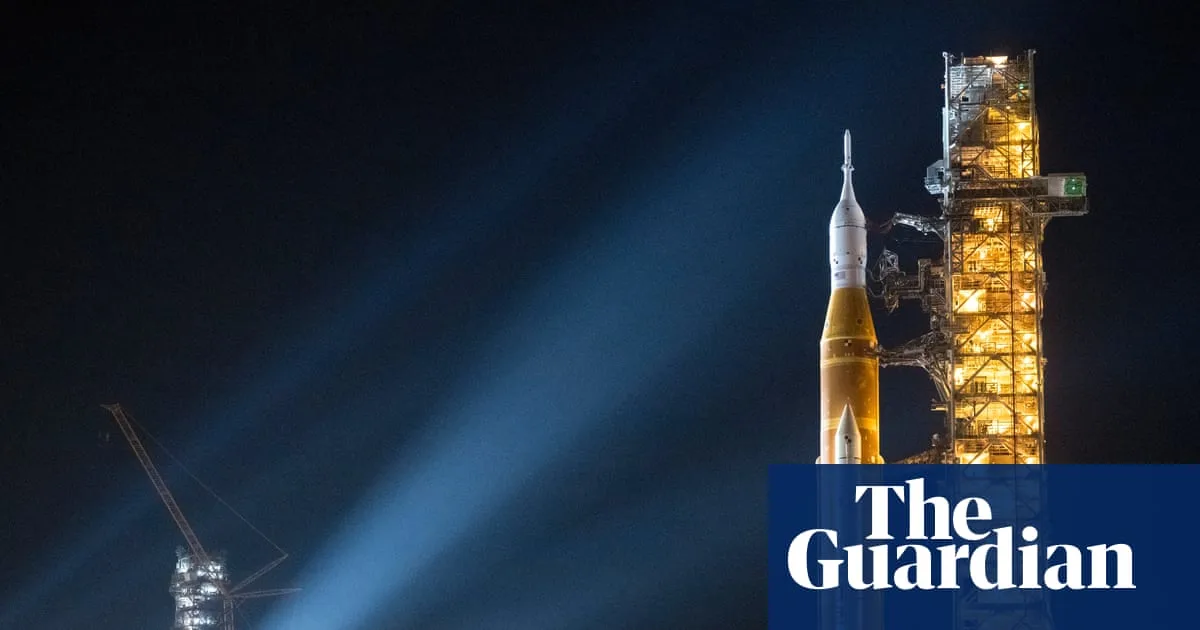
In a landmark moment for human space exploration, NASA has commenced the final phase of preparations for its first crewed mission to the Moon in over half a century. The colossal Space Launch System (SLS) rocket and its Orion spacecraft began their slow journey to the launchpad on Saturday, 17 January 2026, marking a pivotal step towards the historic Artemis II flight.

The Road to Launch Pad 39B

The space agency's mammoth Crawler-Transporter 2 vehicle carried the integrated rocket and capsule along a four-mile route at the Kennedy Space Centre in Florida. This meticulous trek from the Vehicle Assembly Building to Launch Pad 39B was expected to take up to 12 hours. The launch window for the Artemis II mission officially opens on 6 February 2026, setting the stage for a monumental return to lunar exploration.

Once positioned at the pad, engineers will conduct a series of critical tests, including a full 'wet dress rehearsal'. This procedure involves loading all the cryogenic propellants into the SLS rocket's tanks, simulating every step of launch countdown without actually igniting the engines.

A Promise Fulfilled and a Proving Ground

NASA Administrator Jared Isaacman framed the mission as the fulfilment of a long-standing pledge. "This mission fulfils a promise to the American people that we will return to the moon," he stated. He emphasised the Moon's role as a "perfect proving ground" for advanced autonomous systems essential for future deep space voyages.

Speaking at a press conference, Isaacman outlined a pragmatic vision for initial lunar infrastructure. "We talk about building a moon base. Now, day one of the moon base is not going to look like this glass-enclosed dome city... It's probably a lot of rovers that are moving around, a lot of autonomous rovers that are experimenting with mining," he explained. He confirmed that this push for autonomy extends to other missions, including a potential voyage to Venus featuring onboard AI capabilities.

The Artemis II Crew and Their Mission

The ten-day mission will carry an international crew of four astronauts around the far side of the Moon and back to Earth, replicating and expanding upon the path of Apollo 17 in 1972. The crew consists of NASA astronauts Reid Wiseman, Victor Glover, and Christina Koch, alongside Canadian Space Agency astronaut Jeremy Hansen.

For Hansen, a former fighter pilot, the mission has profoundly changed his perspective. "I had previously taken the moon for granted," he admitted. "But now I've been staring at it a lot more. And I think others are going to join us in staring at the moon a lot more as there are humans flying around the far side." He called the endeavour "good for humanity".

Astronaut Christina Koch highlighted the crew's readiness for the unknown. "As astronauts, one of the qualities that we talk about a lot is adaptability... the most important thing is that you're ready to take on what you haven't prepared for." She also pointed to the Moon's immense scientific value, describing it as a "witness plate" for Earth's ancient history, preserved free from the weathering processes that erase evidence on our home planet.

The Artemis programme is designed as a sustainable stepping stone. While Artemis II will orbit the Moon, the subsequent Artemis III mission is planned to land astronauts on the lunar surface. NASA states the overarching goal is to use the Moon to prepare for the first human missions to Mars.

The mission will conclude with the Orion capsule splashing down in the Pacific Ocean, where the crew and spacecraft will be recovered by the US Navy. This crucial test flight paves the way for a new era of sustained human presence beyond Earth's orbit.