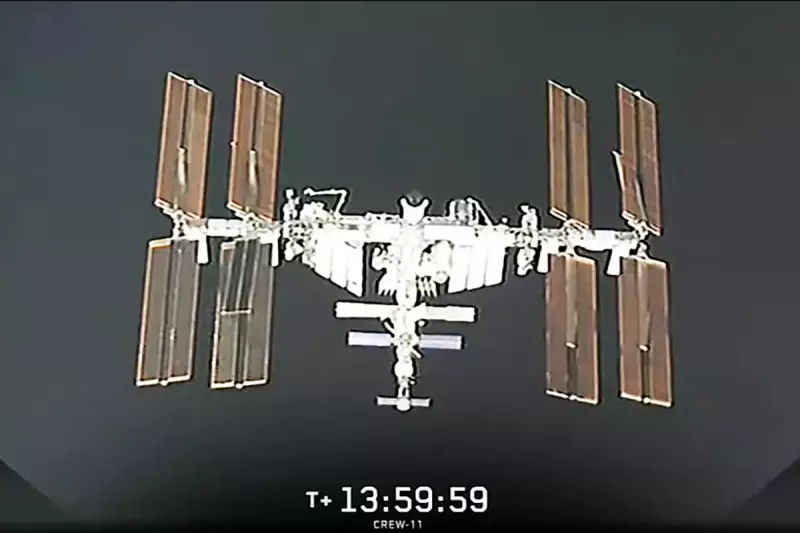
In an unprecedented move for orbital operations, NASA has ordered an emergency return to Earth for the entire SpaceX Crew-11 mission following a mystery health issue affecting one of the astronauts aboard the International Space Station (ISS).
Historic Evacuation Ordered
The four crew members are preparing for a medical evacuation, scheduled for Wednesday, 14 January 2026. Their Dragon capsule is set to undock and splash down several weeks ahead of the original mission timeline. This marks the first medical evacuation from the ISS in its 25-year history of continuous human habitation.
The US space agency has maintained strict medical privacy, refusing to disclose which of the four astronauts is affected or the specific nature of the health concern. The crew consists of NASA astronauts Zena Cardman and Michael Fincke, Roscosmos cosmonaut Oleg Patonov, and Kimiya Yui from the Japan Aerospace Exploration Agency (JAXA).

Mission Cut Short for Medical Care
NASA first signalled a problem last Thursday when it cancelled the year's first planned spacewalk, citing a "medical concern." In a subsequent press conference, NASA Administrator Jared Isaacman confirmed the Crew-11 mission would end early. He stressed that while serious, the situation did not constitute an "emergency deorbit" and that the affected crew member was in a stable condition.
"The capability to diagnose and treat this properly does not live on the International Space Station," Isaacman stated, explaining the rationale for the early return. "We're always going to do the right thing for our astronauts."
The crew spent Tuesday packing cargo and reviewing procedures for their accelerated return. Mission managers have given the final go-ahead, with favourable weather forecast for a parachute-assisted splashdown off the coast of California at 3.41am EST on Thursday (8.41am GMT).
Orbital Outpost Left with Reduced Crew
The departure will leave the orbiting laboratory with a skeleton crew of just three. Command of the ISS will be handed from NASA's Michael Fincke to Roscosmos cosmonaut Sergey Kud-Sverchkov. This reduced occupancy underscores the gravity of the situation and the priority placed on crew health and safety.
NASA will live-stream the historic return mission on its NASA+ service, YouTube channel, and via Amazon Prime, allowing the public to witness the conclusion of this truncated expedition. The event highlights the inherent risks of spaceflight and the robust, if rarely used, procedures in place to protect astronauts far from Earth.