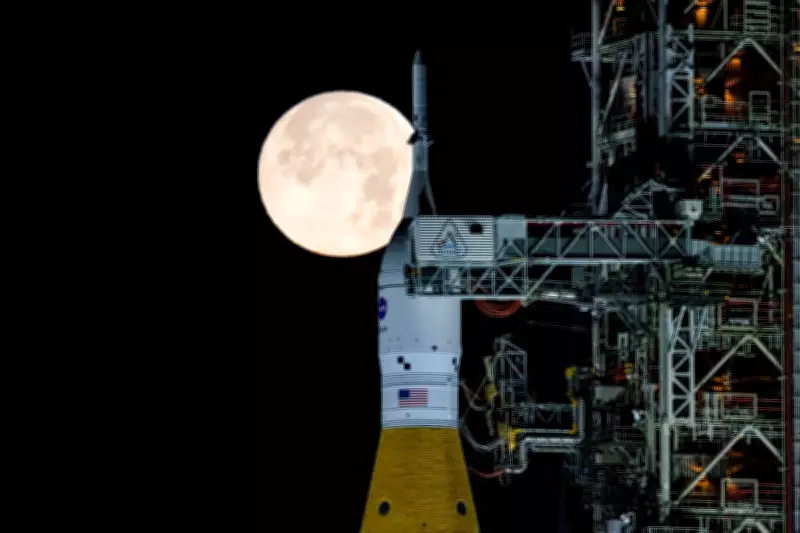
NASA Postpones Moon Rocket Launch to March Following Critical Test Issues
NASA has announced a significant delay to the launch of its new moon rocket, now targeting a March liftoff after encountering exasperating fuel leaks during a make-or-break test earlier this week. The space agency confirmed the postponement on Tuesday, stating that the decision will allow engineering teams to thoroughly review data and conduct a second wet dress rehearsal before proceeding with the flight test.
Recurring Hydrogen Leaks Disrupt Crucial Pre-Launch Operations
The problematic leaks emerged just a couple of hours into the daylong fueling operation on Monday at Kennedy Space Center in Florida. Launch controllers had begun loading the 322-foot (98-meter) Space Launch System rocket with super-cold hydrogen and oxygen at midday, requiring more than 700,000 gallons (2.6 million litres) of propellant to flow into the tanks and remain on board for several hours to mimic final countdown procedures.
However, excessive hydrogen quickly built up near the rocket's base, forcing the launch team to halt hydrogen loading at least twice. Controllers scrambled to work around the problem using techniques developed during the rocket's delayed debut test flight in 2022, which was also plagued by hydrogen leaks before finally soaring without a crew.

Astronaut Quarantine and Mission Timeline Adjustments
The four astronauts assigned to the mission – three Americans and one Canadian – monitored the critical dress rehearsal from nearly 1,000 miles (1,600 kilometres) away at Johnson Space Center in Houston. NASA confirmed that the crew, who had been in nearly two-week quarantine, will be moved out of isolation and will re-enter quarantine approximately two weeks before the next launch window opens.
The space agency noted that delays were also incurred during close-out operations of the test, alongside recurring audio dropout issues affecting ground crew communications. NASA gave no specific date for an official March launch target, emphasising that teams must first fully review test data, mitigate each technical issue, and return to comprehensive testing protocols.
Complex Launch Windows and Mission Objectives
The Artemis program mission faces particularly narrow launch windows, with only a few days available in any given month for optimal conditions. The recent bitter cold snap had already shortened February's launch window by two days, further complicating scheduling. Running behind schedule due to weather, countdown clocks began ticking on Saturday night to allow controllers to work through all procedures and address lingering rocket problems.
The planned nearly 10-day mission will send the astronauts past the moon, around its mysterious far side, and straight back to Earth. This trajectory is designed to test the Orion capsule's life support systems and other vital components, though the crew will not enter lunar orbit or attempt a landing. The mission represents NASA's first crewed lunar mission since the Apollo program of the 1960s and 1970s, with the Artemis program aiming to establish a more sustained human presence on the moon.