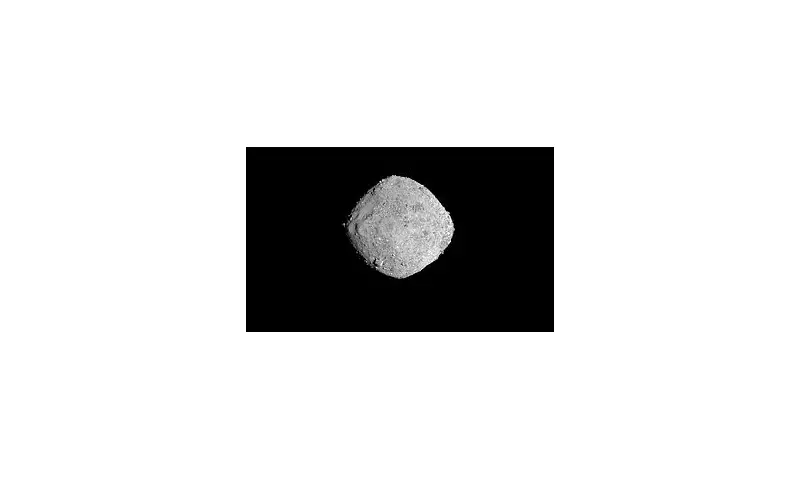
Scientists have moved a significant step closer to unravelling one of science's greatest mysteries: how life began on Earth. In a landmark discovery, NASA has identified essential sugars on an ancient asteroid located a staggering 200 million miles from our planet.
Building Blocks from the Cosmos
The US space agency's analysis of samples from the asteroid Bennu has revealed the presence of the five-carbon sugar ribose, a fundamental component of RNA, alongside six-carbon glucose. This marks the first time ribose has been definitively identified in an extraterrestrial sample brought to Earth.
Led by a team at Japan's Tohoku University, researchers stress this is not evidence of alien life. Instead, it provides profound clues about the primordial ingredients available in our solar system. 'Although these sugars are not evidence of life, their detection, along with amino acids, nucleobases, and carboxylic acids in Bennu samples, shows building blocks of biological molecules were widespread,' the team explained.

The OSIRIS-REx Mission and Bennu's Secrets
Bennu is a time capsule from the dawn of our solar system, formed from rocks dating back nearly 4.6 billion years. This 500-metre-wide asteroid makes a close approach to Earth roughly every six years.
In 2020, NASA's OSIRIS-REx spacecraft seized a unique opportunity during one such flyby, collecting precious material from Bennu's surface. The samples completed their journey back to Earth, landing safely on 24 September 2023. Since then, laboratories worldwide have been meticulously analysing the contents.
'All five nucleobases used to construct both DNA and RNA, along with phosphates, have already been found in the Bennu samples,' said Dr Yoshihiro Furukawa, who led the new study. 'The new discovery of ribose means that all of the components to form the molecule RNA are present in Bennu.'
Support for the 'RNA World' and a Future Threat
Intriguingly, while ribose was found, its DNA counterpart, deoxyribose, was not detected in these samples. This suggests ribose may have been more common in the early solar system, bolstering the 'RNA world' hypothesis. This theory posits that the first primitive life forms relied on RNA to store genetic information and catalyse reactions.
Dr Furukawa elaborated: 'Present day life is based on a complex system organised primarily by three types of functional biopolymers: DNA, RNA, and proteins. However, early life may have been simpler.' The finding of glucose also indicates an important energy source for life was present from the beginning.
While Bennu offers a window into our past, it also presents a future hazard. Recent risk assessments calculate a 1-in-2,700 chance of Bennu colliding with Earth in September 2182, underscoring the dual importance of such missions for both science and planetary defence.